


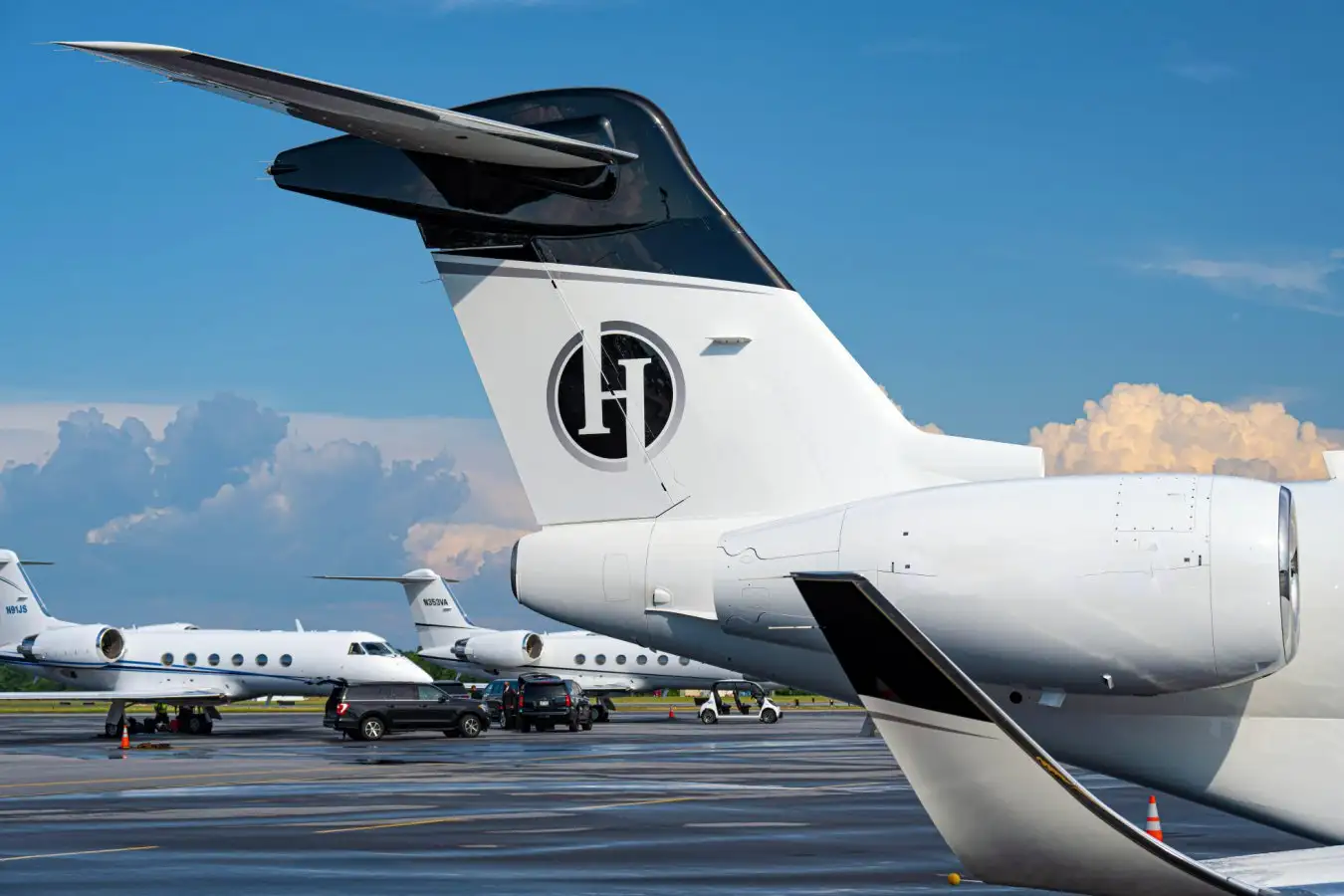

Private Jets: The Carbon-Intensive Travel Choice
Steve Allen / Alamy
The individuals most concerned about the environment, particularly among the wealthiest and most educated, often contribute the most to environmental damage due to their frequent flying habits.
However, researchers emphasize that changing policies is more critical than altering personal values to address the urgent climate and biodiversity crises.
“I don’t want to imply that individuals are entirely responsible for their carbon emissions,” states Malte Duce, a researcher from the University of Cambridge involved in the study. Finding low-carbon alternatives to flying can be challenging.
The term “carbon footprint” popularized by BP often shifts accountability to consumers.
Research has consistently shown that a person’s carbon footprint tends to rise with income. This study explored how personal beliefs could influence this trend. Researchers surveyed 5,000 individuals across Canada, France, Germany, Italy, the UK, and the US regarding their income, wealth, education, and job prestige.
Next, they gathered opinions on environmental issues, climate concerns, and waste management. To estimate a broader “ecological footprint,” questions about meat and dairy consumption, home size, waste generation, vehicle usage, and flying habits were included.
For the majority, a strong conservation ethic correlated with a reduced ecological footprint. However, within the top 30% of socio-economic status, those with the greatest commitment to environmentalism had an even larger impact.
The primary factor was that affluent nature enthusiasts frequently utilized air travel, one of the most carbon-intensive activities. They might rationalize this by emphasizing actions like recycling that have a minimal effect on their overall footprint, according to Duce.
Environmentalism represents a universalist value, suggesting that these individuals are open to diverse cultures and global interactions, leading to increased flying frequency, explains Felix Kreutzig of the University of Sussex, who was not part of the study.
Previous research has suggested that as countries become wealthier and invest in sustainable alternatives, environmental impacts initially rise but eventually decline, a phenomenon known as the environmental Kuznets curve. However, Duce and colleagues argue that their findings contradict this concept.
“Simply focusing on individual environmental awareness through campaigns will not lead to substantial emissions reduction,” states Meeka Kaiser from Cambridge University. “Stronger measures are necessary.”
Countries like the UK and Germany have increased aviation taxes, and ticket prices have risen due to an energy crisis stemming from the Iran war. Yet, researchers warn these price hikes may not deter high-income travelers.
In 2023, France prohibited short-haul flights, though a loophole allowed many routes to continue unrestricted.
Carlo Aall, a researcher at the Western Norway Institute, argues that without policy intervention, climate catastrophe is unavoidable. He advocates for “degrowth,” the concept of reducing energy and resource consumption even at the potential cost of economic contraction. “Even as environmental activists, we cannot escape the consumerism cycle,” he asserts.
The researchers acknowledged that their findings could reinforce the narrative of hypocrisy among environmentalists, potentially undermining climate action. Notable philanthropists like Bill Gates have faced criticism for utilizing private jets, and the aviation sector is expanding rapidly, fueled by events like the landmark Paris Climate Summit in 2015.
However, Kreutzig highlights the positive impact of initiatives like the Fridays for Future protests, initiated by Greta Thunberg, which led to significant climate policy changes in Germany, even if not all participants committed to abstaining from flying, as Thunberg did. “Active citizenship is vital,” he asserts. “It’s about action.”
Topics:
Source: www.newscientist.com