


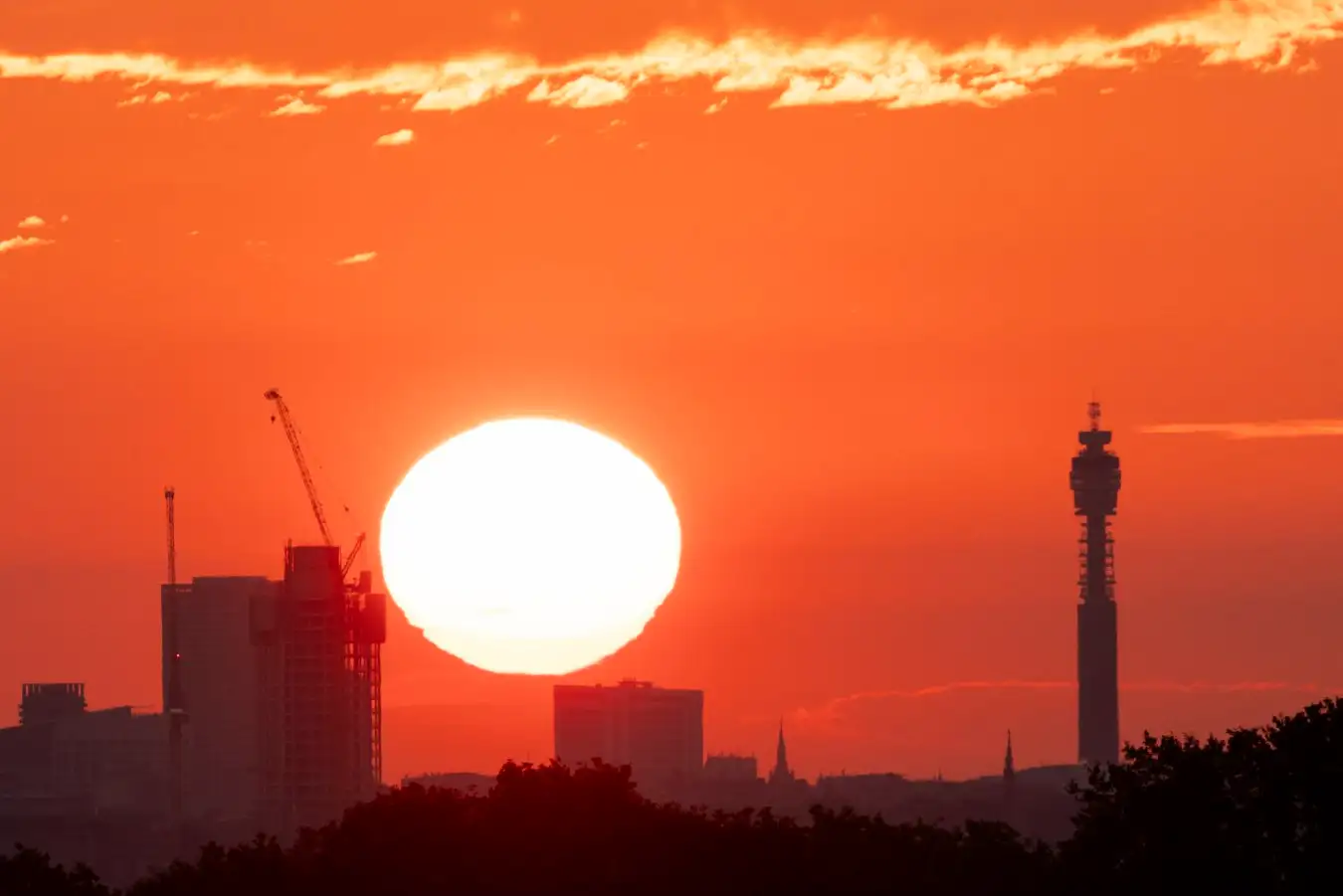
A red heat warning has been issued for parts of the UK, including London, this week.
Brooke Mitchell/Getty Images
The ongoing heatwave affecting Europe is alarming. With numerous records shattered, the rise in temperatures, especially during the night, presents significant challenges. I can’t help but wonder, “If conditions are this severe now, what will they look like in 10, 20, or even 30 years?”
Unfortunately, the answer is clear: it will only get hotter. The Met Office predicts that by 2056, UK temperatures could soar above 40°C (104°F) for days at a time, potentially reaching an alarming 45°C (113°F) in some locations. This reality is not just about the present; it signifies a relentless trend towards more extreme heat, well encapsulated in discussions about the so-called “new normal.”
Surviving intense heatwaves is feasible if our infrastructure and systems are adequately prepared, but the UK is far from ready. For instance, offices at New Scientist struggle to cope with the current heat, with many individuals suffering without air conditioning. A recent conference on adapting to extreme heat during London Climate Action Week was ironically canceled due to extreme temperatures.
Climate scientists persistently emphasize the urgent need to prepare for escalating heatwaves, severe droughts, and rising sea levels. While media coverage spikes during extremes like the current heatwave, interest wanes once temperatures cool, resulting in a delayed response.
This perspective is echoed by the UK Climate Change Committee, which warns that “adaptation progress is either too slow, stagnant, or heading in the wrong direction,” as outlined in their 2022 report. There’s a common misconception that the UK’s environment will remain consistently pleasant, but the reality is dire; the country is on a path toward potential disaster, yet awareness remains minimal.
Several aspects of this situation are concerning. Firstly, emissions continue to rise, exacerbating the root causes of climate change. While the rate of increase may be slowing, the Earth’s average surface temperature is expected to rise between 2.1°C and 3.3°C by 2100, if not more.
These troubling figures can be misleading because oceans warm more slowly than land, resulting in an increase in average surface temperatures that may not fully reflect the coming impacts.
What truly matters are the instances of extreme weather rather than average conditions. Projections for future extremes are already grim, with many scientists believing that we will face even greater extremes than currently anticipated. Some regions are already experiencing more severe heatwaves than predicted, which may be attributed to climate models underestimating shifts in jet stream dynamics and not accounting for reductions in air pollution that typically shield sunlight.
The potential ripple effects of extreme weather conditions are vast and complex, making them difficult to predict. Nonetheless, it is likely that we are underestimating their impact. For instance, as heatwaves intensify, young populations could face significant mortality rates. Furthermore, the fundamental human need for sustenance is at risk. Evidence suggests that global warming is already impacting agricultural productivity, driving food prices up, and prompting deforestation as farmers struggle to adapt.
Moreover, simultaneous extreme weather occurrences could lead to unparalleled economic turmoil. A 2024 study warns that this could trigger the worst global financial crisis in history.
We have yet to consider unpredictable variables, such as the decline of the Amazon rainforest or alterations in the Atlantic Meridional Overturning Circulation. A researcher I met recently indicated that the slowing of this crucial ocean current roughly 12,000 years ago resulted in significant seasonal variations, including sweltering summers and winter temperatures plunging to extreme lows in regions like Britain.
The truth is that the global landscape is shifting rapidly, necessitating comprehensive changes across all facets of life, including our homes, workplaces, factories, schools, transportation, and agriculture. However, these adaptations are not happening quickly enough. Therefore, if you’re not yet alarmed by the current heatwave, it’s time to be concerned.
Topics:
- Climate Change/
- Extreme Weather
Source: www.newscientist.com