


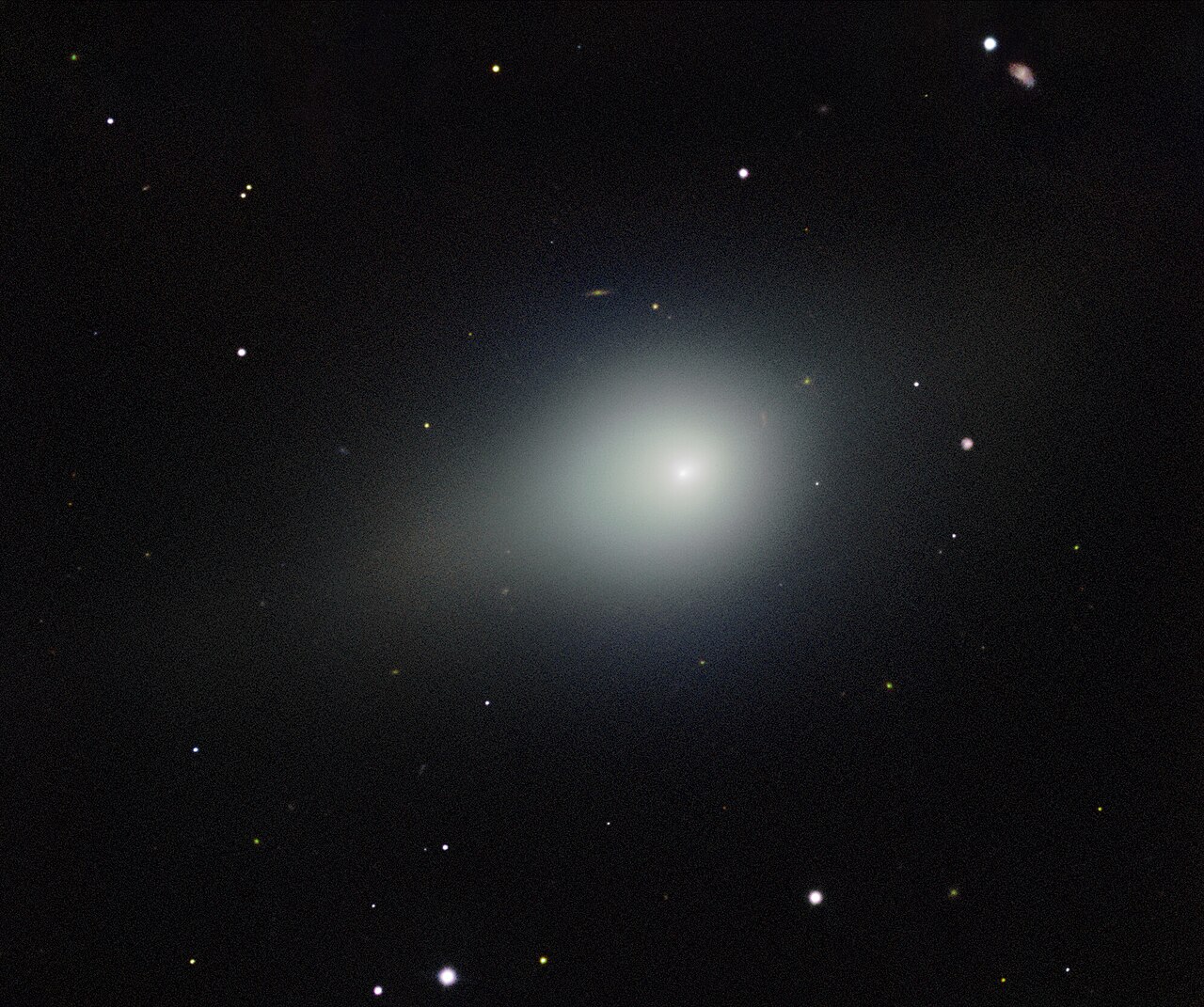
In the summer of 2025, the Asteroid Terrestrial-impact Last Alert System (ATLAS), a surveying telescope system in Chile, discovered 3I/ATLAS, only the third known interstellar object to pass through the Solar System. Its uncertain origin and trajectory, which carried it through the region between the Sun and Mars, gave scientists a rare but brief opportunity to study material from beyond our Solar System. Although some researchers questioned whether it could carry signs of advanced alien technology, observations and a search for artificial radio signals found no evidence that it was an alien probe.
A rare interstellar visitor
Most astronomers focused on 3I/ATLAS’s physical and chemical properties. However, some scientists suggested that it might exhibit a technosignature—evidence of advanced extraterrestrial technology. Under that hypothesis, 3I/ATLAS would have been the most prominent extraterrestrial technosignature ever observed.
Compared with ‘Oumuamua, the first interstellar object discovered in our Solar System, 3I/ATLAS could be much larger. ‘Oumuamua was several hundred meters long, or about 1,000 feet, while the upper estimate for 3I/ATLAS’s length was in the kilometer, or mile, range. Some researchers also noted that its trajectory was roughly aligned with the plane in which the planets orbit the Sun. At first, it appeared not to have the glowing tail expected from a natural object traveling through the Solar System.
Evidence points to a natural object
The prevailing conclusion was that 3I/ATLAS was not an alien probe or mothership sent to study or destroy Earth. Scientists have no reason to assume that interstellar objects must fall within a particular size range, and 3I/ATLAS is only the third such object on record—too small a sample for meaningful statistical comparisons.
Its apparent alignment with the planetary orbital plane was also not considered surprising, because ATLAS’s field of view matches the orbits of the planets in our Solar System. Further observations eventually detected the typical glowing tail associated with a natural object. The most likely explanation is therefore that 3I/ATLAS is space debris that either formed in interstellar space or originated in another star system before an unknown event sent it toward our Solar System millions of years ago.
Searching for artificial radio signals
Even without evidence of alien technology, 3I/ATLAS provided a useful case study for how scientists might search for technosignatures from an advanced civilization. A team of Chinese scientists recently used the 500-meter-diameter Five-hundred-meter Aperture Spherical Telescope (FAST) to search for unusual radio signals from the object.
Other radio telescopes had already observed 3I/ATLAS, but FAST is one of the most powerful radio telescopes in operation. The researchers therefore applied multiple methods to determine whether any detected signal could have been artificial.
The team analyzed data collected while FAST was pointed at 3I/ATLAS in 2025. The telescope recorded radio waves between 1.05 and 1.45 gigahertz at intervals of about 49 microseconds. The researchers divided the measurements into time segments and looked for unusual signals or recurring patterns over periods ranging from 0.7 seconds to 1,000 seconds.
According to the researchers, FAST’s sensitivity and data-processing methods allow it to detect artificial radio signals within the targeted frequency range from devices transmitting at 0.15 watts or more. The team found no evidence of an artificial signal in the data, further supporting the widely accepted view that 3I/ATLAS was a rare piece of space debris rather than the vanguard of an alien fleet.
Future searches for technosignatures
The researchers concluded that their tests demonstrated FAST’s ability to detect technosignatures in the universe. They recommended that future searches run for longer periods and examine a wider range of signal durations, extending down to the microsecond scale.
3I/ATLAS will eventually leave the Solar System. Perhaps millions of years from now, a team of alien scientists could use the object to test its own ability to detect technosignatures.
Source: sciworthy.com