


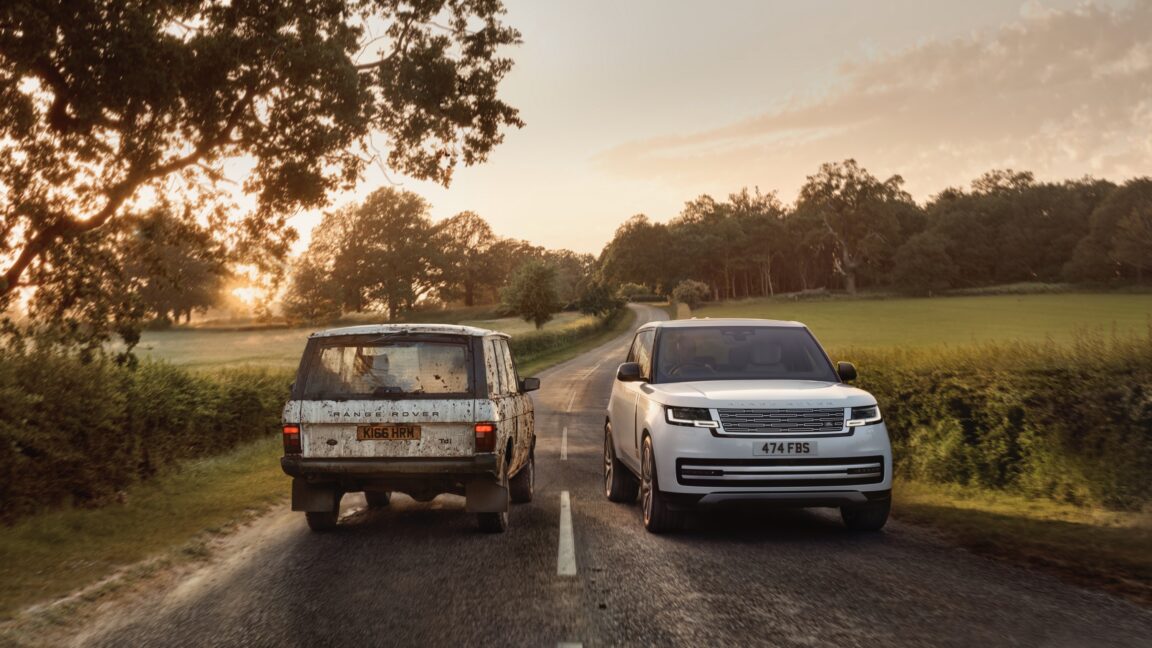
The all-electric Range Rover’s drive motor is 24% more efficient than the unit used in the Jaguar I-Pace. With a response time of just 50 milliseconds, the electric powertrain delivers significantly faster performance than a conventional drivetrain. Each motor features 144 copper hairpins, 0.008-inch (0.2-mm) laminations, and a 0.03-inch (0.7-mm) air gap between the rotor and stator. Like other premium electric SUVs, the Range Rover Electric also uses a silicon-carbide inverter capable of responding in less than 1 millisecond.
Range Rover
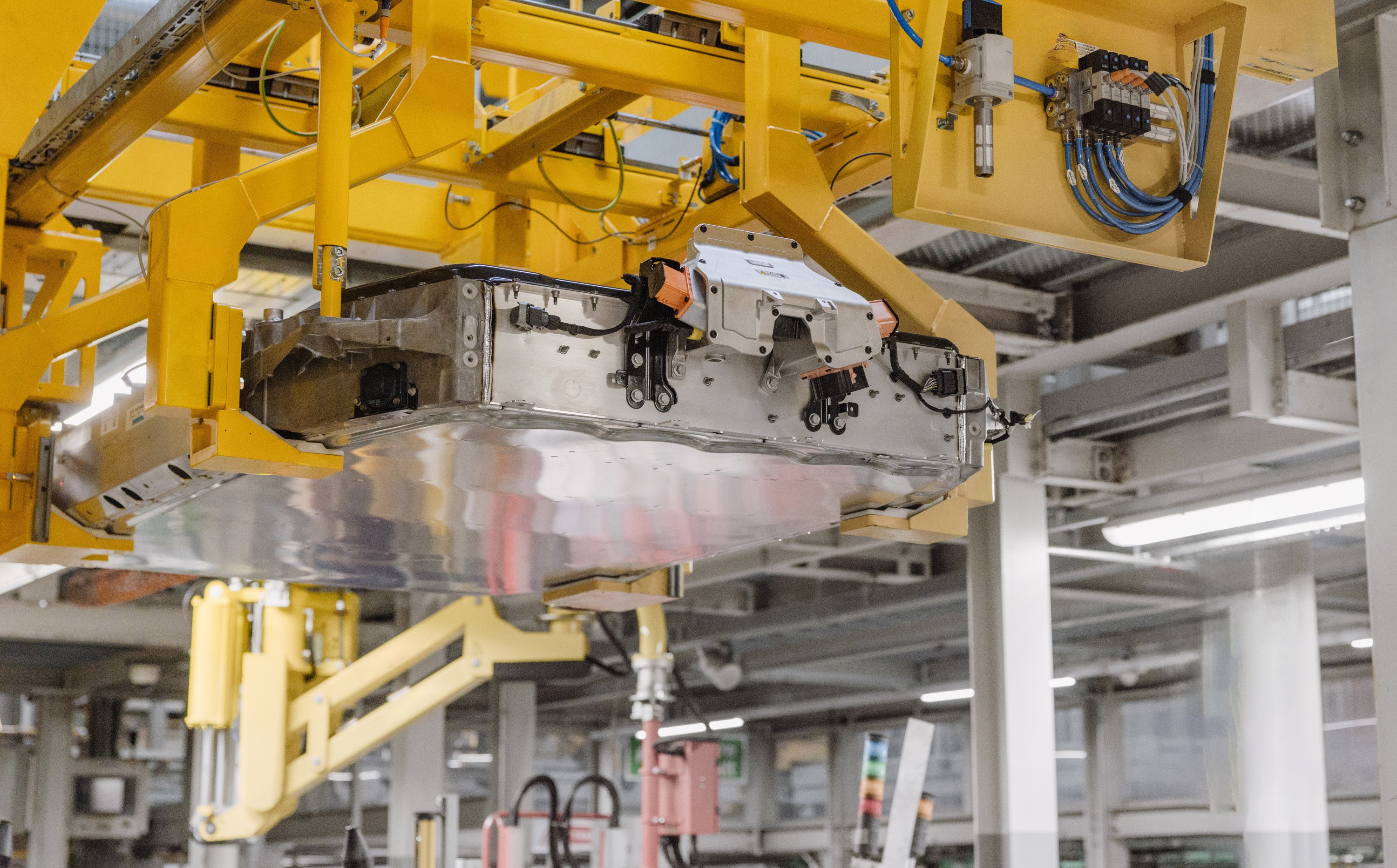
The Range Rover Electric battery pack and drive unit are mounted directly to the chassis.
Range Rover
Range Rover
The smooth underside of the battery pack helps protect the Range Rover Electric during off-road driving.
Range Rover
The Range Rover Electric battery pack and drive unit are mounted directly to the chassis.
Range Rover
The smooth underside of the battery pack helps protect the Range Rover Electric during off-road driving.
Range Rover
The Range Rover Electric also benefits from efficient battery packaging. Its 118.5-kWh usable battery uses a double-layer cell layout divided into 10 modules. The battery cells use AESC nickel-manganese-cobalt chemistry, while airgel spacers help manage heat and improve safety. Operating at 800 volts, the battery system includes two virtual battery twins that help calculate performance and support active battery management.
JLR’s ThermAssist thermal-management system further improves EV efficiency. According to the automaker, it can increase driving range by up to 7% while reducing the energy needed to heat the cabin by 40%. The system helps maintain battery and passenger-compartment temperatures more efficiently in a wide range of conditions.
Based on the EPA testing cycle, the Range Rover Electric is expected to deliver at least 333 miles (536 km) of range on a full charge. That figure is designed to cover approximately 97% of the average owner’s daily driving needs. US-market models will feature a native NACS charging port, access to Tesla Superchargers, and ISO 15118 plug-and-charge compatibility.
With a maximum DC fast-charging rate of 350 kW, the electric Range Rover can charge from 10% to 80% in approximately 22 minutes. A 10-minute charging session can add as much as 125 miles (201 km) of range. The SUV also supports up to 3.6 kW of AC output through vehicle-to-load (V2L) technology, while vehicle-to-grid (V2G) functionality is planned for a future update.
Range Rover Electric on the Road and Off-Road
The large battery pack gives the Range Rover Electric a lower center of gravity than the V8 model. At 3.4 inches (85 mm) lower, the center of gravity should improve stability and handling both on pavement and on uneven terrain. Standard air suspension with twin-valve dampers helps balance ride comfort with off-road capability, while the aluminum battery-pack frame increases chassis stiffness by 56%.
Range Rover
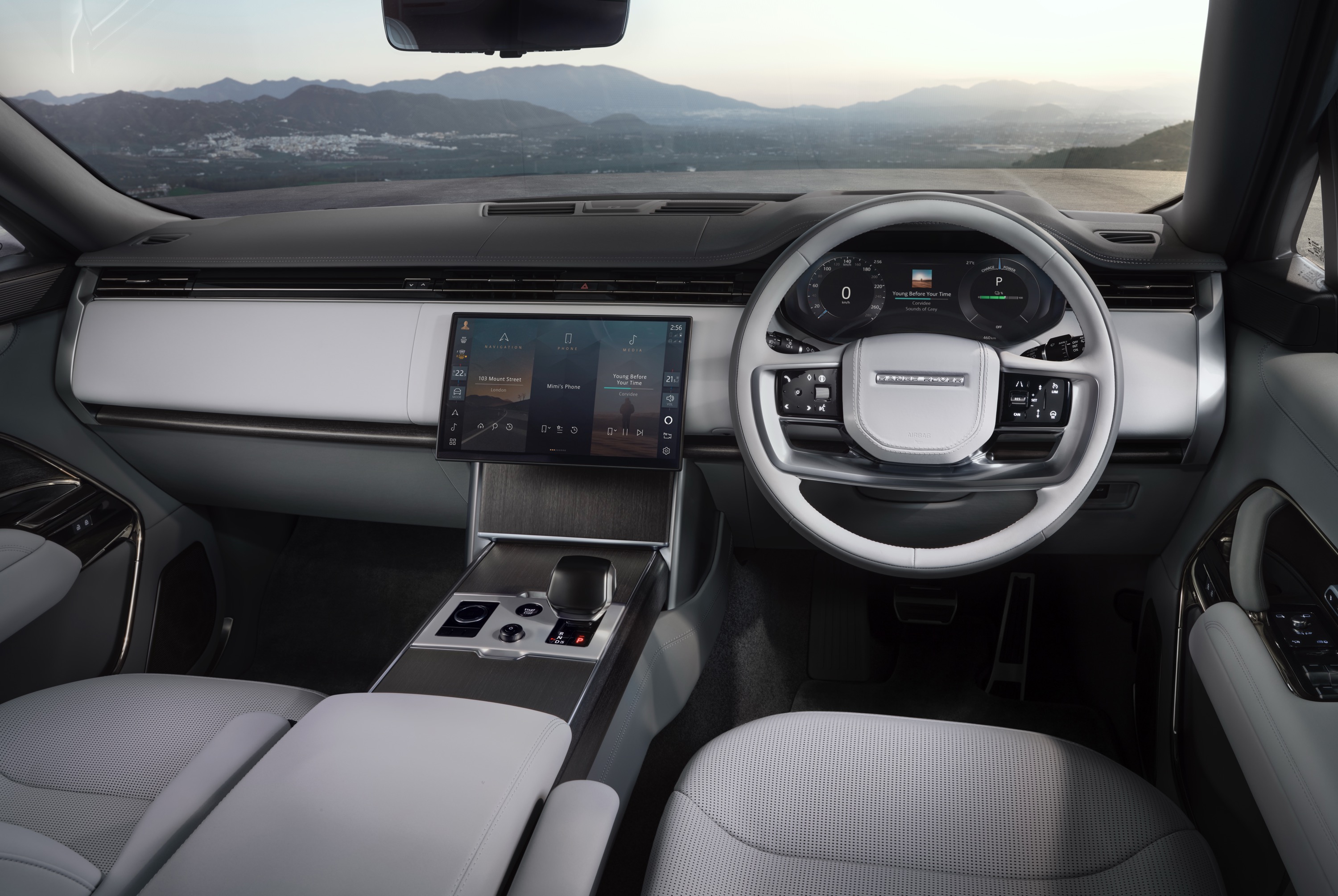
Without engine noise and vibration from a V8, the Range Rover Electric provides an exceptionally quiet cabin.
Range Rover
Range Rover
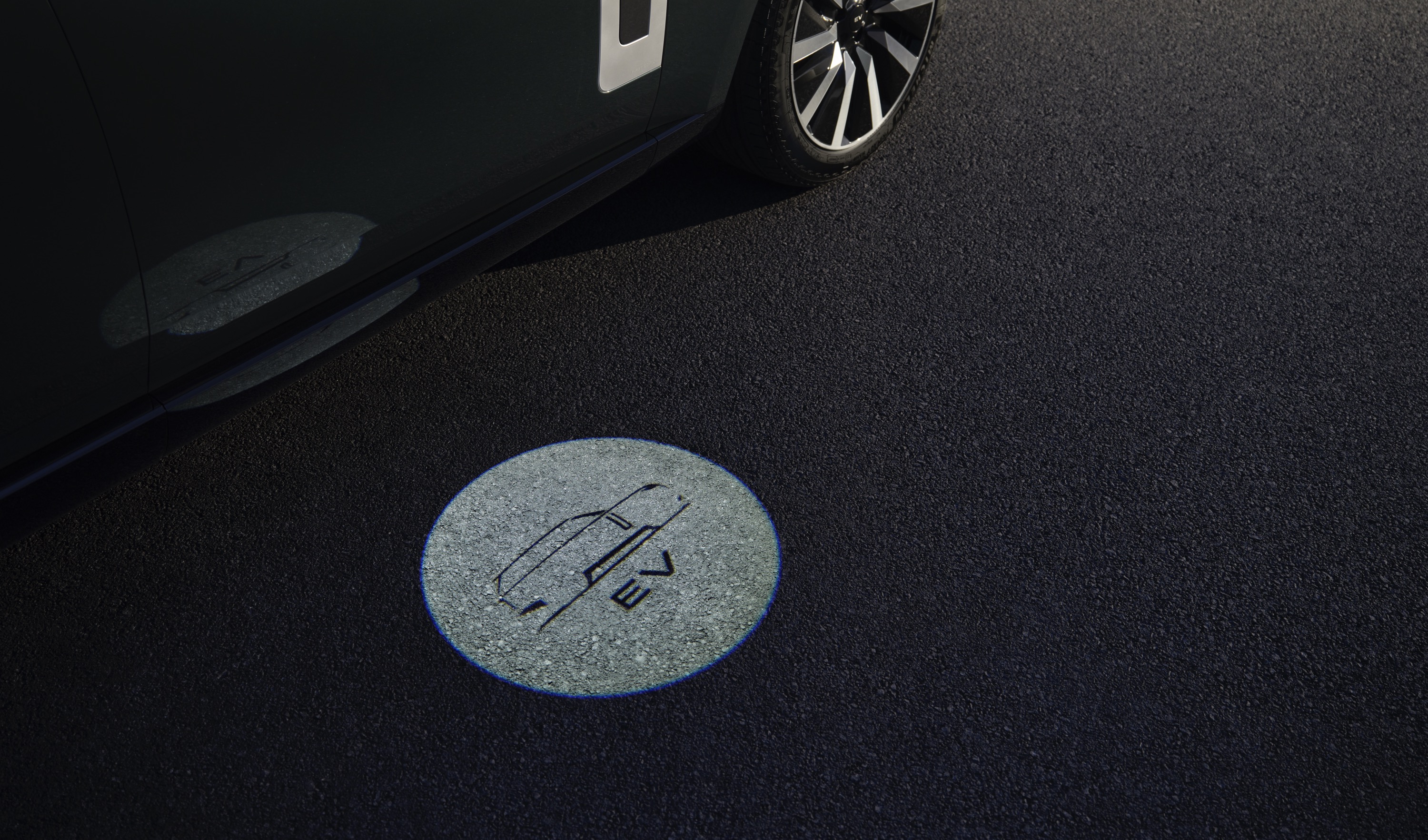
The puddle light adds a subtle visual reminder that this Range Rover is powered by electricity.
Range Rover
Without engine noise and vibration from a V8, the Range Rover Electric provides an exceptionally quiet cabin.
Range Rover
The puddle light adds a subtle visual reminder that this Range Rover is powered by electricity.
Range Rover
One of the biggest benefits of the Range Rover Electric is its low noise, vibration, and harshness (NVH) levels. The electric motor operates smoothly and quietly, making the SUV up to 7 decibels quieter than the V8-powered Range Rover. JLR noted that additional insulation may be required around the front drive unit, while the high-voltage cables will need careful routing to prevent noise and vibration from entering the cabin.
To further enhance cabin comfort, the electric Range Rover uses an active noise-cancellation system. The technology incorporates an ultra-thin membrane speaker developed by JLR in partnership with Warwick Audio and integrated into the headrest. Together with the quiet electric motor and insulated cabin, the system helps create a refined and nearly silent driving experience on the road.
Source: arstechnica.com