


This is today’s edition of The Download, a weekday newsletter delivering a daily briefing on the most important developments in technology.
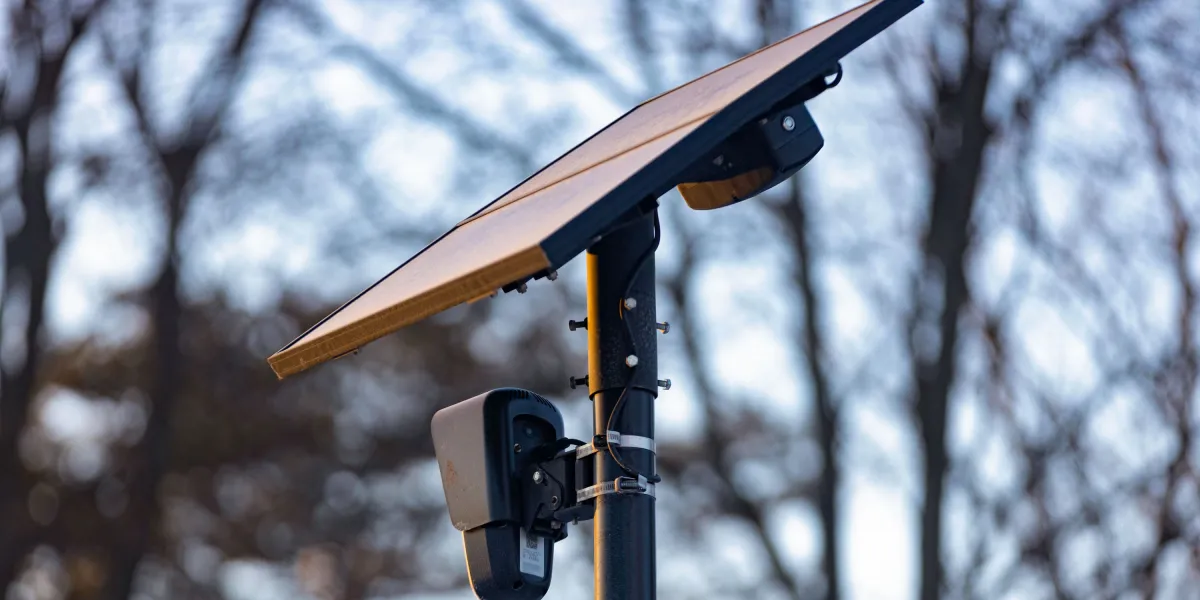
Flock tightens access rules amid growing backlash over surveillance technology
Flock, a major police technology company, is changing how law enforcement officers access its nationwide network of license plate readers. The policy shift comes as public criticism of mass surveillance grows, along with reports that some officers have used the technology to stalk and harass current or former romantic partners.
To strengthen safeguards, Flock plans to require officers to enter a criminal case number before searching its database. The company will also expand automated audits designed to identify suspicious searches. However, Flock does not verify the case numbers, meaning officers may still find ways to bypass the controls.
Learn more about Flock’s new surveillance rules, the privacy concerns surrounding license plate readers, and the loopholes that remain.
—James O’Donnell
How cloning could help save endangered species—or create human “organ bags”
—Jessica Hamzelow
This week, I spoke with scientists who discovered a way to turn male mouse embryos into females. Their CRISPR-based technique removes the Y chromosome, making it possible to create female clones from male mice.
The researchers hope the method could support wildlife conservation, particularly when only a small number of individuals remain in an endangered species. But cloning technology has many potential applications, from genetically modifying farm animals and recreating beloved pets to producing “brainless” human replicas for medical purposes.
Discover what cloning technology can do today—and the ethical questions it may raise in the future.
This story is from “The Checkup,” a weekly biotech newsletter. Sign up to receive it in your inbox every Thursday.
This scientist is mapping the biology of early childhood
In 2017, Deanne Taylor attended a presentation about the Human Cell Atlas, an ambitious effort to map every cell in the human body. At first, Taylor was confused—and then concerned. The researchers planned to study adults but had not included children. “That’s when my little alarm clock went off,” she says. “It is hopeless.”
Children’s cells express genes differently from adult cells, which can lead to dramatically different—and sometimes fatal—responses to medications that adults tolerate safely. Taylor has since advocated for including children in the Human Cell Atlas and is helping create a major database of healthy pediatric tissues.
The project could give researchers a baseline for understanding childhood development and reveal how diseases that typically appear in adulthood may begin much earlier in life.
Meet the scientists creating detailed cellular maps of early childhood.
—Colleen de Belfonds
This story will appear in an upcoming print magazine focused entirely on children. Subscribe now so you can read it when it arrives.
Must-read technology news
We’ve searched the internet for the most important, surprising, entertaining, and thought-provoking technology stories of the day.
1. Ukrainian drones defeat US military forces in an exercise
Ukrainian forces destroyed an American tank brigade during a military exercise. (WSJ $)
+ The exercise highlighted the United States’ vulnerability to drone attacks. (Ars Technica)
+ Trump announced 100% tariffs on many drones. (The Verge)
+ Europe is developing a drone-focused vision for the future of warfare. (MIT Technology Review)
2. OpenAI and Anthropic cut prices as they compete with Chinese AI companies
Rising artificial intelligence costs are pushing major companies toward less expensive models. (Financial Times $)
+ China’s Z.ai is aiming to challenge Anthropic and OpenAI in AI coding. (Bloomberg $)
+ DeepSeek is rapidly raising its API prices. (Quartz)
3. Apple develops a China-specific AI model with Alibaba’s help
A custom artificial intelligence model designed for China could give Apple greater control over its AI services in the market. (Reuters $)
+ Apple could become the first foreign company to deploy an AI model approved by the Chinese government. (The Verge)
+ Chinese artificial intelligence is dividing opinion in the White House. (MIT Technology Review)
4. US humanoid robot ambitions face dependence on Chinese supply chains
Building affordable humanoid robots requires components manufactured in China. (New York Times $)
+ China’s humanoid robot industry faces its own unique business challenges. (CNBC)
+ Gig workers are training humanoid robots from home. (MIT Technology Review)
5. People are “marrying” chatbots, and lawmakers want to intervene
The proposed response comes as AI companion apps become increasingly popular. (Wired $)
+ Chatbots are pushing the internet toward a post-human future. (New York Times $)
6. Researchers challenge Anthropic’s new AI watermark
The watermark may disappear when AI-generated text is rewritten. (Nature)
7. Artificial intelligence is reshaping political alliances
Data centers, surveillance systems, and local opposition are creating unexpected political coalitions. (Axios)
8. Oxygen discovered nearly two miles underground
The finding suggests Earth’s deep biosphere may support more life than scientists previously believed. (New Yorker $)
9. New research challenges existing theories about how memories are stored
Mice retained memories even after losing half of their synapses. (New Scientist $)
10. Indian startup tests cancer-detecting dogs for earlier diagnosis
Artificial intelligence interprets the dogs’ responses to patients’ breath samples. (Bloomberg $)
Quote of the day
“They were incredibly sloppy. If we’re serious about this, AI shouldn’t be able to break into the internet and then do it again immediately afterward.”
—A former OpenAI employee told Wired that the company’s hack by a rogue AI agent marked a turning point for artificial intelligence safety and cybersecurity.
One more thing
AI materials discovery must move from predictions to real-world laboratories
Well-funded startups are building AI-powered laboratories that could discover new materials faster and more affordably. But the field is still waiting for its ChatGPT moment.
The most expensive and time-consuming part of materials discovery is not imagining a new molecular structure—it is creating that structure in the real world. Until a material is synthesized, researchers cannot know whether it can be produced or whether it will have the desired properties.
Startups such as Lila Sciences and Periodic Labs are building laboratories where AI agents can design experiments, operate robotic systems, and analyze results. In time, these systems could reduce the materials discovery process from decades to just a few years.
Learn how scientists are using AI to transform materials discovery and turn computer-generated predictions into practical breakthroughs.
—David Rotman
We still have good things
A place for comfort, fun, and distraction to brighten your day. Have an idea? Please contact me.
+ Astronomers created the largest 2D map of the universe ever made.
+ See the most immersive photographs of a total solar eclipse.
+ Musician Andy Brewer created a complete song using nothing but equalization.
+ Step inside Imaginarium at the National Gallery, a virtual art world where famous masterpieces become interactive digital adventures. Thanks to reader Peter Ryan for discovering it!
Source: www.technologyreview.com