


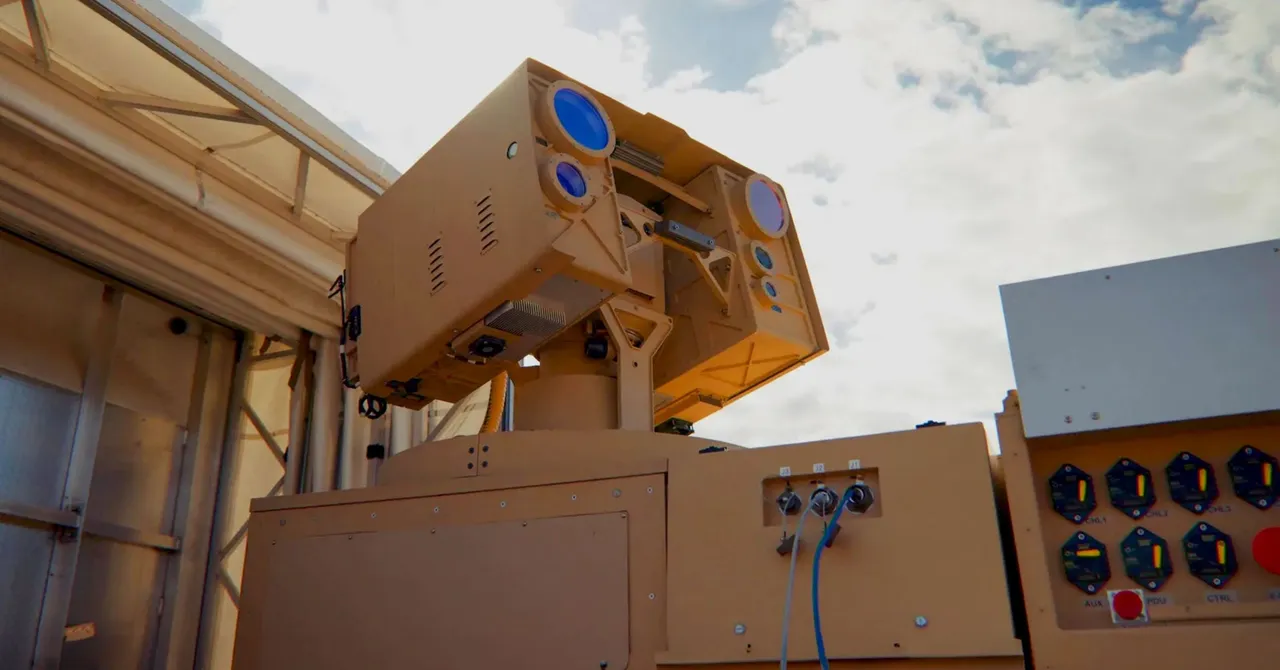
This week, the U.S. Army used high-energy multipurpose lasers to disable three drones near the U.S.-Mexico border. According to an official report citing Customs and Border Protection, the drones “posed a physical threat to U.S. military personnel and CBP partners.”
The operation took place near Texas’s Rio Grande Valley between the night of August 25 and the early morning of August 26. It was led by Joint Task Force Southern Border (JTF-SB), which operates under U.S. Northern Command. Officials said the military used technology derived from the Army’s High Energy Multipurpose Laser (AMP-HEL) program, which is designed to develop high-energy laser systems for defense applications.
The effort reportedly began in September 2025, when defense technology company AeroVironment delivered the first two functional prototypes of its laser-based weapon system to the U.S. military. In December of that year, the company expanded the program with two upgraded systems. Known as the Locust Laser Weapon System, the platform is designed for installation on military vehicles, including the Army’s version.
The Locust system operates at 20 kilowatts and uses a concentrated beam of light to detect, track, illuminate, damage, or destroy targets at long range. High-energy laser systems typically rely on sensors, cameras, radar, and other technologies to identify and track objects. Once a target is located, the system focuses the beam with precision, even when the object is moving. The laser’s energy generates heat that can damage or disable a drone, with the result depending on factors such as distance, exposure time, and the target’s characteristics.
The latest Locust systems, including the version delivered to the military last December, also feature radar and command-and-control technology. These capabilities allow the weapon to be integrated into larger mobile defense platforms rather than operated as a standalone system.
The precise location of the operation has not been disclosed. Officials have also provided no specific information about the origin of the downed drones or the organization operating them. However, JTF-SB commander Maj. Gen. Curtis Taylor suggested that the aircraft could be linked to a criminal organization involved in drug trafficking and activities in Mexico.
“Cartel networks are increasingly employing unmanned aircraft systems to facilitate illegal human smuggling and actively monitor our nation’s personnel and law enforcement partners. By integrating advanced directed energy capabilities and layered countermeasures like this laser system, we have made clear that we will not tolerate hostile surveillance. We are also very grateful for the support of our partners in the Mexican Army as we work together to combat this threat to our border regions,” Taylor said in a press release.
The statement did not identify the specific AMP-HEL variant used in the operation. International news outlets have connected the action to the broader campaign against illegal immigration and drug cartels that President Donald Trump pursued after beginning his second term.
During his campaign, Trump promised to take aggressive steps to address illegal immigration and drug trafficking, particularly along the U.S.-Mexico border. His administration has since introduced a range of technologies and security measures, with high-energy laser systems forming part of an expanding counter-drone toolkit.
This story was originally published in the Spanish version of WIRED. Translated from Spanish.
Source: www.wired.com