


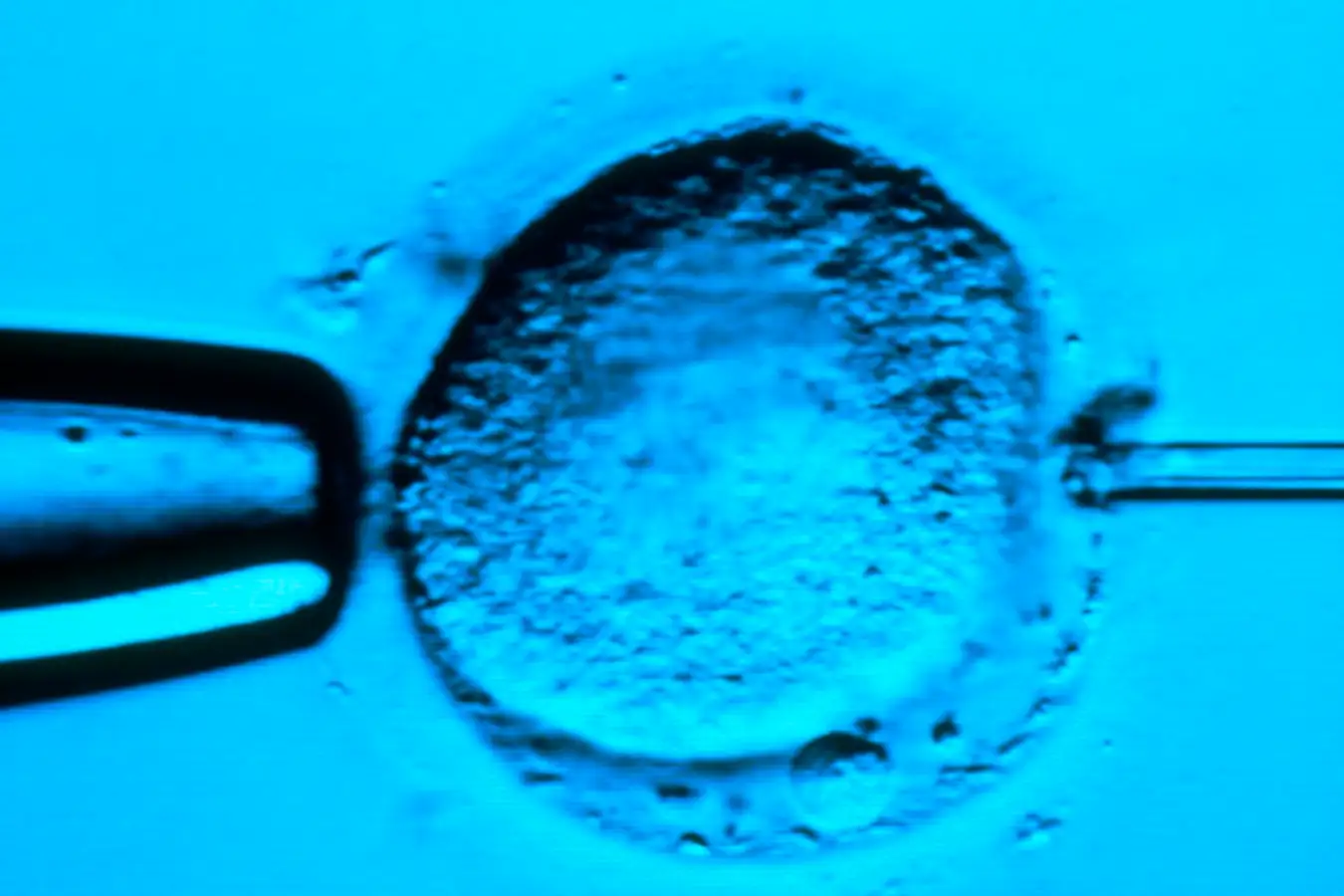

Understanding Embryo Development Could Boost IVF Success Rates
Philip Prairie / Science Photo Library
Recent research has unveiled the essential genes governing human fetal development, particularly the Nanog gene. Its function has been elucidated through precise modifications to fertilized egg DNA using groundbreaking CRISPR base editing technology.
This pivotal discovery may pave the way for improved techniques in in vitro fertilization (IVF). As Kathy Niakan of Cambridge University highlights, “Studying early human development is crucial for advancing stem cell biology.” This enhanced understanding could revolutionize both stem cell research and regenerative medicine, ultimately impacting countless lives.
For years, studies on animal models have shown that Nanog plays a vital role inembryonic development. This gene draws its name from the Celtic land of Tir na nÓg, symbolizing eternal youth, as its activation grants stem cells immortality. However, recent findings clarify that Nanog serves a distinct function in human embryos compared to its role in other species like mice.
As a fertilized egg develops, its cells differentiate into one of three key roles: the placenta, the yolk sac, or the embryo itself. In experiments where the Nanog gene was disabled in mouse fertilized eggs via base editing, no cells progressed into yolk sac progenitors. Base editing carefully alters one DNA base at a time, differentiating itself from the original CRISPR technique that cuts DNA and often leads to various mutations. “This precision significantly lowers the risk of unintended chromosomal abnormalities,” Niakan states.
Conversely, when Nanog was inactivated in human eggs donated by women undergoing IVF, not a single cell developed into an embryo-forming cell, establishing that Nanog is pivotal in initiating the developmental program for forming human bodies.
Interestingly, many embryos still exhibit normal morphology under microscopic observation, and IVF implantation decisions are primarily based on embryo shape, according to Niakan. “In around half of the cases, where embryos appear to develop well based on their shape, they still might not implant,” she notes. “Identifying crucial markers or genes like Nanog could enhance these implantation success rates.”
While Niakan’s team is among the forerunners in employing base editing on human embryos, having conducted similar research in 2017, their focus on embryos discarded due to abnormalities may not accurately reflect healthy embryos’ behavior. Recently, Dieter Egli presented findings at Columbia University, discussing base editing in two-cell embryos.
“Our objective was fundamentally different; we aimed to understand significant genes. This marks the initial application of this technique to investigate gene function in human embryos,” Niakan explains. “In contrast, Dieter’s work emphasized using technology to correct mutations associated with diseases.”
However, Egli is critical of Niakan’s results, suggesting that NANOG doesn’t play a crucial role in human embryogenesis, emphasizing the need for functional follow-up studies to elucidate the molecular mechanisms involved. Niakan counters that her team undertook this foundational research.
Collectively, these investigations underline that CRISPR-based embryo editing is substantially safer compared to the original CRISPR, which was implicated in gene editing three children. However, Mary Herbert, from Niakan’s Melbourne team, asserts that we are still distant from using CRISPR base editing to generate genetically modified children, such as those aimed at preventing hereditary diseases. “The technology isn’t ready for that yet,” Herbert concludes, emphasizing the prevailing consensus.
A significant hurdle remains that gene editing often results in mosaicism, where only some cells within an embryo are altered. Consequently, even if a disease-causing mutation is corrected, the developing child may still inherit the condition.
For instance, one editing attempt by Egli’s group resulted in 80% of the embryos exhibiting mosaicism. Niakan’s team mitigated this by introducing the gene-editing machinery into eggs alongside sperm during fertilization, lowering the mosaic rate but still resulting in half the eggs being affected. “[This] indicates that even if this method were utilized to correct mutations leading to genetic disorders, the mosaicism rate might remain excessively high in many situations,” asserts Robin Lovell-Badge from the Francis Crick Institute in London.
Niakan emphasizes the ethical implications surrounding the use of base editing on children at this stage but doesn’t dismiss the possibility for the future: “I strongly advocate for increased transparency in basic research and public discourse.”
Topics:
Source: www.newscientist.com