


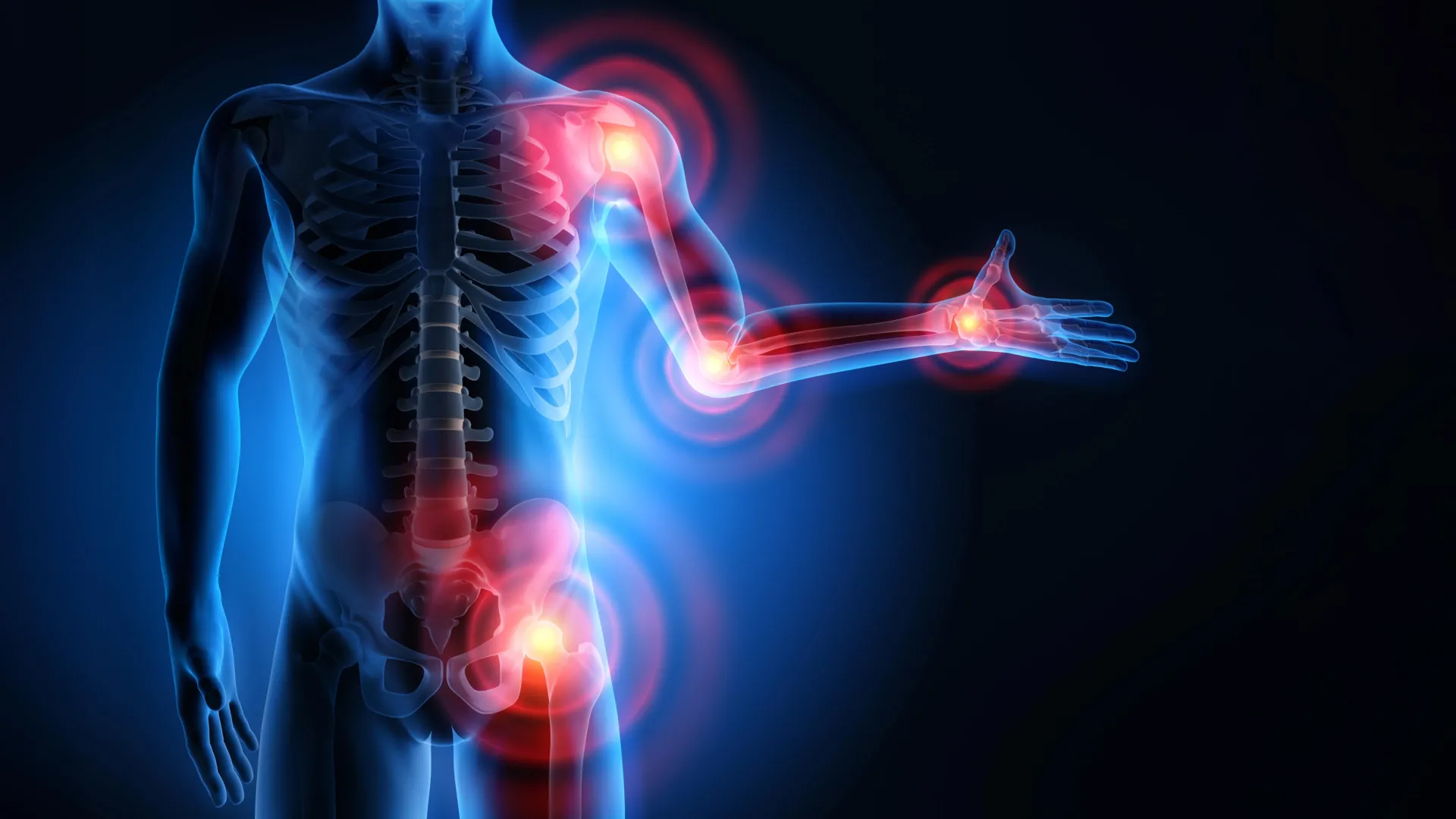
The human body is often hailed as a wonder of “perfect design”: streamlined, efficient, and meticulously tailored for various functions. However, a deeper examination presents a much different narrative.
Contrary to being flawless machines, our bodies resemble a mosaic of compromises shaped over millions of years of evolution. Rather than creating new structures from scratch, evolution modifies existing forms.
This leads to several components of human anatomy becoming “good enough” solutions—functional but imperfect. Many prevalent medical issues stem directly from these genetic limitations.
Spine
The human spine exemplifies this principle effectively.
Our spinal column, which evolved progressively, was inherited from our tree-dwelling quadrupedal ancestors, primarily serving as flexible beams that facilitated smooth movement among branches while protecting the spinal cord.
As humans transitioned to upright bipedalism, the spine retained its initial functions but also adapted to support weight vertically and maintain balance while allowing for body movement. These conflicting requirements create tension.
The spine’s characteristic curvature aids in weight distribution but makes it susceptible to lower back pain, herniated discs, and degenerative conditions that compromise its primary function: safeguarding the spinal cord and surrounding nerves. Such conditions are incredibly common. The underlying issue is that your spine is not fundamentally flawed; it’s simply tasked with a job it wasn’t originally designed to handle.
Neck
Another striking example of this flawed design is the recurrent laryngeal nerve, which takes a perplexing route that seems illogical.
A branch of the vagus nerve, this nerve regulates our organs’ “rest and digest” functions, including lowering heart rate and breathing. It also links the brain to the larynx, facilitating speech and swallowing.
One would expect a logical, direct path between the brain and the larynx. Instead, it descends into the chest, loops around major arteries, and then makes its way back to the voice box.
This redundant path is not an ingenious design but rather remnants of history. In our fish-like ancestors, nerves traveled straight around gill arches, and as neck lengths evolved, nerves got stretched rather than rerouted.
This inefficiency leads to increased injury risks during surgical procedures.
Eyes
The construction of our eyes also reflects an evolutionary compromise.
In humans and other vertebrates, the retina (light-sensing layer at the back of the eye) is configured “posteriorly.” This necessitates that light passes through layers of nerve fibers before reaching the photoreceptors that transform light into nerve impulses sent to the brain.
Furthermore, the optic nerve exits behind the retina, which creates a blind spot just beneath the horizontal plane of vision. The brain compensates so seamlessly that we hardly notice this gap.
In essence, while we have developed remarkable visual and photoreceptor cells, it comes at the cost of resulting in inconsistencies in our visual field.
Teeth
Our teeth serve as another reminder that evolution prioritizes adaptability over durability.
Humans grow two sets of teeth: baby teeth and adult teeth. Unlike sharks, once adult teeth are lost, they do not regenerate. These creatures continuously replace their teeth throughout their lives.
In mammals, tooth development is tightly regulated and closely linked to complex jaw growth and feeding strategies. While effective for our ancestors, this system leaves contemporary humans vulnerable to tooth decay and loss.
Wisdom teeth exemplify this evolutionary lag. Ancestors had larger jaws designed for a tougher diet requiring heavy chewing. Over time, as human diets softened, jaw sizes diminished, but the number of teeth did not change as quickly. Consequently, many people lack sufficient space for third molars, leading to impaction and crowding, often requiring surgical removal.
While wisdom teeth aren’t functionally useless, they no longer fit comfortably in modern human skulls.
Pelvis
Childbirth embodies one of the most significant evolutionary compromises. Like the spine, the human pelvis balances two conflicting demands: efficient bipedal locomotion and the delivery of large-brained infants.
A narrower pelvis enhances mobility but restricts the size of the birth canal. Conversely, human offspring have disproportionately large heads. Relative to body size, this creates a challenging and sometimes perilous birthing process that often necessitates assistance.
This trade-off between mobility and brain size is not solely anatomical; social behaviors foster collaborative care and cultural adaptation surrounding childbirth.
Evolutionary Persistence
Evolution doesn’t always discard structures unless they incur substantial disadvantages. This is why some anatomical features persist, even if they provide only limited benefits.
The appendix, once deemed a vestigial organ, is now understood to contribute to minor immune functions. However, it can become inflamed, resulting in appendicitis—a potentially life-threatening condition.
The purpose of the sinuses is also ambiguous. They may lighten the skull or influence vocal resonance, with their size and versatility also benefiting forensic identification. However, drainage channels can lead to nasal congestion and infections, a byproduct of development rather than an intentional adaptation.
Even the tiny muscles around our ears hint at our evolutionary background. In many mammals, these small muscles help to rotate the outer ear (pinna) for improved directional hearing. While humans possess similar muscles, most people cannot utilize them effectively.
Our bodies may not be perfectly designed, but they serve as a living testament to evolution. Anatomy tells a historical story of adaptation, compromise, and contingency. Evolution does not strive for perfection; it capitalizes on available resources and modifies structures incrementally.
Viewing anatomy through this evolutionary lens may also reshape our understanding of common medical issues. Back pain, complicated childbirth, tooth decay, sinusitis, and more aren’t merely unfortunate occurrences; they are, in part, reflections of our evolutionary journey.
Source: www.sciencedaily.com