


Intuit: A Pioneer in Agent AI Innovation
Intuit has established itself as an early leader in the agent AI landscape, but its journey to success faced significant challenges.
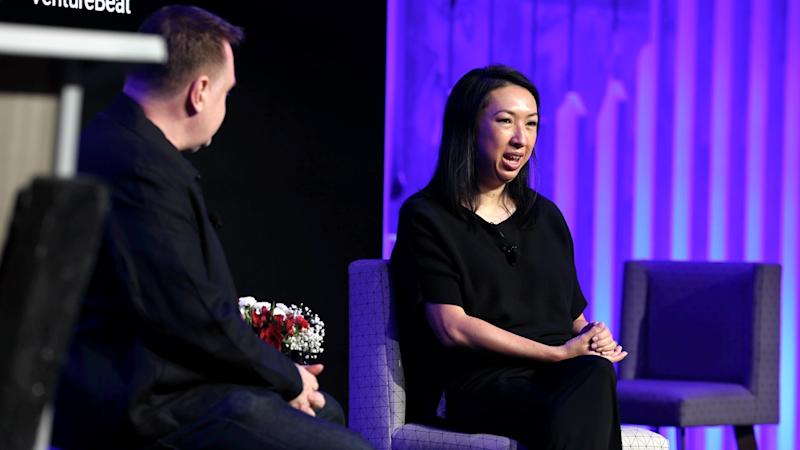
During VB Transform 2026, Intuit’s VP of AI, Nhung Ho, shared insights into how the company underwent two substantial rebuilds of its agent architecture within just four months. Initially, Intuit transitioned from a complex fleet of specialized agents to a centralized orchestration layer. However, the increasing complexity of the orchestrator ultimately led to the decision to shift towards a skills and tools-based system. Remarkably, the second complete rebuild was accomplished in just 60 days, with the first functional prototype delivered in only 20 days.
The need for this second major overhaul stemmed from a significant failure point: agents within the orchestrated system communicated results in natural language, leading to the loss of critical context for downstream agents. As Ho noted, “If you have 10 agents passing information to each other, errors are inevitable.”
Understanding the Orchestration Layer’s Collapse
Ho explained that the initial development of specialized agents was largely fueled by genuine customer feedback. The challenge was that customers were overwhelmed with managing multiple capable agents to determine the right one for specific tasks. Intuit’s solution aimed to streamline this by routing tasks internally without requiring customers to select individual agents.
This orchestration model lasted approximately three months. Ho humorously commented that, within the fast-paced development timeline of 2026, it felt like the effort took a year.
The downfall was due to structural shortcomings rather than capacity constraints. The necessity for each downstream agent to interpret the conclusions of the upstream agent led to a degradation of inference accuracy. Although the 10-agent sequence did not outright fail, the design compounded errors.
This analysis ultimately steered Intuit back toward a more efficient skills and tools architecture.
Essentials for a 60-Day Rebuild and Gaining Engineering Buy-In
Completing a production agent system rebuild in just 60 days demanded more than just a change in architecture. Ho emphasized the more complex challenge of securing buy-in from management and the engineers who had developed the original agents.
To convince leadership, Ho’s team created a demo of the new architecture using authentic customer queries from a production environment, demonstrating significant improvements over prior systems.
“The best evidence, in my view, is addressing the real issues customers encounter with their systems,” Ho stated.
Gaining engineering support required a different approach. Numerous engineers beyond Ho’s core team had been focused on specialized agents, but now they were tasked with deconstructing agents into individual skills and tools.
Ho highlighted the compelling argument for scalability: while standalone agents solve single problems, the shared skills within the new architecture benefit all customers accessing that product component. This shift also transformed team responsibilities, moving the focus from building new agents to conducting evaluations, which became crucial for assessing the architecture’s effectiveness.
Integrating Humans into Agent Conversations for Enhanced Support
The most notable advancement from this restructuring allows for the integration of human representatives into live agent conversations. Currently in early testing, this feature targets approximately 1% of Intuit’s customer base, with plans to expand significantly soon.
Customers can now introduce an Intuit support expert, their own accountant, or an Intuit bookkeeper into ongoing discussions, allowing for comprehensive comprehension of the prior exchanges with the agent.
Ho contrasted this innovative approach with typical AI chat products, which often defer to external experts. Intuit’s systems are designed to directly connect customers with their experts in seamless dialogues.
This human integration coincides with a financial data permission model tailored for security. Each action an agent performs requires explicit customer consent, a measure Ho noted could adapt as trust develops over time. To maintain accountability, Intuit preserves an audit history of all agent actions with the capacity to reverse changes when necessary.
Revolutionizing Feedback in the Era of Agent AI
This architectural transformation also redefined how Intuit gathers and utilizes customer feedback. Ho emphasized the qualitative shift from previous practices.
“Feedback has traditionally been sparse and polarized,” Ho observed. “Users tend to either really like it or not, often leaning toward the Negative.”
With the new chat-based system, every interaction serves as a form of feedback, increasing the company’s response rate from approximately 0.3% to nearly 100%.
Ho has taken to writing code personally to develop models for systematic feedback analysis, seeking areas where manual review processes fail to keep pace. This influx of feedback includes candid customer insights that reveal where the system may fall short.
“Customers unmistakably express their dissatisfaction, saying things like, ‘This isn’t right,’” Ho noted. “Yet, they are also open to resolving issues. This responsibility falls on all of us to harness and act upon this new type of feedback for continuous improvement.”
Source: venturebeat.com