



Actor Christina Applegate said this week that new examinations overturned her multiple sclerosis (MS) diagnosis, which she received more than five years ago, leaving her without a diagnosis. “I felt back to square one. I didn’t know what was happening to me,” she said on a podcast. Her experience highlights the challenges of identifying MS: studies estimate that between 5% and more than 40% of people diagnosed with the disease may have been misdiagnosed, depending on the population and clinical setting. MS can also be underdiagnosed, meaning some people with the disease are not recognized as having it.
Live Science spoke with experts about how MS is diagnosed, why an early and accurate diagnosis matters, and what future tests might improve the process.
“It is also very important that doctors and patients realize that it is not inappropriate to revisit the diagnosis to see if it is correct,” Dr. Ali Green, head of the neuroimmunology and glial biology department at the University of California, San Francisco, told Live Science.
The importance of early diagnosis
MS is an autoimmune disease in which the immune system attacks the central nervous system, including the brain and spinal cord. The attacks can directly damage neurons and destroy myelin, the fatty insulating material surrounding nerve fibers that helps them transmit signals efficiently.
This damage produces characteristic scars in nervous tissue and can cause symptoms such as vision problems, muscle weakness, tingling, dizziness and difficulty controlling the bladder. Without treatment, people with progressive MS can lose the ability to walk or stand and, in some cases, develop partial or complete paralysis.
Such severe outcomes have become less common as treatments have improved, Green said. Current therapies suppress the immune attack and help prevent further nerve damage.
“There used to be people who developed severe disabilities after 10 or 20 years of illness, but now people have mild disabilities after 30 or 40 years of illness,” Green told Live Science.
MS most frequently appears between the ages of 20 and 40, although it can occur at any age, according to the Mayo Clinic. “The sooner people with multiple sclerosis start treatment, the better long-term outcomes they will have,” Green said.
That makes an efficient diagnosis important, so patients can begin treatment when it is most likely to help. “We’re trying to be as proactive as possible about this,” said Dr. Johans Allet, a neuroimmunologist and researcher at the Penn State Health Research Institute.
Why MS is a “diagnosis of exclusion”
There is no single definitive test that can establish whether someone has MS. Instead, specialists use a set of diagnostic criteria that are regularly updated to reflect how the disease appears in a patient’s symptoms and clinical test results.
The latest criteria were implemented in 2024 and published in 2025. They consider evidence from scans of the brain, optic nerves and spinal cord, along with a patient’s symptoms and other test results.
The first step is recognizing symptoms that might indicate MS. Early symptoms vary widely and may include problems with balance, vision or bowel control. They may not immediately suggest a neurological disorder, Green said. However, MS symptoms typically worsen over the course of a day or several days and then improve, a pattern that can provide an important clue.
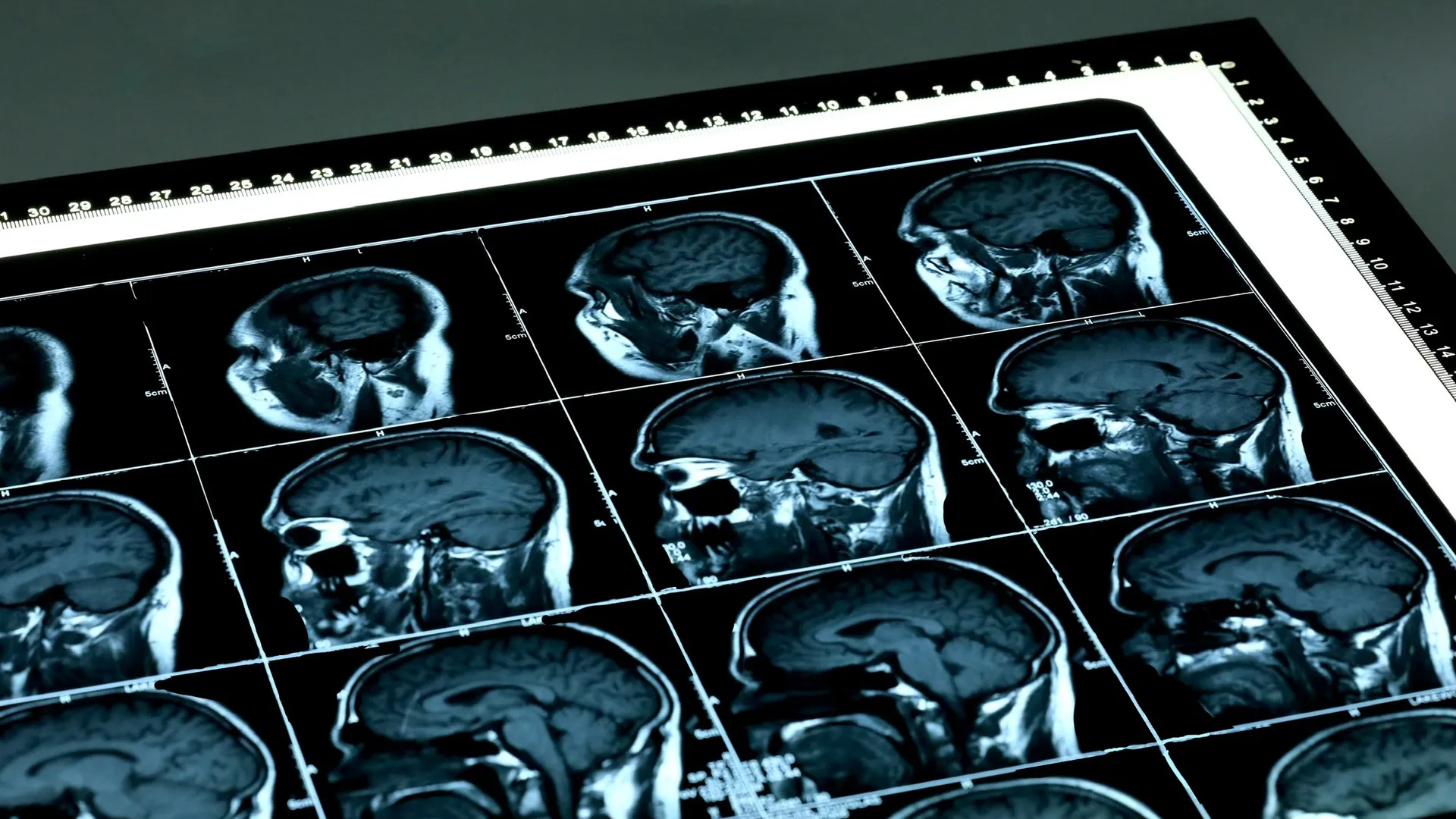
If the symptoms raise concern, doctors typically order magnetic resonance imaging (MRI) scans of the brain and spinal cord. These scans can reveal areas where myelin has been damaged. Neurologists assess the shape, size and location of the lesions, which often appear near blood vessels because immune cells can enter the brain in those areas.
However, myelin damage can also occur in conditions such as migraines, uncontrolled diabetes and vascular disease. Doctors therefore need to look for patterns that are specifically associated with MS. Both Green and Allet noted that neurologists who specialize in MS are generally better equipped to distinguish MS-related damage from lesions caused by other diseases than doctors working in other neurological specialties.
MRI scans of the optic nerves can also show damage associated with MS, Allet said, and the latest diagnostic criteria place greater emphasis on these scans. Electrophysiological testing, which measures how well nerves function, provides another type of evidence.
“It’s very important because it tells us something completely different than just looking at a lesion on an MRI,” Green said.
A spinal tap can provide additional information by collecting the fluid surrounding the brain and spinal cord. That fluid may contain proteins and inflammatory cells associated with MS.
Doctors must also rule out other illnesses that can resemble MS. These include neuromyelitis optica and myelin oligodendrocyte glycoprotein antibody-associated disease, or MOGAD. Both are autoimmune diseases of the central nervous system, but they are associated with distinctive autoantibodies that target different parts of the nervous system and are not seen in MS.
Other conditions, including inflammatory diseases such as lupus and myasthenia gravis, can initially look like MS. Some “MS mimics” can be excluded using spinal-fluid and antibody tests, while others require a longer series of evaluations.
“Ultimately, this is a diagnosis of exclusion,” Allet said. “Some can be ruled out right away, while others take time to thoroughly investigate.”
Green also pointed to neurosarcoidosis, an inflammatory condition that can sometimes be mistaken for MS. Neurosarcoidosis can worsen with MS medications, so a patient whose flare-ups become worse after treatment might have another condition, he said. However, because long periods can pass between flare-ups, doctors may need to follow patients for some time before the underlying disease becomes clear.
Where diagnosis could improve
Given the range of available tests, patients can feel fairly confident in an MS diagnosis, Green said. “In general, MS diagnoses today have fairly high diagnostic reliability,” he said. But reliability is highest when the tests are interpreted by experts who follow the latest standards. Test results still require clinical interpretation, which can introduce uncertainty.
Without knowing the details of Applegate’s case, Allet and Green said it would be difficult to determine what led to the diagnosis being overturned. Applegate said her brain scans had been reevaluated using “new technology,” but she did not provide further details.
Allet said Applegate’s situation was surprising because he would expect someone with access to substantial resources to receive high-quality medical care quickly. For some patients, reaching a specialist and obtaining appropriate testing can take years, potentially leading to misdiagnoses and delayed treatment. “For someone who didn’t have that access, it would have been seven or eight years?” he speculated.
Both experts see potential in proteomic tests, which analyze profiles of proteins and small protein fragments called peptides in blood or cerebrospinal fluid. Such tests could be designed to detect proteins involved in the immune attack underlying MS, as well as indicators of the neurological damage caused by the disease.
These detailed protein analyses could help researchers “look at the whole system in tandem” and develop a more definitive diagnosis, Allet said. However, no proteomics-based diagnostic test for MS has yet been approved, Green said.
Green also doubts that researchers will develop a simple, one-time test that can determine whether a patient has MS. “I think it’s probably unlikely, and it’s probably not going to be that simple,” he said.
Scientists may eventually reduce the number of tests needed to reach a diagnosis, but clinical assessments by neurologists are likely to remain important. “I doubt there will be a test that completely replaces this, at least in the near future,” Green said.
Source: www.livescience.com