


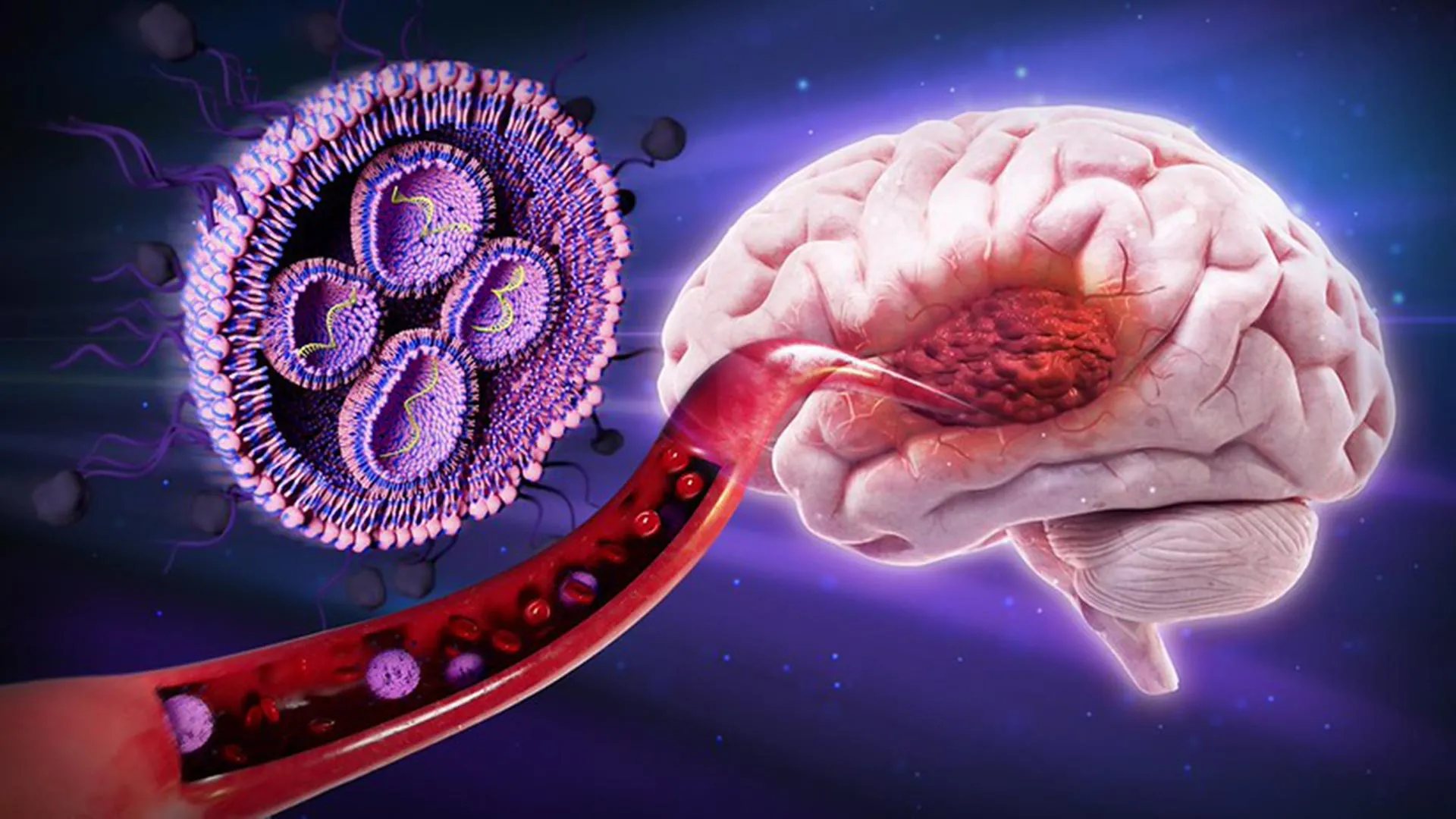
Researchers at Oregon State University have pioneered an innovative experimental strategy to combat glioblastoma, the most aggressive form of brain tumor. Alarmingly, fewer than 30% of patients survive beyond two years after diagnosis.
Led by Ole Talatulla, Olena Talatulla, and Yoon Tae-goo from the OSU College of Pharmacy, the study addresses two critical challenges that have historically hindered effective glioblastoma treatment. First, therapies must effectively penetrate the blood-brain barrier—a complex network of cells designed to safeguard the central nervous system from harmful substances in the bloodstream. Second, any treatment must specifically target tumor cells while sparing healthy tissue.
Revolutionary Sugar-Coated Nanoparticles Target Brain Tumors
The research team utilized mouse models to evaluate lipid nanoparticles infused with genetic material that aims to reactivate the body’s natural ability to suppress tumor growth. The nanoparticles were coated with a sugar layer, enhancing their ability to infiltrate the brain and accumulate within tumors.
This innovative approach led to a remarkable 50% increase in the median survival time of glioblastoma-affected mice, according to findings published in the Journal of Controlled Release.
The sugar coating comprised mannose, a substance closely related to glucose, the body’s primary energy source. Cells lining the brain’s blood vessels contain a transporter known as GLUT1, which facilitates glucose transport into the central nervous system. Notably, GLUT1 can also identify mannose, which enables the coated nanoparticles to traverse the blood-brain barrier utilizing the same pathway.
“The bloodstream has high concentrations of glucose, which means the nanoparticles compete for GLUT1’s attention,” Ole-Taratula explained. “To succeed, the nanoparticles require a densely coated sugar surface, which is our primary innovation. By chemically bonding mannose to cholesterol—the fundamental structural element of nanoparticles—we enhanced surface coverage by six times.”
Effective Delivery of Tumor Suppressor mRNA
The nanoparticles carried messenger RNA (mRNA) that directs cells to produce PTEN, a crucial protein that helps manage uncontrolled tumor growth. Notably, PTEN is often absent or inactive in glioblastoma cells.
To ensure the mRNA remains intact until it reaches its intended target, researchers incorporated a positively charged cholesterol derivative that securely encapsulates the genetic material within the nanoparticles.
Moreover, glioblastoma cells exhibit elevated GLUT1 production, which allowed the sugar-coated nanoparticles to amass more significantly within the tumor once inside the brain.
“Glioblastomas are metabolically reprogrammed and express GLUT1 at three times the normal level, allowing particles to preferentially gather in tumor tissues post-blood-brain barrier crossing,” noted Olena Taratura. “Restoring PTEN expression in these tumor cells successfully reinstated growth control, resulting in tumor shrinkage without any measurable organ toxicity after repeated administration.”
Challenging and Lethal Cancer
Glioblastoma affects approximately 3.19 individuals per 100,000 in the United States. It is more prevalent in men compared to women, with a median age of diagnosis at 64 years. Sadly, over 95% of patients succumb to the disease within five years of diagnosis.
Additional contributions to this study came from Vincent Cataldi, Vladislav Grigoriev, Neera Yadav, Tetiana Korzun, Chao Wang, and Adam Alani from the School of Pharmacy.
This research received support from the National Cancer Institute of the National Institutes of Health, the Eunice Kennedy Shriver National Institute of Child Health and Human Development, and the National Research Foundation of Korea.
Source: www.sciencedaily.com