


World War II Shipwreck Off Albania Becomes Refuge for Lionfish and Mediterranean Monk Seals
A World War II hospital shipwreck off the coast of Albania has become a thriving artificial reef, attracting dozens of marine species — including invasive lionfish and a rare Mediterranean monk seal. Researchers are now examining how shipwrecks affect local ecosystems and whether they provide benefits or create new risks for marine life.
The hospital ship Po sank in Vlore Bay in 1941 after it was torpedoed by a British Fairey Swordfish aircraft during the Greco-Italian War. Today, more than 80% of the wreck’s surface is covered with marine organisms, according to a study published in the journal Frontiers in Ocean Sustainability.
The colonization of submerged structures by marine organisms is known as the artificial reef effect. Shipwrecks provide shelter, breeding areas and feeding grounds, while algae and other organisms grow across their surfaces and attract fish, molluscs and other marine animals.
Latest videos fromLive Science
Although researchers have studied the wider Bay of Vlore, little historical or quantitative information existed about the biological communities living directly on the Po shipwreck. The new study investigated how the wreck has changed the seafloor environment and how marine species have colonized its structure.
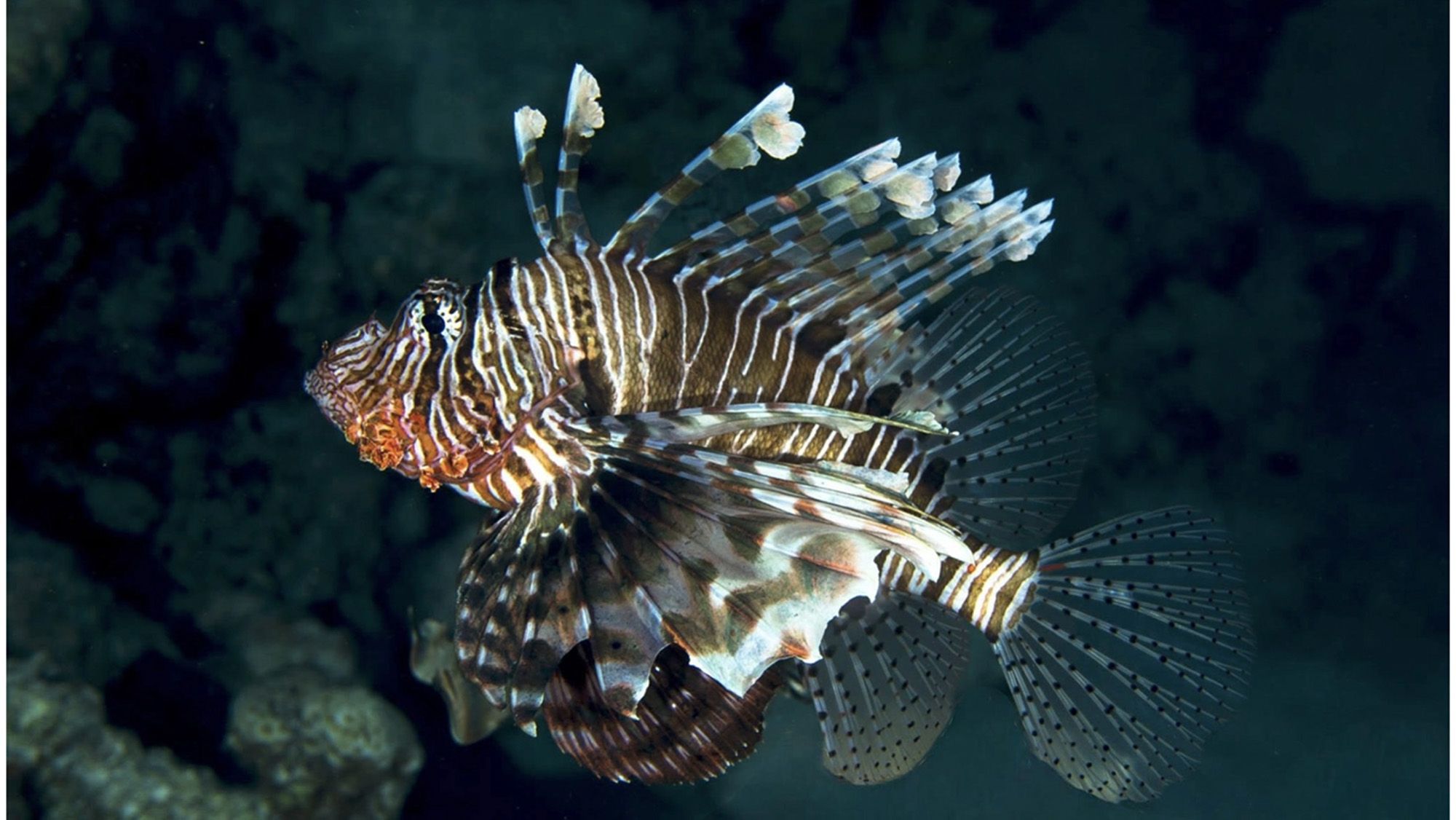
Between June 2022 and September 2024, researchers recorded as many as seven lionfish (Pterois miles) around the wreck at the same time. The species is native to the warm coastal waters and coral reefs of the western Indian Ocean and the Red Sea, but it has become an invasive species in the Mediterranean.
At approximately 800 miles (1,300 kilometers) from its native range, the lionfish sightings near Albania represent one of the northernmost records of the species in the Adriatic Sea. The researchers suggested that shipwrecks may help invasive fish establish themselves in waters outside their traditional habitats.
“The effects of climate change are now sadly well known and predictable,” study co-author Simone Modugno, a biologist and scientific diver at the University of Ferrara in Italy, told Live Science. He said rising temperatures, marine heatwaves and changing salinity are helping tropical and invasive species expand into new areas.
The World War II hospital ship Po is now home to a variety of marine animals and plants.
Image credit: Mauro Pazzi
Lionfish are not the only nonnative organisms spreading through the Mediterranean. Species from the Red Sea can enter the region through the Suez Canal, and warmer ocean temperatures may allow them to survive farther north. Modugno warned that lionfish populations could create serious ecological problems along the Adriatic coast within the next decade.
“For at least three years, I have observed a steady and unstoppable increase in Pterois miles along Albania’s coastline,” Modugno said. “The Mediterranean monk seal has also returned to the region, alongside other invasive plants, molluscs and shellfish. Like the coasts of Greece and southern Italy, Albania is experiencing intense overgrazing, while lionfish numbers are rapidly increasing.”
Despite concerns about invasive species, the wreck also supports native marine life. Researchers identified 28 fish species living around the ship, along with egg masses from squid in the family Ommastrephidae.
The team also documented sightings of the endangered Mediterranean monk seal (Monachus monachus). In August 2023, researchers photographed a seal resting inside a sheltered cavity of the shipwreck. It was the first confirmed sighting of a monk seal in Vlore Bay since 1996.
Mediterranean monk seals typically give birth and rest in secluded sea caves. Tourism, coastal development and other human activities have reduced access to safe natural habitats, while fishing gear can cause fatal entanglements. The discovery suggests that shipwrecks may provide important resting areas for seals when their natural habitat becomes fragmented.
The findings highlight the complicated role of shipwrecks in marine conservation. Artificial reefs can create shelter and increase biodiversity, but they may also help invasive species spread into new waters. Continued monitoring of the Po wreck and the surrounding seafloor will help scientists understand how climate change, artificial reefs and human activity are reshaping the Adriatic ecosystem.
Modugno S, Castro R, Pustina I, Kromidha G, Dedej Z, Meçöllari A (2026). “First assessment of marine geomorphology and biocolonization through the study and investigation of the wreck of the hospital ship ‘Po’ along the Albanian coast (Gulf of Vlora).” Frontiers in Ocean Sustainability, 4:1762680. DOI: 10.3389/focsu.2026.1762680
Topics
Source: www.livescience.com