


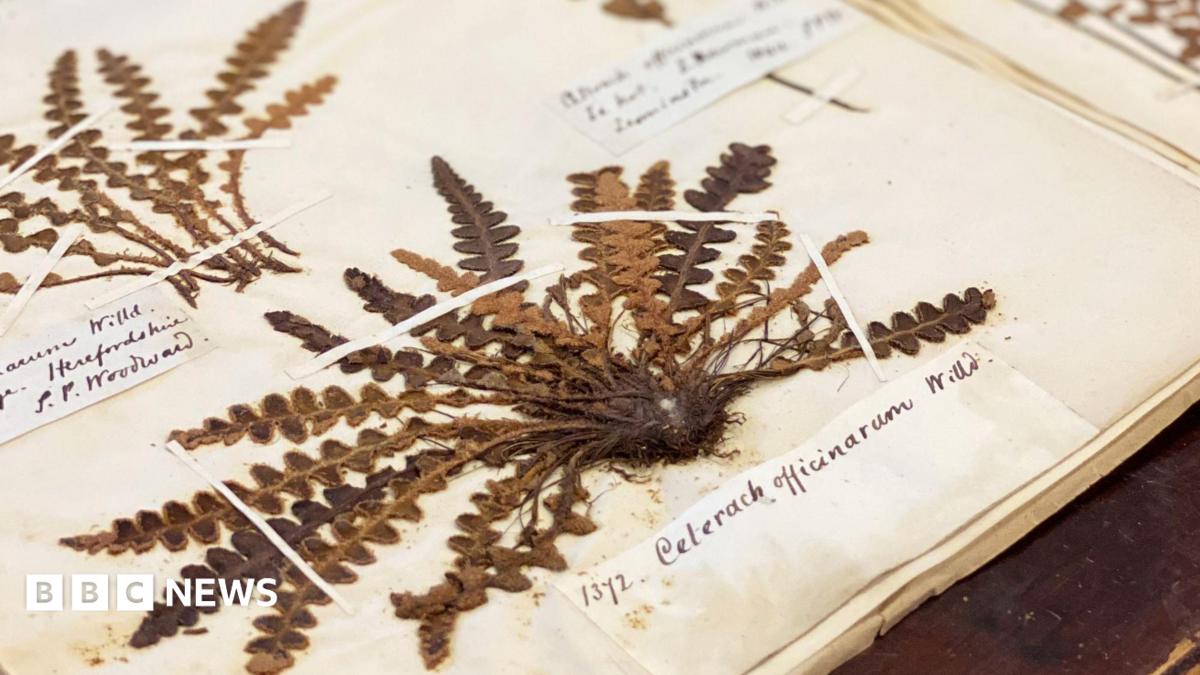
Digitization of ‘hidden’ records reveals Britain’s rich biodiversity, featuring historical flower specimens linked to Charles Darwin.
Over 10,000 dried and pressed specimens at the Royal Agricultural University (RAU) Herbarium in Cirencester, Gloucestershire, are being photographed and digitally cataloged. This initiative aims to enhance accessibility for researchers and promotes the study of historical biodiversity.
Researchers describe the RAU as a “time capsule” of Britain’s biodiversity, opening avenues for groundbreaking research in climate change, habitat management, genetics, and more.
According to Dr. Kerry Hemmings from RAU, the digitized herbarium holds the potential for “significant global impact in biodiversity research.”
She emphasized, “Without digitization and comprehensive metadata, we lack the means to fully understand the collection, which remains a ‘hidden’ natural heritage, waiting to be explored.”
Source: www.bbc.co.uk