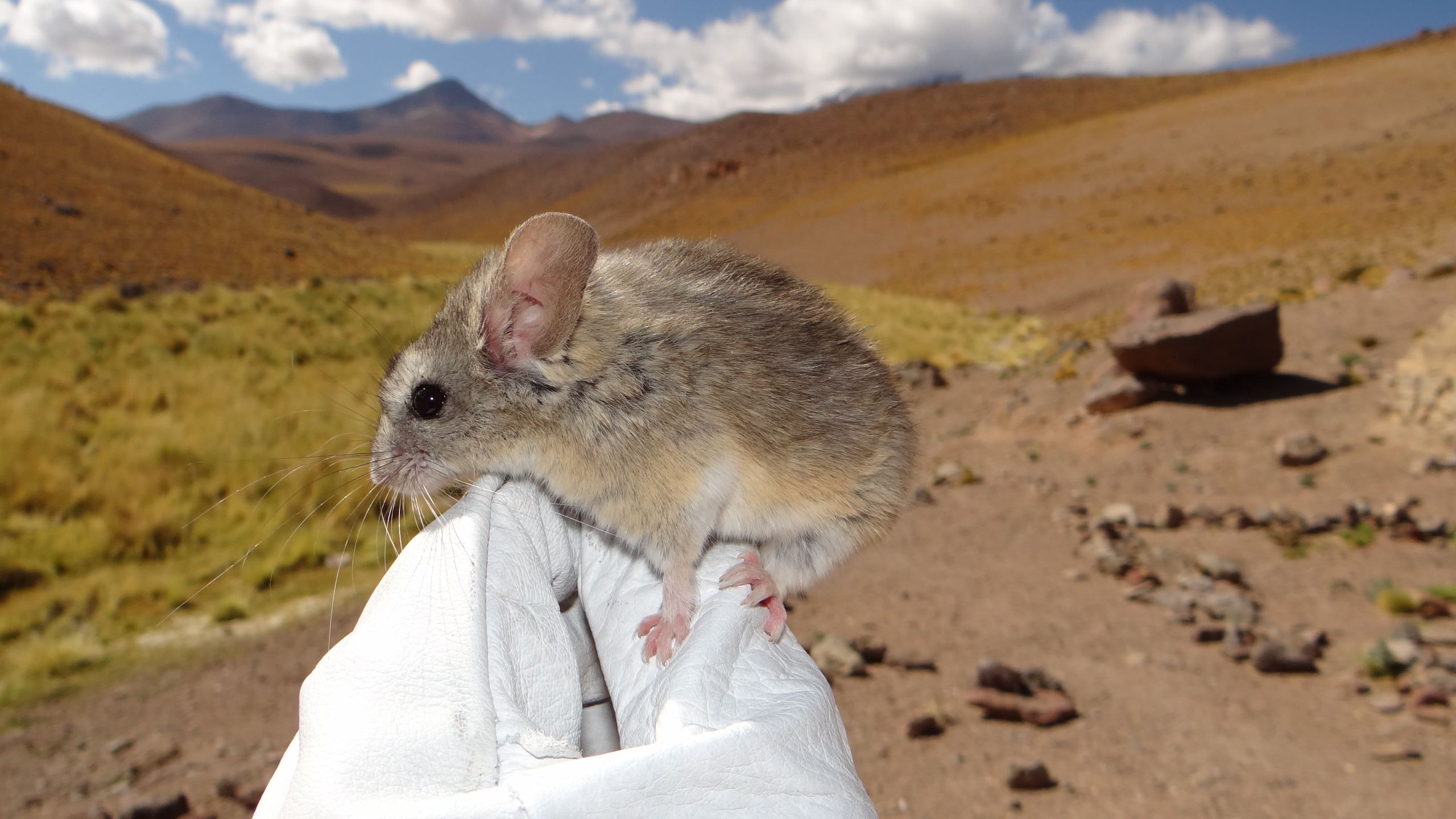
Recent research has revealed how Andean rats thrive at extreme altitudes on dormant, icy volcanoes in the Andes.
These hardy rodents inhabit regions soaring over a mile (1.6 kilometers) high, where conditions are far from ideal for survival. This area has been crowned the highest settlement on Earth. The air is rarefied, temperatures plummet, and the stark desert landscape makes both water and vegetation incredibly scarce.
“As a mountaineer surveying these peaks, it’s astonishing to consider that life exists in such desolate conditions,” remarks Jay Storz, a professor of biological sciences at the University of Nebraska-Lincoln, in an interview with Live Science.
In 2020, Storz led a team to unprecedented heights, documenting the Andean wall rat (Philotis Vacalum) thriving at a record altitude of 22,110 feet (6,739 meters). Notably, these rats were discovered atop Luriaco, documented as the world’s highest active volcano, now dormant and located on the Argentina-Chile border.
A recent study, published on July 9th in the journal Science, unraveled the biological adaptations enabling these mice to survive in such harsh environments. Remarkably, they have evolved to consume normally toxic plants.
Before this discovery, it was believed that mammals could survive only up to about 18,000 feet (5,500 m). But these resilient rodents have shattered that ceiling, continuing to thrive even at lower altitudes.
“The extraordinary aspect of this species is its expansive elevation range, spanning from sea level along the Chilean desert coastline to the highest peaks in the Andes,” explained Storz.
Subscribe for the latest groundbreaking discoveries delivered to your inbox.
To further study this fascinating rodent, the research team conducted surveys in lowland, midland, and highland regions from 2020 to 2023. Employing a mix of mountaineering and animal research techniques, Storz and his team ascended mountains, setting traps to capture and analyze the rats.
While acclimatized mountaineers can endure these high altitudes briefly, Storz notes that these conditions remain “far from acceptable for long-term human survival.”
Expeditions pose significant risks, even to seasoned climbers. One of Storz’s colleagues was evacuated during a previous expedition in Peru due to pulmonary edema—a critical altitude sickness characterized by fluid accumulation in the lungs.
Storz and team member Mario Pérez Mamani at the Huarca Huarca summit in Peru.
(Image credit: Jay Storz)
Some samples have been sent to a lab in Chile for deeper investigation. The process involves placing the mice in controlled conditions to check how they adapt to extreme cold and oxygen scarcity. Additionally, the team’s genomic analysis showed local adaptations correlated with different altitudes; those from higher elevations exhibited superior temperature and oxygen regulation compared to their lowland counterparts, as stated by the University of Nebraska-Lincoln.
Researchers found that high-altitude mice possess genetic changes enabling them to process and detoxify otherwise harmful plants, aiding their survival in sparsely vegetated habitats.
Observations also indicated that higher-altitude mice exhibit more daytime activity, likely due to fewer predators and warmer conditions during those hours. Despite these adaptations, genetic similarities remain prominent across all rats, with overlaps among populations indicating no isolation of high-altitude individuals.
In their study, not all mice survived the process. To gain insights into their biology, researchers euthanized some specimens for tissue analysis. These specimens also serve as “voucher” representatives, contributing to museum collections for ongoing study.
Storz emphasized the importance of preserving specimens for future research and confirmed that the study did not threaten the mouse population, as they were collected humanely.
“Kings of the Mountain”
Graham Scott, co-author and biology professor at McMaster University, highlighted that the core message of this research showcases life’s ability not only to endure but to flourish in extreme conditions. The Andean rats achieve this through specialized adaptations to combat cold, oxygen scarcity, and limited food supply.
“This truly illustrates the fascinating complexity of evolution, positioning these animals as rulers of their high-altitude realms,” remarked Scott.
Living in such harsh conditions likely has its benefits. Scott noted that competition might drive rats to reside at such elevations, combined with their fearless nature in the absence of predators.
But an intriguing question surfaces: Are there any animals that thrive at even higher altitudes?
“Birds can often be challenging to classify since they take to the skies. However, we believe these rats are likely the highest-altitude land mammals,” Scott clarified.
Liphardt, S., Bautista, N.M., Quiroga-Carmona, M., Herrera, N.D., Bloomer, L.M., Opazo, J.C., Hoffman, F.G., Saleem, R., Somo, D.A., Derbas, F., Thurman, T.J., Wheeler, T.B., Shaw, D.E., Walt, H.K., Harter, T.S., McClelland, G.B., Scott, G.R., Sabato, P., Chevillon, Z.A.,… Storz, J.F. (2026). Adaptation to extreme elevational gradients in the Andean shrew, the world’s highest mammal. Science, 393(6807), eaec8347.