



Testosterone for Menopause: What the Evidence Really Shows
If you are approaching menopause, you may see online ads promising that testosterone can relieve hot flashes, brain fog, fatigue and other symptoms. Although some menopause treatments are approved by the U.S. Food and Drug Administration (FDA) and supported by strong evidence, testosterone therapy has considerably less evidence behind it.
Doctors are prescribing testosterone to more menopausal patients. A 2026 survey conducted in the United States found that more than 90,000 off-label testosterone prescriptions were recorded in 2025, primarily for women ages 45 to 64 and people diagnosed with menopause. That represented a 58.7% increase from 2024.
These prescriptions are considered “off-label” because the FDA has not approved testosterone as a treatment for menopause, perimenopause—the transition to menopause—or postmenopause, the period after menopause.
So, does testosterone actually relieve menopausal symptoms? Current research suggests that the answer is complicated: testosterone may help some postmenopausal women with a specific sexual-health condition, but there is no strong evidence that it improves most common menopause symptoms.
Testosterone treatment for menopause is gaining popularity, but experts say evidence supporting its use is limited.
Image credit: Bloomberg via Getty Images
Does menopause cause a major drop in testosterone?
Although testosterone is often called the “male” hormone, women also produce it, usually at lower levels than men. However, the idea that women experience a major testosterone or “androgen” deficiency as menopause approaches is a common misconception, according to Susan Davis, professor of endocrinology and director of the Women’s Health Research Program at Monash University in Australia.
Testosterone levels do not appear to decline sharply at menopause. Data from Jean Hailes indicate that levels change gradually across adulthood, while research has found that menopause is not associated with a significant decline in testosterone.
Instead, estrogen and progesterone fluctuate during perimenopause and then decline rapidly. These hormonal changes are more clearly linked to many familiar symptoms of perimenopause and menopause.
Placebo-controlled trials have not shown that testosterone consistently reduces brain fog or improves well-being, mood, bone density or muscle function in menopausal patients, Davis said. She has conducted many of these trials.
“Telling women that fatigue, low mood, and brain fog are symptoms of androgen deficiency is completely untrue,” Davis said.
On Sept. 17, the FDA held a public workshop on testosterone use in menopausal women. The agency said more evidence is needed to fully evaluate testosterone as a treatment for menopausal symptoms.
Can testosterone improve sexual desire after menopause?
There is some evidence that testosterone may help postmenopausal women with hypoactive sexual desire disorder, or HSDD.
HSDD involves persistently low or absent sexual desire that causes distress. It can affect people of all ages and is not unique to menopause, although it can occur during perimenopause and after menopause.
A review of 36 randomized trials involving 8,480 participants found that postmenopausal women using a testosterone skin patch experienced an average of 0.85 additional satisfying sexual events per month compared with those using a placebo.
The effect was modest. Nanette Santoro, professor of obstetrics and gynecology at the University of Colorado School of Medicine, said that if testosterone produced a very large benefit, it would likely have been apparent in the research.
“Of all the studies that have been done, I think if there was a huge effect, you would have seen it.”
Susan Davis, head of the Women’s Health Research Program at Monash University
Stories about postmenopausal women experiencing “amazing sexual awakenings” after taking testosterone have circulated recently, Santoro said. However, those anecdotes are not supported by strong clinical data.
Testosterone has not been approved by the FDA to treat HSDD in menopausal women. Flibanserin, a medication that affects serotonin in the brain, has been approved to treat HSDD in perimenopausal women younger than 65.
Why the placebo effect makes testosterone research difficult
The placebo effect can complicate studies of testosterone. People may report improvements in symptoms or well-being even when they receive a treatment that contains no active ingredient.
Davis said that approximately one in three participants in her patient group reported feeling better while taking a placebo. Other studies have found similar results, with about 30% to 40% of participants in placebo groups reporting improvements in sexual desire and satisfaction.
This does not mean that testosterone never helps anyone. It means that studies have not demonstrated a consistent benefit for most menopausal symptoms beyond its possible effect on HSDD.
The UK National Institute for Health and Care Excellence is supporting the ESTEEM trial, a large study designed to address some of these unanswered questions. Researchers plan to test whether testosterone cream can reliably improve quality of life in hundreds of menopausal women.
The cream delivers testosterone through the skin and is applied to the lower abdomen and thighs. Researchers will track symptoms including sleep quality, memory, anxiety, migraines, weight and overall health. Results are currently expected by 2028.
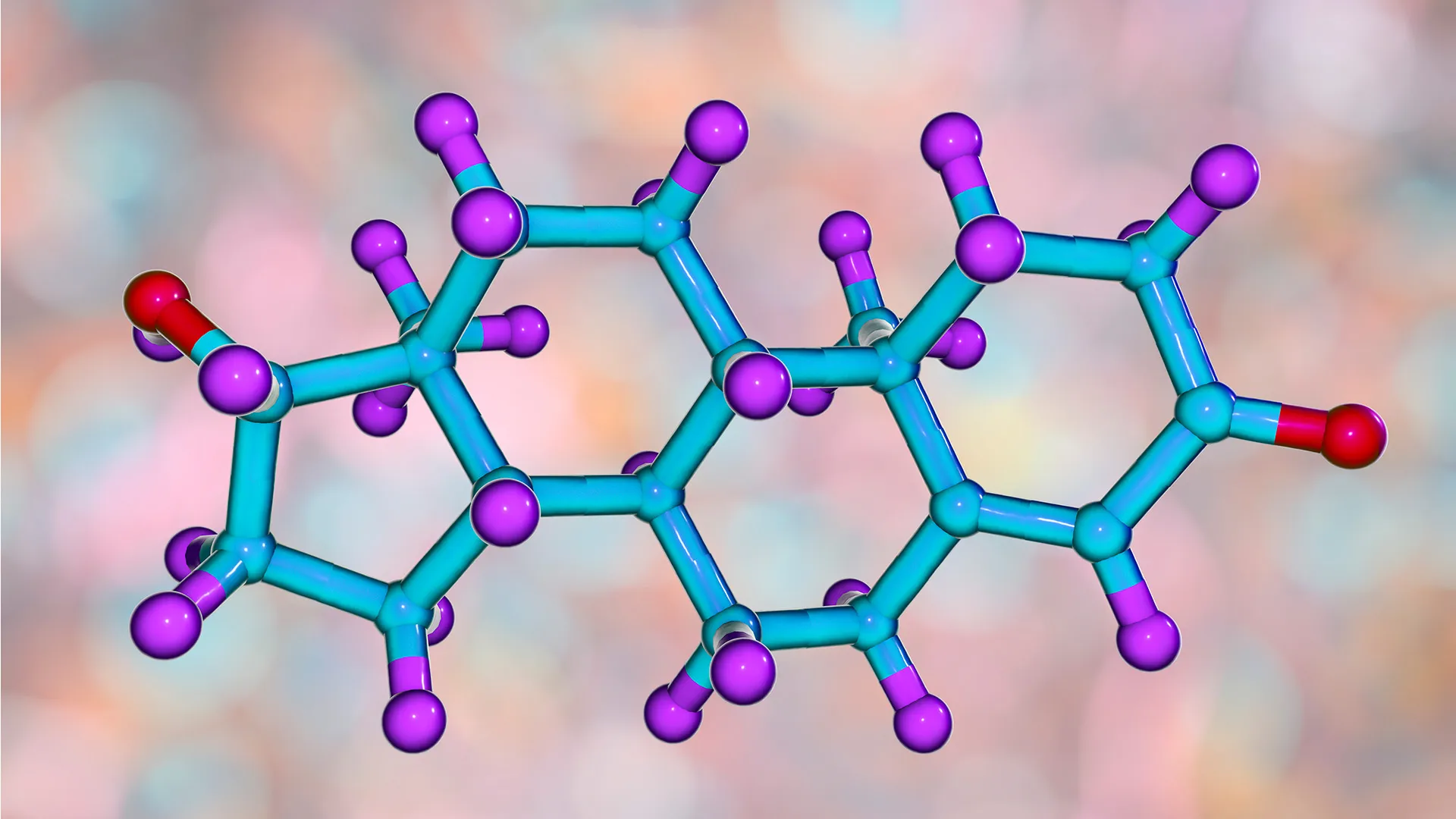
Testosterone levels do not appear to drop sharply around menopause.
Image credit: KATERYNA KON/SCIENCE PHOTO LIBRARY, Getty Images
Is testosterone therapy for menopause safe?
Testosterone treatments available in most countries were not specifically formulated for women. Only four countries—Australia, South Africa, New Zealand and England—have approved a testosterone cream formulated specifically for women.
These products contain lower doses than testosterone treatments intended for men and are especially used for postmenopausal women with HSDD.
In the United States, doctors may adapt products approved for men for use in female patients. This can result in substantial differences in dosage, and the effects of these dosing regimens are not well understood.
Excessive doses can cause unwanted masculinizing effects, including an enlarged clitoris, voice changes, thinning hair, baldness and rapid growth of facial or body hair. Low doses may cause mild acne, oily skin and a slight increase in facial and body hair growth.
The potential effects of excess testosterone on cardiovascular health and breast cancer risk also remain poorly understood. Testosterone is considered off-label in the United States, meaning that its safety, effectiveness and appropriate dosage for menopause have not been evaluated and approved by the FDA.
An FDA spokesperson told Live Science that doses and formulations approved for men may differ significantly from those considered appropriate for women, whose testosterone levels and metabolic profiles are different.
Santoro described a patient who received extremely high levels of testosterone through an implant placed under the skin. The patient experienced hair loss, breast shrinkage and clitoral enlargement. Santoro said that very high doses are being prescribed to some women in North America, although their safety has not been studied.
What should women know before considering testosterone?
Menopause care should include an honest discussion of potential benefits, risks and alternatives. Lifestyle factors such as diet and exercise may also be part of that discussion, as can the social pressures surrounding sexual activity, body image and aging.
For now, the evidence does not strongly support testosterone as a general treatment for hot flashes, fatigue, brain fog, low mood, bone-density changes or reduced muscle function. It may have a modest role for some postmenopausal women with HSDD, but dosing and safety should be discussed carefully with a qualified health professional.
As Davis put it, be wary of anyone who claims to have an answer that no one else has.
This article is for informational purposes only and does not provide medical advice.
Source: www.livescience.com