


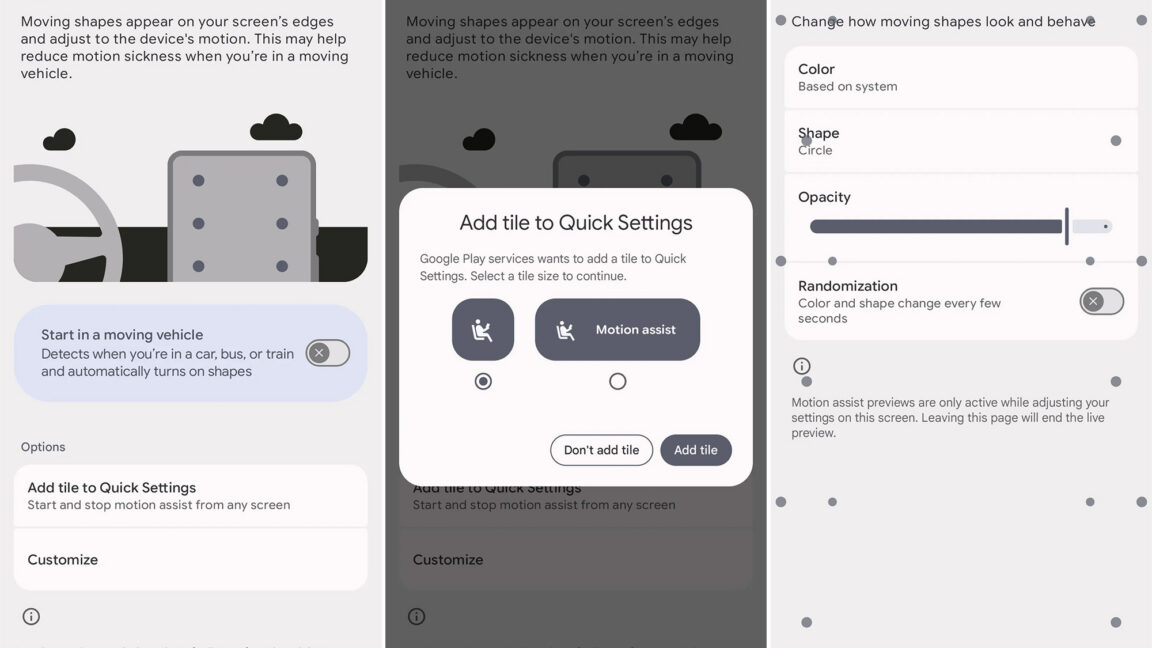
People who experience motion sickness often feel nauseous when using a phone or reading in a moving car. Now, Google is slowly bringing an iPhone-style solution to Android. The new Motion Assist feature is designed to make it easier to use your smartphone while traveling.
Motion sickness occurs when the signals from your inner ear do not match what your eyes see. For example, sitting in a moving vehicle while looking at a book or phone screen can create a sensory mismatch that leads to nausea and discomfort. Apple addressed this issue in iOS 18 with a feature called Vehicle Motion Cues, which displays a pattern of moving dots along the edges of the screen to help reduce motion sickness.
Google’s answer, called Motion Assist, works in a similar way. Google began testing the Android feature in 2024, but it remained limited to internal testing for some time. According to an Android Authority report, Motion Assist is now becoming available on select Pixel phones running Android 17 through a phased Google Play Services rollout. No separate app or manual update is currently required.
When Motion Assist is enabled, small dots appear around the edges of the phone’s display while you use it in a moving vehicle. The feature uses data from the phone’s accelerometer and gyroscope to move the dots in response to changes in motion. For example, the dots may shift toward the bottom of the screen when the vehicle accelerates forward or move toward the left when the vehicle turns right.
These animated dots are intended to mimic how objects in the real world move through your field of vision, helping reduce the disconnect between your eyes and inner ear. Google’s Android implementation is similar to Apple’s Vehicle Motion Cues feature, which works as follows:
Source: arstechnica.com