


A small clinical trial suggests psilocybin-assisted therapy may help loosen rigid thought patterns linked to anorexia nervosa, but researchers stress that the psychedelic drug is not a standalone cure.
:focal(1408x912:1409x913)/https://tf-cmsv2-smithsonianmag-media.s3.amazonaws.com/filer_public/03/9d/039dfbc7-b058-4b71-876d-a8baec6035af/psilocybe_pelliculosa_122504.jpg)
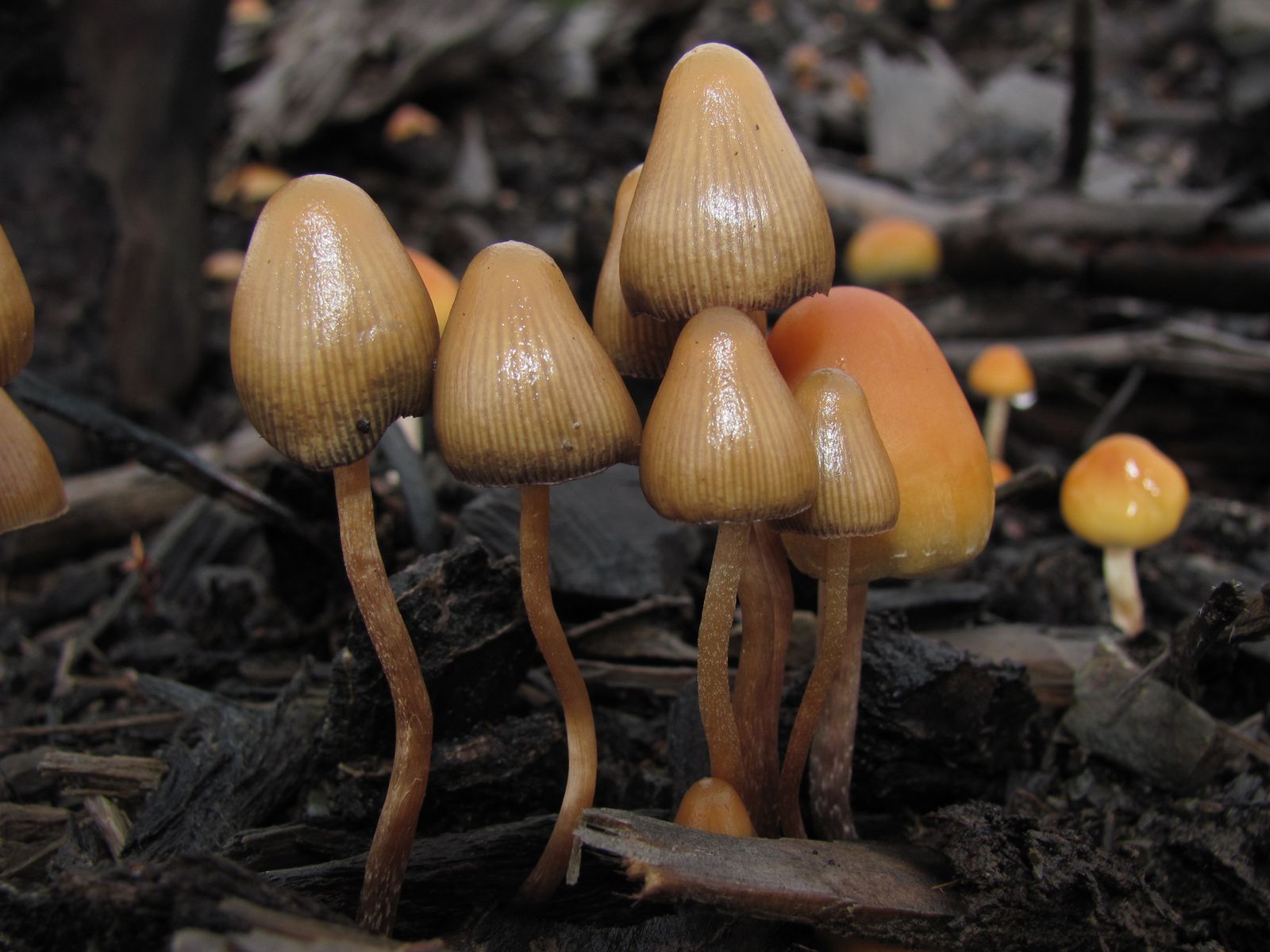
shroom360 (via Wikimedia Commons, CC BY-SA 3.0)
During treatment sessions involving psilocybin—the psychoactive compound found in so-called magic mushrooms—some people with anorexia nervosa asked to try foods they would normally avoid. The unexpected requests were part of a small clinical trial led by researchers at Imperial College London, who examined whether psilocybin-assisted therapy could help people with eating disorders characterized by severe food restriction.
In many clinical studies, requests to eat during a drug session might be treated as a distraction. But Jennifer Danby, the trial’s lead therapist, said that allowing participants to experiment with food was an important part of the treatment. “Sometimes they could taste something and think, ‘Oh, it feels good to eat when I’m hungry,’ or, ‘It feels good to be fed something that I wouldn’t normally eat,’” she said. “We were actively working on people’s relationships with food.”
The results of the small trial were published July 8 in the British Journal of Psychiatry. The findings offer preliminary evidence that psilocybin, when paired with intensive psychological support, may help reduce symptoms of anorexia nervosa. At the end of the six-week treatment period, 18 of the 21 participants showed improvement in their eating disorder symptoms.
“The treatments we currently have are not effective enough for enough people,” says Danby, who has worked with people with eating disorders for more than 15 years. The study suggests psychedelic-assisted therapy could eventually provide another option for treating one of psychiatry’s most challenging conditions.
Psilocybin has also produced promising results in clinical research involving depression, post-traumatic stress disorder, alcohol use disorder and anxiety. In these studies, participants generally receive one or more doses during carefully supervised sessions. Therapists prepare participants beforehand and help them process their experiences afterward.
Quick Overview: Psilocybin and Magic Mushrooms
Psychiatrists and neuroscientists have long wondered whether psychedelics could help treat other mental health conditions, including anorexia nervosa. In 1959, a French psychiatrist reported treating women with anorexia using psilocybin. A 2023 American pilot study also found that psilocybin was associated with symptom improvements in some, but not all, of ten female participants with anorexia. The Imperial trial is the largest human clinical study of its kind to date, although substantially larger studies will be needed.
Danby says psilocybin may be especially relevant to anorexia because the disorder is often associated with rigid thinking. Patients may follow inflexible rules about food and exercise, struggle with uncertainty and find it difficult to imagine life without the illness.
“Typically, people have a very black-and-white mindset,” Danby says. Psychedelics, by contrast, may temporarily increase a person’s ability to consider different perspectives and recognize new possibilities. Even a short period of greater psychological flexibility could make some patients more receptive to recovery, she adds.
When early psilocybin research suggested that the drug might disrupt rigid thinking in people with depression, Claire Foldi, a physiology researcher at Australia’s Monash University, noticed similarities with the inflexible, rule-bound behavior seen in rats used to model anorexia.
“This overlap was difficult to ignore,” Foldi says. Rather than assuming psilocybin would work for every mental illness, she wondered whether the drug might target cognitive rigidity across several different disorders.
Foldi proposed that psilocybin could improve the cognitive flexibility and decision-making needed for anorexia treatment to succeed. In a 2024 study, her team tested the idea in female rats. The researchers restricted the animals’ food and gave them voluntary access to running wheels, creating symptoms that resemble aspects of anorexia.
In one group, psilocybin helped the rats maintain their weight. In another, the drug improved the animals’ ability to adapt when researchers changed the behavior that led to food rewards—an experimental measure of cognitive flexibility.
However, researchers have not yet proved that psilocybin is an effective treatment for anorexia nervosa in humans. Foldi says rodent studies may help establish possible mechanisms, while human trials show how strongly the drug’s effects depend on the psychological and therapeutic environment.
/https://tf-cmsv2-smithsonianmag-media.s3.amazonaws.com/filer_public/9e/01/9e01b2f8-fddd-4e22-be01-7e2abcb1101f/gettyimages-155373812.jpg)
fotografixx (from Getty Images)
The recent clinical trial involved 21 women who had experienced anorexia for more than three years. The average duration of illness was 11 years, and participants had not achieved long-term remission despite previous treatment. Each participant was required to have support from family members or close friends and to receive care from a specialist eating disorder service within the United Kingdom’s National Health Service.
Before receiving psilocybin, participants completed a series of telephone and in-person interviews with psychiatrists and therapists. Establishing trust was considered essential because anorexia is often closely tied to a need for control, while psychedelic experiences can require people to tolerate uncertainty and relinquish some control.
The treatment consisted of three psilocybin sessions, each separated by two weeks. Participants received 1 milligram of synthetic psilocybin during the first session, followed by 25 milligrams during each of the next two sessions. They lay down wearing eye masks and listened to a specially designed playlist through headphones.
Although participants arrived with personal goals for the sessions, therapists encouraged them to remain open to unexpected experiences. Some participants turned inward and needed little intervention. Others became frightened and required reassurance and physical support.
Rather than directing participants toward a predetermined insight, therapists followed each person’s experience. “There was no agenda of what we wanted people to get out of each experience,” Danby says. “That was largely up to them.”
In psychedelic therapy, patients are often advised to fully experience the effects of the drug. If fear or panic arises, they may be encouraged to accept the emotion and explore it. For people with anorexia, however, that approach can unintentionally reinforce counterproductive patterns.
Danby says the eating disorder may function as a survival strategy. Pressuring patients to surrender control could cause them to hold on more tightly to the disorder. “We didn’t want it to become a fight,” she says.
Instead, therapists encouraged participants to explore their resistance and examine the emotions beneath it. “Why don’t you take shelter in the resistance? Why don’t you look underneath it?” Danby recalls asking. If someone said they were afraid, she might respond, “Okay, let’s explore that fear.”
After each session, participants met with a therapist to discuss their experiences and consider how any insights could be applied to daily life. Anorexia can become a central part of a person’s identity and routine, particularly when the illness has lasted for many years. Treatment generally involves gradually changing the habits and beliefs that have developed around the disorder.
Psilocybin may make some patients more open to change and help them consider new paths toward recovery, but that openness can fade without continued support. Danby says families and clinical teams must be prepared to reinforce those changes after the psychedelic sessions end.
The trial’s results reflected that complicated process. Nearly all participants reported an initial reduction in symptoms, and self-reported symptoms remained lower across the group one year later. Participants also said they became more aware of the seriousness of their illness and more willing to consider recovery.
However, the level of improvement differed substantially among participants, and the benefits were not always sustained. Body mass index did not change significantly during the six-week follow-up period, although weight restoration was not the trial’s primary focus and the study did not include a nutritional intervention.
Most side effects were mild or moderate, with headaches and nausea reported most often. One participant attempted suicide twice, seven and nine months after receiving psilocybin. The suicide risk among people with anorexia is already high at baseline, and investigators concluded that the attempts were unlikely to be related to the drug.
The study also had important limitations. The participant group lacked racial and cultural diversity: 16 of the 21 participants were White and British. The trial also did not include an individual placebo control, making it difficult to separate the effects of psilocybin from the approximately 50 hours of therapeutic contact participants received.
“Further research is needed to assess how these findings apply to a broader and more diverse population,” Hannah Douglas, the study’s first author and a doctoral student at Imperial College London during the research, said in an statement. She described the findings as encouraging but preliminary.
Danby cautions against viewing psilocybin as a magic pill. “When you take psilocybin, you still have chronic anorexia. You wake up malnourished and have a big mountain to climb,” she says.
For patients, recovery may still require developing basic habits that support health and taking small, difficult steps forward. The potential value of psilocybin may not be an immediate disappearance of symptoms, Danby says, but rather a temporary window in which patients can make incremental changes—such as putting on a coat when they feel cold or responding differently to hunger.
Larger, controlled clinical trials will be necessary to determine whether psilocybin-assisted therapy can reliably create that opportunity for people with anorexia nervosa. “Any little bit of flexibility is good,” Danby says.
Source: www.smithsonianmag.com