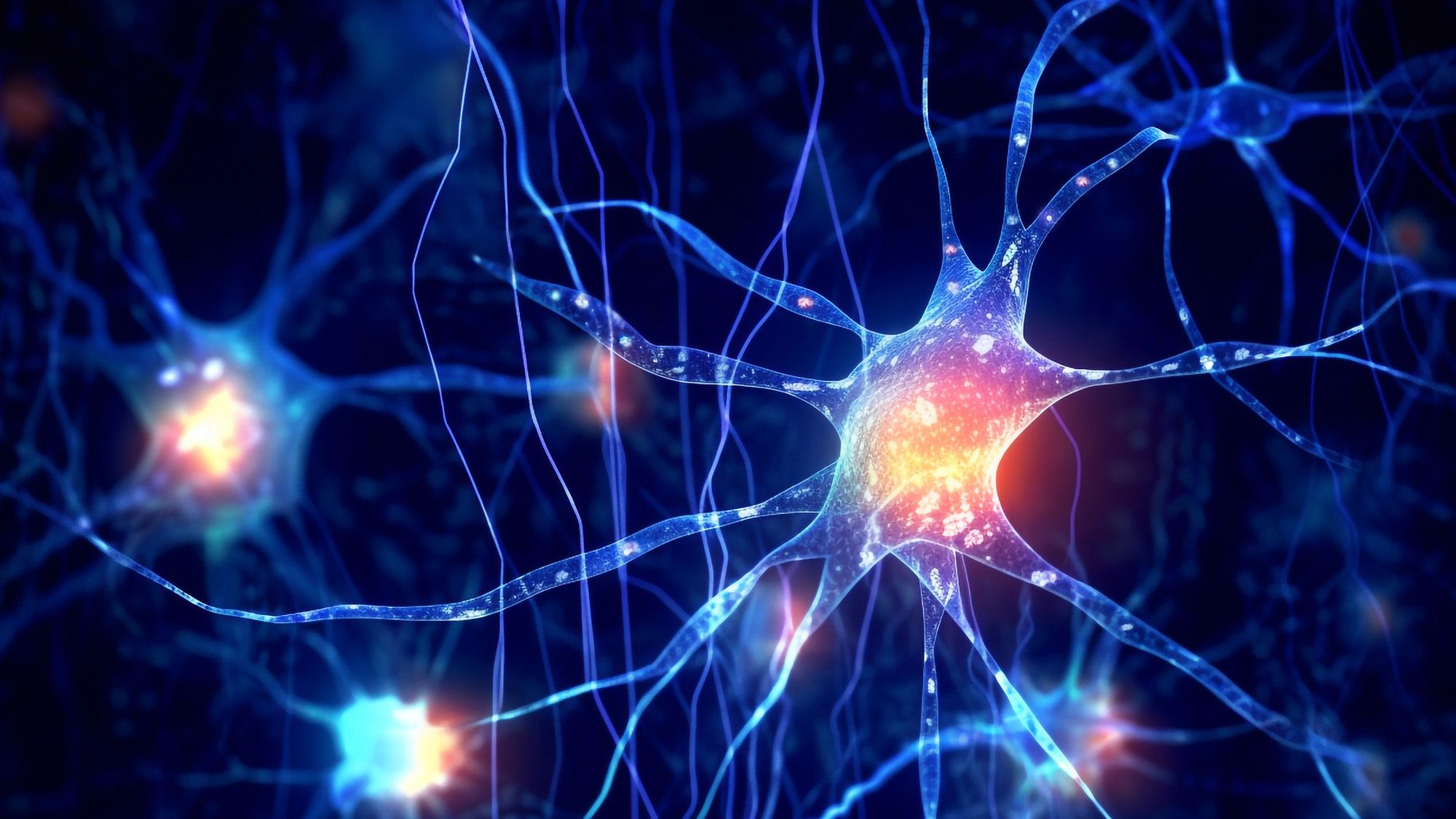
Scientists have developed an experimental approach that may help regenerate neurons lost to Alzheimer’s disease and other neurological conditions, according to new laboratory research. The technique uses a tool called Nano-ERASER to reduce levels of a key protein in brain cells called astrocytes, potentially converting them into neuron-like cells.
The study, published Aug. 26 in the journal Cell Biomaterials, explored whether lowering the protein PTBP1 could encourage astrocytes to develop into neurons.
Adults have a limited ability to produce new neurons. As a result, the brain has few ways to replace cells damaged or destroyed by diseases such as Alzheimer’s. If the experimental treatment can eventually be shown to be safe and effective in people, it could offer a new way to replace lost neurons and restore some brain functions. However, the research is still in its early stages and has only been tested in cells, organoids and mice.
If further studies confirm the findings, the approach could one day help replace neurons lost through neurodegenerative disease. The study authors emphasized that substantial safety testing would be required before human clinical trials could begin.
from the latest videoslive science
Astrocytes are abundant, star-shaped brain cells that support and protect neurons. They help maintain the brain’s chemical environment, provide nutrients and contribute to communication between nerve cells.
PTBP1 is a protein involved in astrocyte development and cell function. Previous research suggested that removing the gene responsible for PTBP1 could convert astrocytes into neurons in mice. However, later experiments challenged those findings, suggesting that the newly formed neurons could not be definitively traced to astrocytes.
That conflicting evidence prompted Xu Peisheng, Ph.D., a pharmacologist at the University of South Carolina and co-author of the new study, to investigate whether astrocytes could be reprogrammed using a different method.
“We found it strange that the two groups reached different conclusions,” Xu told Live Science.
To examine the question, Xu’s laboratory used Nano-ERASER, a technique previously developed by his team. Rather than editing genes, the method uses an antibody to remove PTBP1 from astrocytes. The antibody is packaged inside a polymer gel designed to help it cross the blood-brain barrier, a protective system that limits which substances can enter the brain from the bloodstream.
Get the world’s most fascinating discoveries delivered straight to your inbox.
After the gel delivers the antibodies to astrocytes, the antibodies bind to PTBP1 and activate the cells’ natural machinery for breaking down the protein. The researchers first tested the treatment on human astrocytes grown in laboratory dishes.
Over time, the treated cells lost their distinctive star-like shape and began developing axons, the long structures neurons use to transmit electrical signals. The cells also produced higher levels of proteins typically associated with neurons.
“I think this is a very interesting, fascinating and innovative approach,” said Dr. Christiane Ran, a neuroscientist at Harvard Medical School who was not involved in the study. She noted that the researchers demonstrated that the polymer gel could cross the blood-brain barrier.
The researchers used Nano-ERASER to reduce PTBP1 levels in astrocytes and encourage the cells to develop neuron-like characteristics.
(Image credit: Created by BioRender.com)
The treated cells also displayed electrical activity, suggesting that they were capable of functioning like neurons and firing in synchronized patterns. Similar results were observed in brain organoids, three-dimensional structures grown from human stem cells that model some features of the brain.
The researchers then tested Nano-ERASER in mice genetically modeled to develop Alzheimer’s disease. The animals had lost neurons and developed several features associated with the condition, including brain inflammation, cognitive impairment and the accumulation of sticky protein deposits.
The mice received two intravenous doses of the gel, administered eight days apart. During behavioral tests over the following four weeks, treated mice performed better on memory tasks and built better nests than untreated animals. Brain examinations also showed greater neuron density and lower levels of inflammatory molecules in the treated mice.
Despite these promising results, the study did not definitively prove that astrocytes transformed into neurons inside living mice. The increase in neuron density could have resulted from other neural stem cells or biological processes, Xu said.
“We observed an increase in neuron density in treated mice compared with untreated mice. However, we still cannot rule out the possibility that other neural stem cells also converted into neurons,” he said.
Ran agreed that additional tracing experiments are needed to determine whether astrocytes in the mouse brain actually became neurons. She described the findings as interesting but said researchers must also investigate the treatment’s long-term effects on different types of brain cells.
The researchers plan to study astrocyte reprogramming in living mice in greater detail. Before any human trials, they expect the treatment’s safety and effectiveness to be evaluated in nonhuman primates.
Astrocytes perform essential functions in the brain, so permanently reducing PTBP1 could have unintended consequences. “What effect does chronically decreased PTBP1 have on the brain?” Ran asked.
“It needs to be tested in stages,” she said.
Wang, M., VanderVeen, B., Xu, Z.A., Xu, Y., Mintzer, J., Murphy, A., Zhang, Q., and Xu, P. (2026). Reversing Alzheimer’s disease progression through Nano-ERASER-based adult neural regeneration. Cell Biomaterials, 100575.
Find out how much you know about the human body’s most complex organ with this tool. Take the brain quiz!