


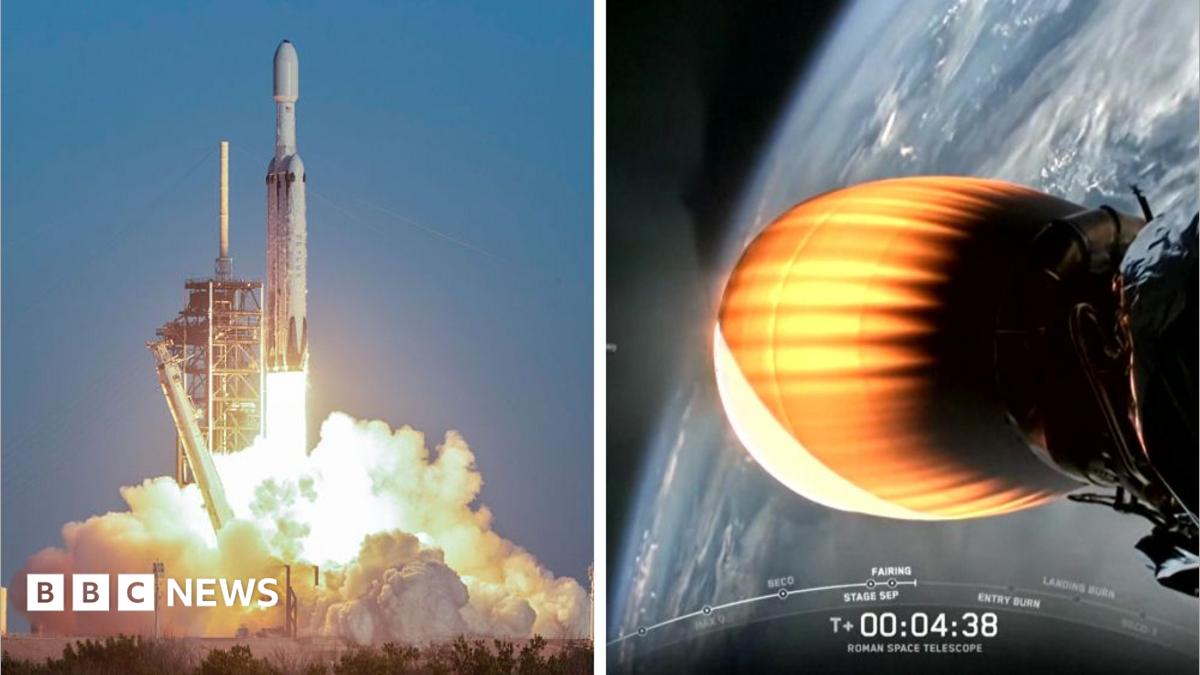
NASA said the Nancy Grace Roman Space Telescope will deliver an expansive view of the universe, helping scientists investigate dark energy and dark matter, discover and study exoplanets, map billions of galaxies, examine black holes, and explore objects ranging from our solar system to the farthest reaches of the observable universe.
Dark matter is an invisible substance believed to act as gravitational glue, holding galaxies and larger cosmic structures together. Dark energy, meanwhile, is thought to drive the accelerating expansion of the universe. Combined, dark matter and dark energy are estimated to account for approximately 95% of the cosmos.
“One of our main goals at NASA is to answer the question: Are we alone in the universe?” Fox said during a press conference on Sunday morning.
Fox said the Roman Space Telescope will provide a major advance in the search for potentially habitable worlds by allowing scientists to study distant planets and analyze the atmospheres surrounding them.
Millard said telescopes such as Roman will help researchers build a “giant cosmic map” showing how the universe has changed throughout its history.
She compared the universe to an onion, with layers that scientists can examine to track how the distribution of galaxies has evolved over cosmic time.
By studying this changing distribution of galaxies, researchers hope to better understand dark matter and dark energy. Although scientists have observed their effects across the universe, their fundamental nature remains one of modern astronomy’s greatest mysteries.
Source: www.bbc.co.uk