


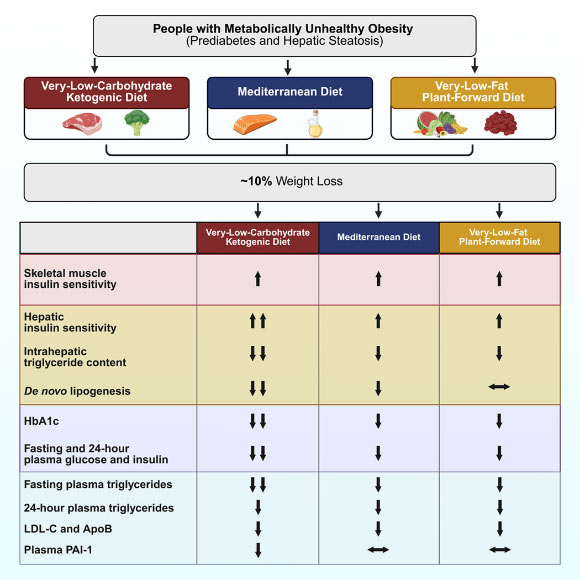
A new randomized clinical trial suggests that diet composition may influence how effectively weight loss reverses obesity-related metabolic damage. Although participants following three different diets lost a similar amount of weight, the very low-carbohydrate ketogenic diet produced greater improvements in liver insulin sensitivity, fatty liver disease, blood sugar, and prediabetes remission. The study was published in the journal Cell Metabolism.
The macronutrient composition of a diet may influence the cardiometabolic benefits of weight loss. Image credit: Petersen et al., doi: 10.1016/j.cmet.2026.07.020.
“Obesity contributes to several metabolic diseases, including atherosclerotic dyslipidemia, prediabetes, and metabolic dysfunction-associated steatotic liver disease. These conditions increase the risk of type 2 diabetes and cardiovascular disease,” said Dr. Samuel Klein of Washington University School of Medicine in St. Louis and his colleagues.
“Insulin-resistant glucose metabolism in skeletal muscle and the liver is a major driver of obesity-related metabolic disease.”
Reducing calorie intake relative to energy expenditure causes weight loss, improves insulin sensitivity in multiple organs, and can reduce or even resolve obesity-related metabolic conditions. For this reason, weight loss remains a cornerstone of treatment for people with obesity and poor metabolic health.
However, the researchers noted that the macronutrient composition of a diet—including its carbohydrate, fat, and protein content—may also affect metabolic health independently of weight loss.
Three widely recommended eating patterns differ substantially in their macronutrient content: the very low-carbohydrate ketogenic diet, the Mediterranean diet, and the very low-fat plant-forward diet.
Previous randomized clinical trials have found that these diets may produce somewhat different weight-loss results. Very low-carbohydrate diets can lead to modestly greater weight loss during the first six months, although that advantage often diminishes over longer follow-up periods.
Until now, it has remained unclear whether these popular diets provide specific metabolic benefits beyond those associated with weight loss alone. Many earlier diet studies have been limited by inconsistent dietary adherence and unequal weight loss between treatment groups.
For the new study, the researchers assigned 55 adults with obesity, prediabetes, and fatty liver disease to one of three diets: a very low-carbohydrate ketogenic diet, a Mediterranean diet, or a very low-fat plant-forward diet. The investigators provided all meals to help ensure that participants followed their assigned diets.
After approximately five months, participants in all three groups had lost about 10% of their body weight.
Each diet improved muscle insulin sensitivity by approximately 50%. However, the ketogenic diet produced substantially greater benefits in the liver.
Participants following the ketogenic diet experienced two to three times greater improvements in hepatic insulin sensitivity than those following the other diets. They also had larger reductions in liver fat, blood glucose, glycated hemoglobin (HbA1c), and fasting insulin levels.
Prediabetes went into remission in 50% of participants in the ketogenic diet group, compared with 29% of those following the Mediterranean diet and 7% of those assigned to the low-fat diet.
Notably, the ketogenic diet did not increase LDL cholesterol or other cardiovascular risk markers compared with the other diets. It also improved several measures of cardiometabolic health, including HDL cholesterol and triglyceride particles, despite providing 73% of calories from fat and a relatively high proportion of saturated fat.
These findings suggest that dietary composition—not calorie restriction and weight loss alone—may play an important role in reversing obesity-related metabolic disease, particularly in people with prediabetes and high liver fat levels.
The researchers cautioned that the trial was small and cannot determine whether a less restrictive reduction in carbohydrate intake, without inducing full ketosis, would produce similar metabolic benefits.
“We know that weight loss improves metabolic health in people with obesity,” Dr. Klein said.
“Our data suggest that, in the presence of high liver fat content and prediabetes, reducing carbohydrate intake may provide important therapeutic effects on metabolism beyond those achieved through weight loss alone.”
“The most surprising finding was that participants in the ketogenic diet group did not experience increases in blood fat or cholesterol levels, even though they consumed the most fat,” said Dr. Max Petersen, also of Washington University School of Medicine.
“GLP-1-based drug therapy has revolutionized the treatment of obesity. Highly effective medications are now available to help people achieve significant weight loss.”
“Our study further shows that specific dietary compositions may provide additional metabolic benefits.”
_____
Max C. Petersen et al. Effect of dietary macronutrient content on the cardiometabolic response to weight loss: A randomized clinical trial. Cell Metabolism, published online August 27, 2026. doi: 10.1016/j.cmet.2026.07.020
Source: www.sci.news