


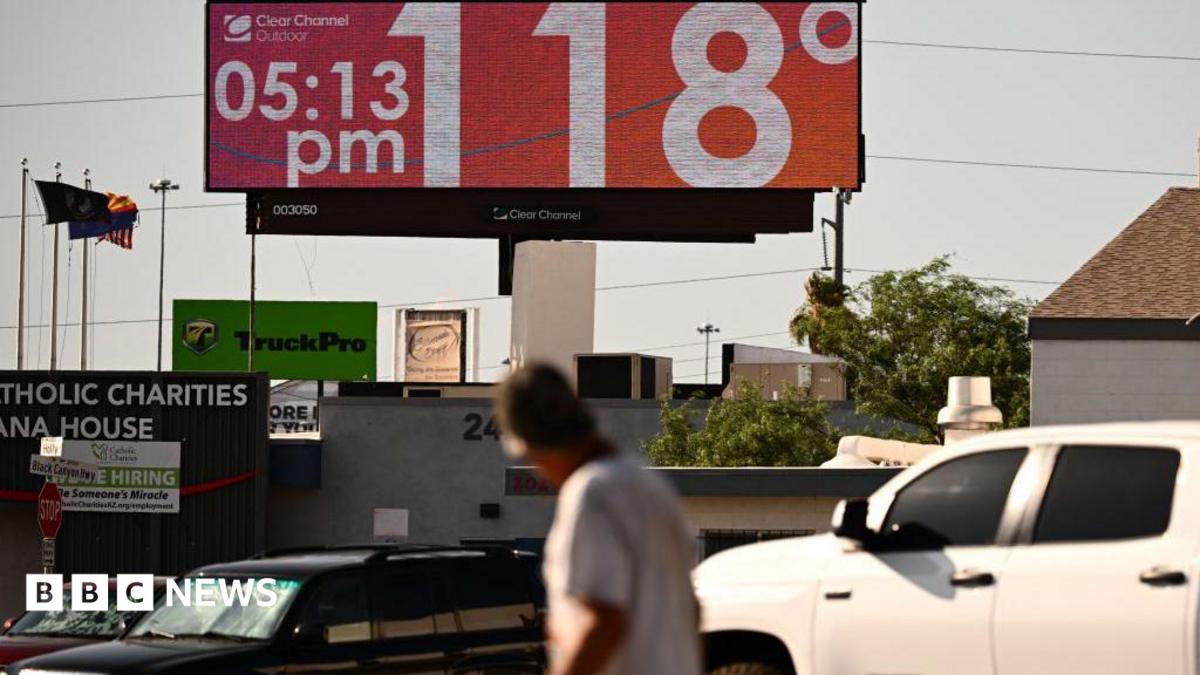
Rudd Keith, the director of the University of Arizona’s Heat Resistance Initiative, revealed to the BBC that institutions like Phoenix are likely to appoint dedicated heat officers. These professionals will oversee heat management efforts and enhance interagency communication regarding extreme heat events.
“Accountability for heat-related issues is crucial. If no one is responsible, it’s easy for the problem to be overlooked,” Keith states, emphasizing the importance of designated heat leaders.
According to Marlon, effective coordination and communication can lead to the establishment of necessary facilities, such as cooling centers, in regions across the U.S. that are not accustomed to extreme heat.
For such initiatives to succeed, experts stress the need for widespread awareness of the severe heat crisis and the understanding that it is not a fleeting issue.
人為的な気候変動により、熱波はより頻繁に、より激しく、より長く続くようになりました。 Global temperatures have increased by over 1.1 degrees Celsius since the industrial era began. Even if global emissions are drastically reduced, scientists warn that temperatures will continue to rise temporarily.
Experts also highlight that understanding heat’s impact extends beyond health; it is fundamentally an infrastructure and economic concern as well.
“We must shift our focus from historical heat planning to preparing for the rising temperatures we can expect in the next five to ten years,” Keith advises.
“If people believe it’s bad now, brace yourself; it’s going to get hotter and stay hot for longer periods. I can almost guarantee that temperature records will be shattered annually around the globe.”
Source: www.bbc.co.uk