


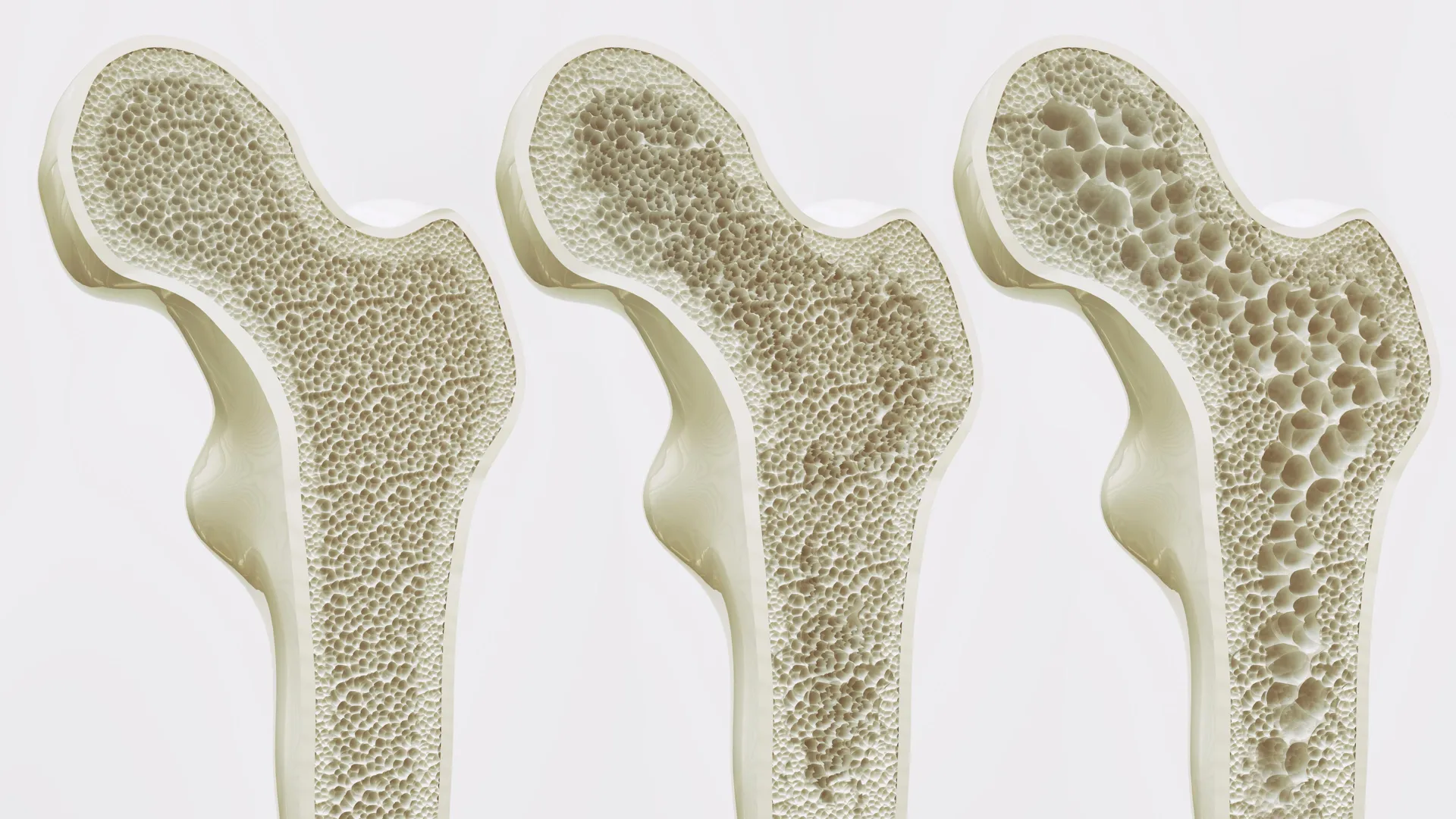
New research from Flinders University suggests that tea and coffee may have different effects on bone health in women over 65. The 10-year study found that regular tea consumption was linked to slightly higher hip bone mineral density, while very high coffee intake was associated with lower bone density.
Published in Nutrients, the study followed approximately 10,000 women aged over 65 for a decade. Researchers examined whether coffee and tea consumption was associated with changes in bone mineral density (BMD), an important indicator of osteoporosis and fracture risk.
Osteoporosis is a widespread health concern, affecting about one in three women over the age of 50 and contributing to millions of fractures worldwide each year. Because coffee and tea are consumed daily by billions of people, even small effects on bone health could have significant population-wide implications. However, previous research has produced mixed findings, and few studies have tracked participants for such an extended period.
Long-term study examines coffee, tea and bone density
Flinders University researchers analysed data from the Study of Osteoporotic Fractures. Participants regularly reported their coffee and tea consumption, while researchers repeatedly measured bone mineral density at the hip and femoral neck—two areas strongly linked to fracture risk.
Over the 10-year follow-up period, advanced imaging techniques were used to monitor changes in participants’ bone density and assess how these changes related to their beverage choices.
The findings showed that women who drank tea had slightly higher total hip BMD than those who did not drink tea. Although the difference was small, it was statistically significant and could be meaningful across a large population.
“Even small improvements in bone density can lead to fewer fractures across large groups,” says Enwu Liu, adjunct associate professor at the College of Medicine and Public Health.
Excessive coffee consumption linked to lower bone density
The relationship between coffee consumption and bone health was more complex. Moderate coffee intake—approximately two to three cups per day—was not associated with poorer bone health. However, women who consumed five or more cups daily had lower BMD, suggesting that excessive coffee consumption may negatively affect bone density.
The association also appeared to differ according to other lifestyle and health factors. Women with higher lifetime alcohol consumption experienced stronger negative associations between heavy coffee intake and bone density. Meanwhile, the potential benefits of tea were more noticeable among women with obesity.
Ryan Liu, co-author of the study, said catechins—naturally occurring compounds found in high concentrations in tea—may help support bone formation and reduce bone breakdown.
“In contrast, laboratory studies have shown that coffee’s caffeine content interferes with calcium absorption and bone metabolism, but these effects are small and can be offset by adding milk,” says Flinders University’s Ryan Liu.
Could daily tea support bone health?
Adjunct Associate Professor Enwu Liu said the results suggest that drinking tea regularly may be a simple habit that supports bone health in later life.
“While moderate coffee consumption appears to be safe, consuming excessive amounts may not be ideal, especially for women who drink alcohol,” he says.
However, the researchers emphasised that the observed differences in bone mineral density were small. While statistically significant, the findings are not strong enough to recommend major changes to individuals’ daily routines.
“These results don’t mean you should stop drinking coffee or start drinking tea by the gallon,” Liu said.
“However, they suggest that moderate tea consumption may be one simple way to support bone health, and that excessive coffee consumption may not be ideal, especially for women who drink alcohol.”
“Calcium and vitamin D remain the cornerstones of bone health, but what’s in the cup may also play an important role. For older women, enjoying a daily cup of tea isn’t just a relaxing ritual; it can be a small step towards stronger bones,” he concludes.
The paper, ‘Longitudinal association between coffee and tea intake and bone mineral density in older women: A 10-year repeated measures analysis in the osteoporotic fracture study‘, was co-authored by Ryan Yan Liu and Enwu Liu and published in Nutrients.
Acknowledgments: Funding for the SOF study was provided by the National Institute on Aging (NIA) and the National Institute of Arthritis and Musculoskeletal and Skin Diseases (NIAMS) and was supported by grants (AG05407, AR35582, AG05394, AR35584, AG35583).
Source: www.sciencedaily.com