


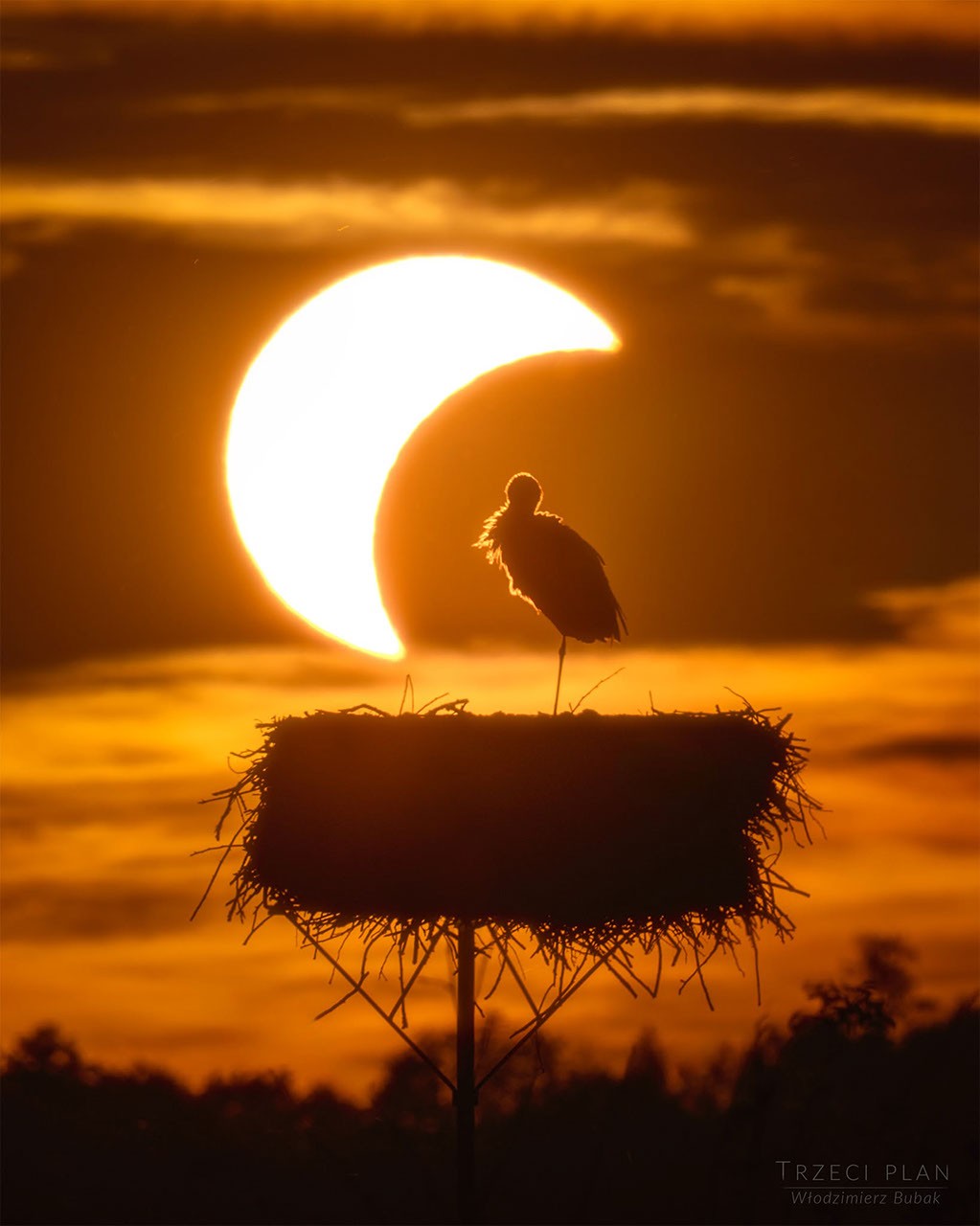
How do animals react to a total solar eclipse? During a total solar eclipse, the sudden change from daylight to darkness can briefly alter animal behavior. Featured image: a stork resting in its nest in Poland during a recent total solar eclipse.
If you are fortunate enough to experience a total solar eclipse in a quiet, natural setting, listen and watch closely. You may notice unusual animal behavior during the brief period of totality. As the sky darkens, daytime birds may become quiet, while nocturnal creatures begin making their usual night sounds.
Crickets and frogs may start calling, and fireflies may become visible in the unexpected darkness. During past eclipses, many birds have fallen silent as they respond to the temporary loss of daylight.
Ducks and other waterfowl may also behave as though it is bedtime. They may turn their heads back, tuck their beaks into their feathers, and prepare to rest on one leg or hide their heads beneath one wing. When sunlight returns at the end of totality, songbirds may begin singing again as if a new morning has arrived. Their songs can mark the return of daylight, while crickets and frogs may grow quiet once more.
For animals and people alike, a total solar eclipse is a short-lived natural event that can briefly disrupt familiar daily routines as the Sun and Moon align.
NASA’s main site for APOD is moving: Visit apod.nasa.gov or go to science.nasa.gov/apod
Tomorrow’s photo: What’s next?
Source: science.nasa.gov