


Heat-Resistant Nitrogenase Reveals How Deep-Sea Archaea Break Nitrogen’s Triple Bond
Microorganisms can perform remarkable chemical reactions. One of the most important is nitrogen fixation: the conversion of atmospheric nitrogen gas (N2) into a form that living organisms can use. Although nitrogen makes up about 78% of Earth’s atmosphere, plants and animals cannot use it directly because nitrogen molecules are held together by extremely strong triple bonds.
Some microorganisms have evolved ways to overcome this challenge. They break the triple bond in N2, convert the gas into ammonia, and incorporate the resulting nitrogen into biomolecules. One such organism is the deep-sea archaeon Methanocaldococcus infernus, which inhabits volcanic marine environments where fluids can reach temperatures above the boiling point of water.
Researchers from Tristan Wagner’s laboratory at the Max Planck Institute for Marine Microbiology in Bremen wanted to understand how this organism fixes nitrogen under extreme heat. They successfully cultivated the microorganism in the laboratory and showed that it can fix N2 at temperatures above 90 °C.
“How do they do it in this kind of heat? And how are enzymes able to break down nitrogen? Would triple bonds function under these conditions?” asked Wagner.
The enzyme that enables nitrogen fixation
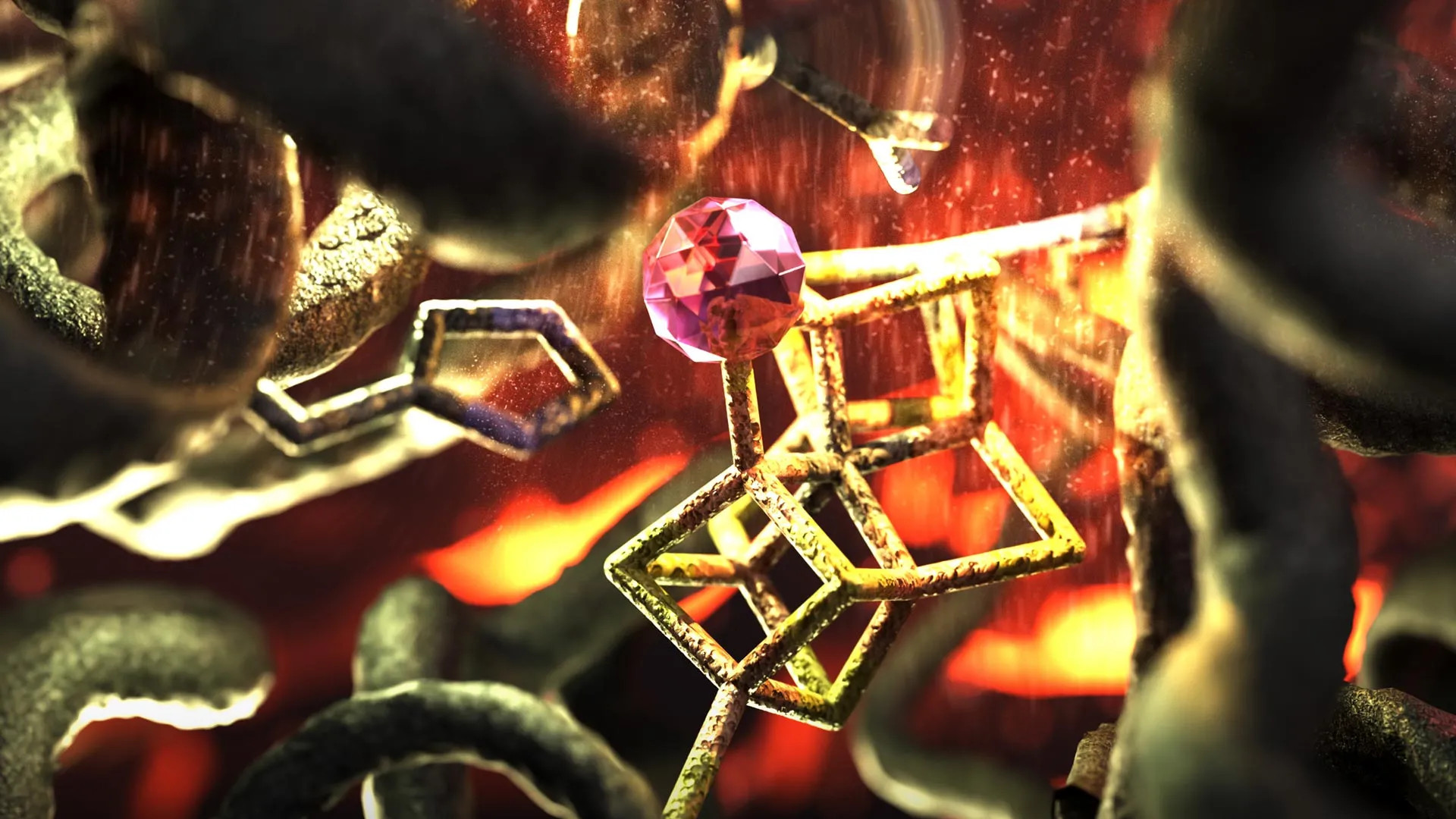
The key enzyme behind nitrogen fixation is nitrogenase. It contains one of the most complex metal cofactors known in biology. These metallocofactors are metal-containing helper molecules that bind to enzymes and are essential for their activity.
The most extensively studied and highest-performing nitrogenases contain molybdenum-based metallocofactors. Other forms use vanadium or iron instead. Scientists are still working to determine how these different nitrogenases are related and how their metal centers enable them to break the powerful triple bond in N2.
A nitrogenase adapted to extreme heat
Nitrogenase from Methanocaldococcus infernus is notable because it appears to share structural characteristics with molybdenum-, vanadium-, and iron-only nitrogenases. This type of nitrogenase may resemble a common ancestor of the three major forms, potentially revealing a shared principle behind their reactions.
The research team isolated nitrogenase directly from the microorganism and discovered that it is unusually heat-resistant. The protein began to degrade at 90 °C, while some of it remained intact even at 98 °C.
“This proves that this enzyme is designed to work under conditions where most proteins spoil rapidly, such as egg whites cooked in boiling water,” says lead author Nevena Maslak of the Max Planck Institute for Marine Microbiology. “We showed that it is not active at room temperature; rather, it only produces ammonia at elevated temperatures. Its extreme stability allowed us to study states of nitrogenase that are normally difficult to capture.”
Studying nitrogenase at near-atomic resolution
The researchers did not need to return to the deep ocean to examine the enzyme. Instead, they combined microbial physiology, natural enzyme purification, biochemistry, and structural biology. Every step had to be performed under strictly oxygen-free conditions because oxygen can permanently damage nitrogenase’s metal cofactors.
The team crystallized the enzyme and studied it at the Institute of Biological Structures in Grenoble, France. Using the facility’s synchrotron—a circular particle accelerator that produces powerful X-rays—the researchers determined the enzyme’s molecular structure at near-atomic resolution.
Nitrogenase from M. infernus was identified as the simplest known nitrogenase studied to date while also combining structural features of all three major nitrogenase families: molybdenum, vanadium, and iron-only nitrogenases.
This combination supports the possibility that ancient nitrogenases were more similar to this archaeal enzyme than to the nitrogenases found in bacteria today.
The researchers then set out to confirm whether the enzyme contained a molybdenum cofactor.
“The search for molybdenum is technically extremely difficult, requiring synchrotron experts to push their equipment to its absolute limits,” Wagner says.
An unexpected molecular state of nitrogenase
The measurements confirmed the expected molybdenum signal, but they also revealed an unexpected result.
“We were stunned to see a previously unobserved state of molybdenum-containing nitrogenase!”
Researchers had previously observed this so-called “turnover” state only in vanadium- and iron-only nitrogenases. It may represent an intermediate step in the reaction that breaks down N2.
Finding the same state in a molybdenum-containing enzyme suggests that all forms of nitrogenase may use a common underlying mechanism to break apart nitrogen molecules.
What deep-sea nitrogen fixation could mean for biotechnology
Understanding nitrogen fixation has implications far beyond deep-sea environments. Nitrogen-fixing microorganisms such as M. infernus convert atmospheric nitrogen into ammonia and also play an important role in Earth’s carbon cycle. These microorganisms are responsible for producing half of the methane found in the atmosphere.
In the future, researchers may explore these organisms as biological systems that use green hydrogen as an energy source and convert the gas into useful products such as methane and ammonia.
“And what if one day crops could get nitrogen directly from nitrogen in the atmosphere?” Wagner speculates.
Such advances could reduce agriculture’s dependence on industrial fertilizers. Manufacturing fertilizer through the Haber–Bosch process requires large amounts of energy and produces greenhouse gas emissions. Excessive fertilizer use can also contribute to eutrophication and other environmental damage.
For now, the study offers new molecular insight into one of biology’s most remarkable chemical reactions: the ability of microorganisms to break nitrogen’s exceptionally strong triple bond under extreme conditions.
Source: www.sciencedaily.com