


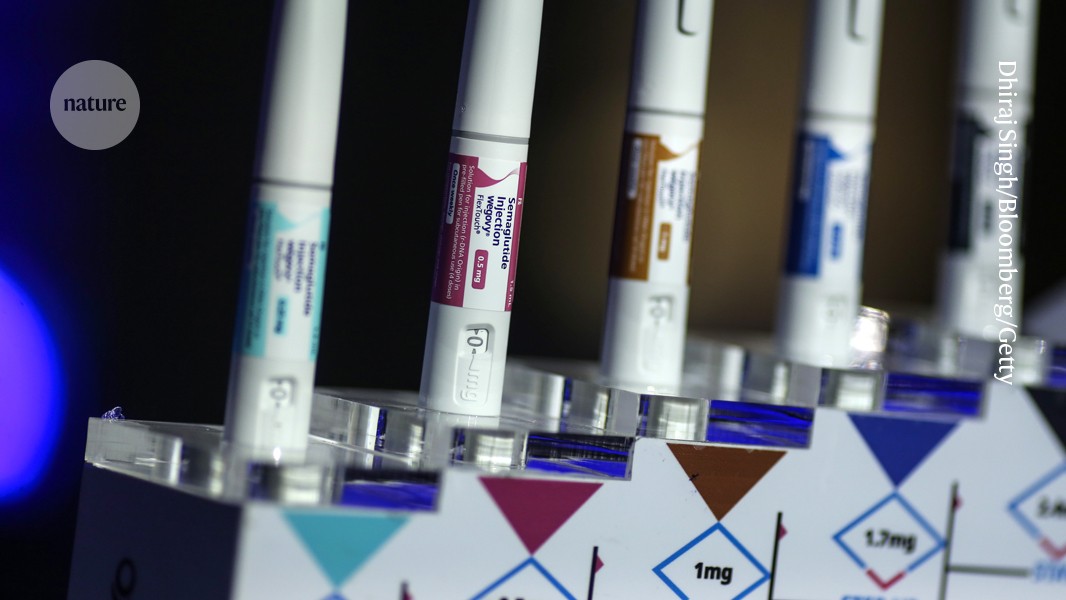
Obesity medications such as semaglutide, sold under the brand name Wegovy, are typically administered by injection.Credit: Dhiraj Singh/Bloomberg/Getty
The potential health benefits of GLP-1 drugs continue to expand, prompting scientists to investigate whether these medications could also influence aging. Research published in Nature on September 21 suggests that semaglutide, a GLP-1 obesity drug, may extend lifespan and slow some biological changes linked to aging in female mice. Older mice treated with the medication lived longer than those that received no treatment.

Could obesity drugs help treat addiction? Research highlights their potential
The findings add to a growing body of research2,3 indicating that GLP-1 medications may have anti-aging effects. These drugs mimic glucagon-like peptide 1, a hormone involved in appetite regulation and blood-sugar control, and are commonly prescribed to treat obesity and type 2 diabetes. Although most evidence so far comes from animal studies, clinical trials are beginning to examine whether GLP-1 drugs could provide similar benefits in humans.
GLP-1 drugs “are at the top of everyone’s list as the most interesting candidates” in longevity research, says Michael Corey, an aging researcher at the University of California, San Diego.
Corey described the research as “a very rigorous animal study that showed a positive signal.” However, he cautioned that the results remain preliminary. It could take years to determine whether GLP-1 medications can safely and effectively be used as treatments for healthy aging or longevity.
How calorie restriction may affect aging
Previous research has shown that calorie restriction can extend lifespan in some animals, including mice.4 Because GLP-1 drugs activate receptors that reduce appetite, scientists have questioned whether the resulting decrease in calorie intake could explain their possible effects on aging, says study co-author Danica Chen, a biologist at the University of California, Berkeley.

New benefits linked to obesity drugs include improved testosterone and sperm quality
Chen and her colleagues tested this possibility in healthy female mice that were 20 months old, roughly equivalent to 60 years of age in humans. Mice treated with semaglutide, marketed as Ozempic and Wegovy, had a median lifespan of 834 days. That was 12% longer than the median lifespan of untreated control mice, which was 742 days.
The semaglutide-treated mice also performed better in tests of coordination, muscle function and glucose metabolism. When researchers examined cellular and molecular markers associated with aging, including inflammation, they found that several age-related changes were less pronounced in the treated mice than in the control group.
During the study, mice receiving semaglutide consumed 24% fewer calories. To determine whether reduced food intake explained the results, the researchers gave a separate group of untreated mice a diet containing the same number of calories consumed by the GLP-1-treated animals. The two groups had similar lifespan outcomes. However, the semaglutide-treated mice outperformed the calorie-restricted group in several tests, including a spatial-memory task that required them to remember the location of an exit in a maze. “That was a real surprise to us,” says Chen.
The findings suggest that semaglutide may offer benefits beyond calorie reduction, Chen says. However, the biological mechanisms responsible for these potential anti-aging effects remain unclear.
Source: www.nature.com