


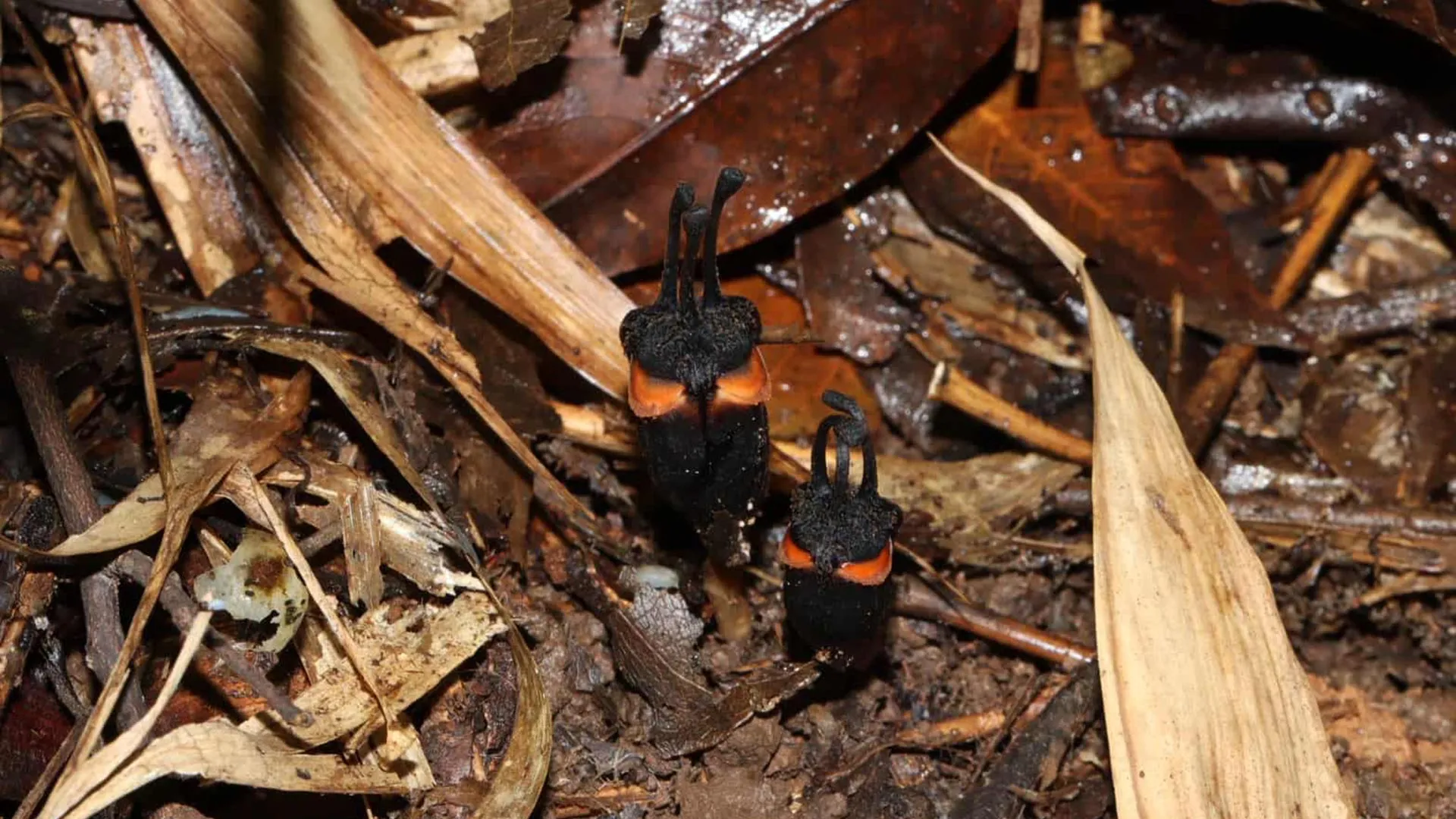
Scientists have discovered a remarkable new species of leafless flowering plant on the forest floor of Thailand’s Thong Pa Phum National Park. Known as Thismia demona, or the “Devil’s Flower,” the unusual plant has a mysterious, almost supernatural appearance.
The plant belongs to Thismia, a genus of small flowers commonly called “fairy lanterns.” These plants lack chlorophyll and cannot photosynthesize. Instead, they obtain nutrients through underground fungi and remain hidden beneath leaf litter for most of their lives.
New species discovered in Thailand
Botanists from Chulalongkorn University and Prince of Songkla University discovered Thismia demona during a survey of Thong Pa Phum National Park. The species grows at an elevation of nearly 1,000 meters, an unusually high altitude for the genus, in a seasonally dry montane evergreen forest.
“The discovery of Thismia demona was a major surprise,” said Dr. Sahut Chantanaorapinto of Prince of Songkla University. “Species of Thismia are generally associated with perennial humid lowland rainforests. However, this population was found in a seasonal montane evergreen forest approximately 1,000 meters above sea level.”
The discovery also expands scientists’ understanding of the geographic range of this plant group. Thismia demona belongs to the Thismia section Geomitra, which had previously been recorded only in the Malay Peninsula, Borneo, and Sumatra. Its discovery in Thailand extends the known distribution of the group farther north for the first time.
Why is it called the “Devil’s Flower”?
The plant’s striking appearance explains its dramatic name. Its flowers are mostly black and topped with horn-like structures rising from a dome-shaped “miter.” Bright reddish-orange markings near the base resemble glowing eyes, creating a distinctly devilish appearance.
“Combined with its hidden, subterranean lifestyle and its mystical appearance on the forest floor, the name Thismia demona perfectly captures the plant’s mysterious and demonic character,” said Dr. Chantanaorapinto.
Fewer than 50 plants known
Although Thismia demona is visually striking, its survival may be at risk. Scientists currently know of only one population, consisting of fewer than 50 individuals in an area smaller than a soccer field. As a result, the species has been provisionally classified as endangered. Researchers are particularly concerned because its habitat is located within a national park that attracts many tourists.
Dr. Chantanaorapinto said that involving nearby communities will be essential to protecting the Devil’s Flower and its fragile habitat.
“An important next step is to adopt sustainable conservation strategies aligned with UNESCO’s People and the Biosphere concept, balancing biodiversity protection with human involvement. Inspiring local pride in this natural heritage can help protect the plant’s microhabitat while supporting sustainable, community-led ecotourism.”
The study describing Thismia demona was published in the open-access journal PhytoKeys. With the discovery of this Devil’s Flower, 16 species of Thismia are now known to occur in Thailand.
Source: www.sciencedaily.com