


NASA Opens Media Accreditation for SpaceX’s 35th Cargo Mission to the International Space Station
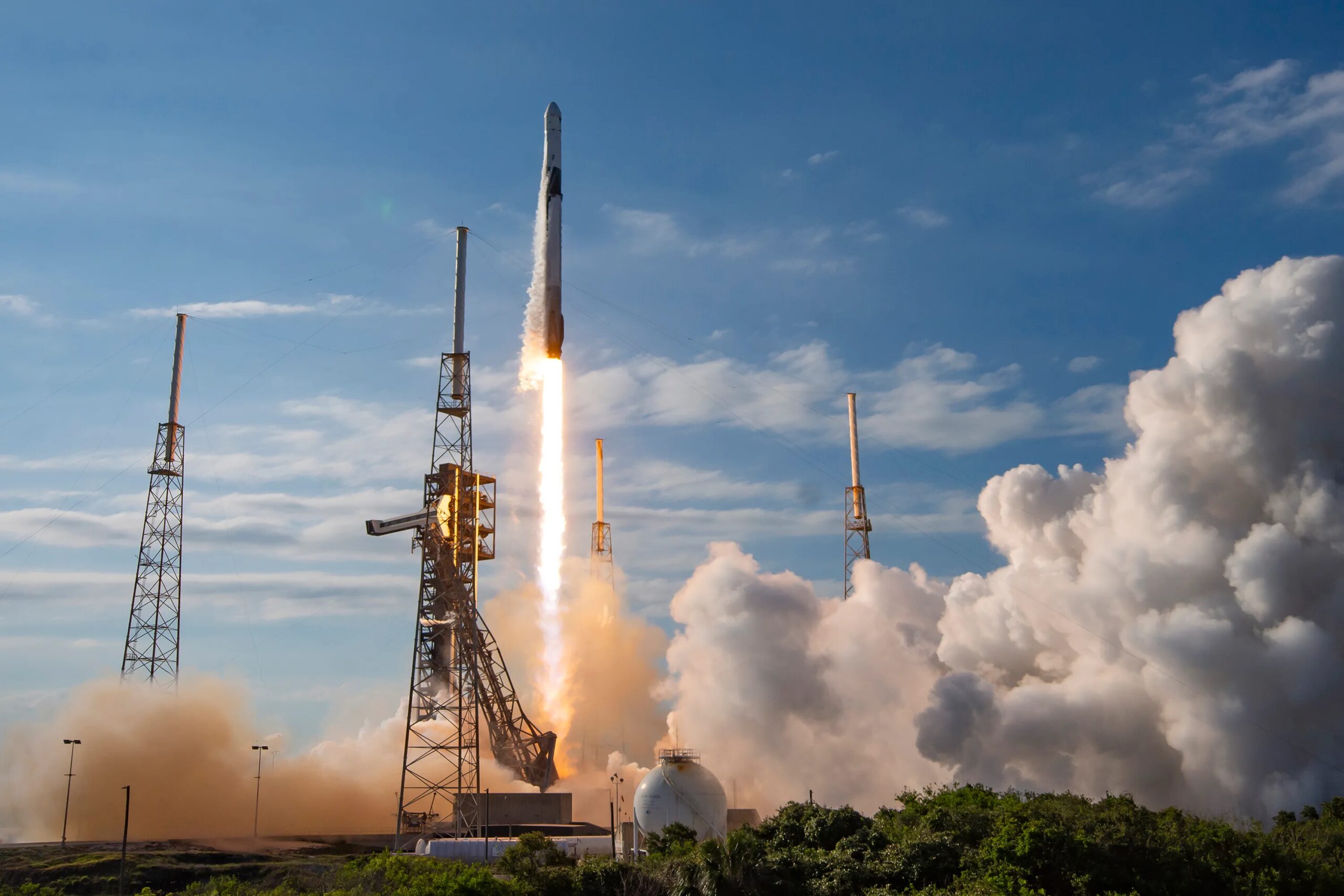
Media accreditation is now open for the next cargo launch delivering NASA scientific research, supplies, and equipment to the International Space Station. SpaceX’s 35th commercial resupply service mission to NASA’s orbital laboratory will launch aboard a Falcon 9 rocket.
NASA and SpaceX are targeting a launch from Cape Canaveral Space Force Station in Florida by October.
Media Accreditation Deadline
Credentials to cover pre-launch and launch activities are available only to U.S. media. Applications must be submitted online by Thursday, October 1, at 11:59 p.m. ET.
Approved media representatives will receive a confirmation email. NASA’s Media Accreditation Policy is available online.
For questions about accreditation or to request special logistics support, email [email protected]. Additional questions may be directed to the NASA Kennedy Space Center Newsroom at 321-867-2468.
Scientific Research and Cargo Aboard the Dragon Spacecraft
Each commercial resupply mission to the space station carries scientific investigations in biology and biotechnology, Earth and space sciences, physical sciences, and technology development and demonstration.
Cargo resupply from U.S. companies helps maintain the nation’s ability to deliver research to the space station and significantly expands NASA’s capacity to conduct investigations in human laboratories in space.
In addition to food, crew supplies, and equipment, the Dragon spacecraft will deliver the final set of International Space Station Roll-Out Solar Arrays, known as IROSA. Astronauts will install the arrays during future spacewalks to complete the station’s power boost.
Once installed, the solar arrays will provide additional power for critical station operations, including safe and controlled deorbiting.
New Microgravity Experiments
The mission will deliver several new experiments to the orbital complex, including hardware for manufacturing retinal prostheses in microgravity. The technology could help restore vision in patients on Earth.
Dragon will also carry a 3D heart cell model designed to advance large-scale drug testing on future space missions, materials for studying how new types of glass form in microgravity, and brain organoids that could reveal potential therapeutic targets for neurodegenerative diseases such as Alzheimer’s disease, Parkinson’s disease, and multiple sclerosis.
International Space Station Research
For more than 25 years, people have lived and worked continuously aboard the International Space Station, advancing scientific knowledge and making research possible that would be difficult or impossible to conduct on Earth.
The space station will help NASA understand and overcome the challenges of human spaceflight, expand commercial opportunities in low Earth orbit, and build the foundation for long-term missions to the Moon and Mars through the Artemis program.
Learn more about NASA’s commercial resupply missions below.
-end-
Media Contacts
Josh Finch / Jimi Russell
Headquarters, Washington
202-358-1100
[email protected] / [email protected]
Stephen Cisselov
Kennedy Space Center, Florida
321-876-2468
[email protected]
Sandra Jones / Joseph Zakruszewski
Johnson Space Center, Houston
281-483-5111
[email protected] / [email protected]
Source: www.nasa.gov