


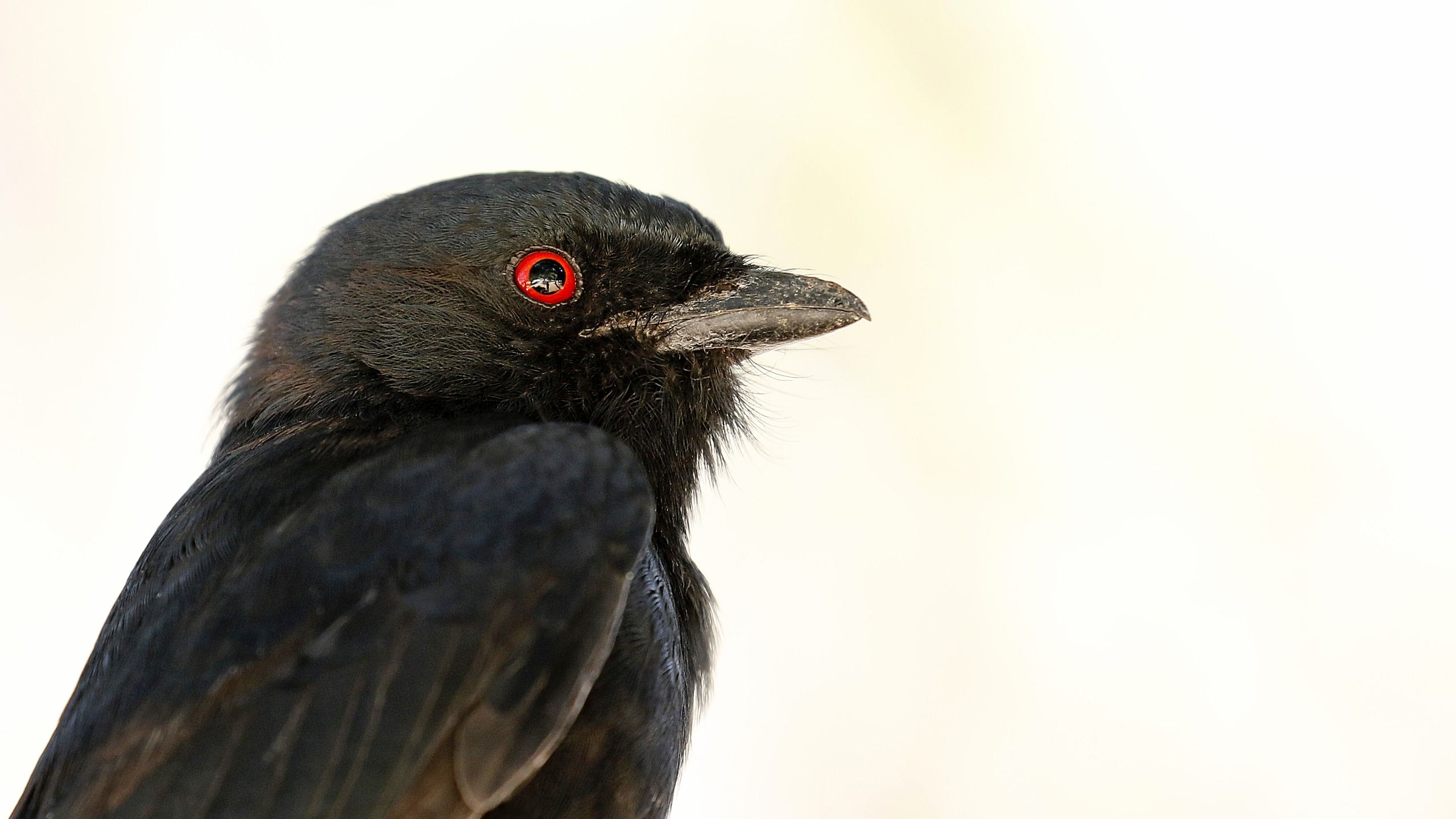
Many of nature’s most striking deceptions arise through evolution rather than conscious intent. But some animal behaviors appear to involve deliberate manipulation, raising a difficult question for researchers: can animals lie? Zoologist and science communicator James O’Hanlon explores that question through examples of mimicry, camouflage and false alarm calls, including the fork-tailed drongo’s exploitation of meerkats.
When deception appears intentional
An orchid mantis (Hymenopus coronatus) does not know that it resembles a flower, and a moth with eyespots on its wings does not understand that the markings may deter predators. These traits developed through natural selection over countless generations, not through conscious decisions.
Distinguishing such evolved adaptations from deliberate deception is one of the most challenging problems in animal-behavior research. Some behaviors appear to be tactics aimed at changing what another animal believes, in a way that resembles human lying.
In an excerpt from his book, Liars, deceivers, and imitators: The tricks and deceptions of nature (Columbia University Press, 2026), O’Hanlon examines camouflage, imitation and misdirection across the natural world. The book builds toward a central question: “Can animals lie?”
The bird that cries wolf
One likely candidate for intentional deception is the Forktail Ogongo (Dicululus adsimilis), described in the book as a small African bird with a constantly changing repertoire of false alarm calls. The bird is a favorite subject for scientists studying tactical deception.
The fork-tailed drongo is an accomplished vocal imitator. It can produce an alarm call that sounds like a meerkat’s warning signal, prompting the meerkats to flee. While they escape, the drongo moves in and steals the food they leave behind.
The birds can imitate signals from other animals as well as calls from nearby species, including the cloaked glossy starling and the white-breasted bubbler. The source also describes the Black-bellied Goat as imitating other animals’ signals and reports that researchers have identified more than 50 unique deceptive calls in the staghorn goose’s repertoire.
By constantly changing their “cry wolf” tactics, the birds may prevent their victims from learning to ignore the warnings, allowing the thefts to continue. The deception can affect other animals, too: the source says gray clover and social weaver birds that forage in groups are also sometimes fooled by false alarms and flee from their food.
Why scientists remain cautious
Despite the growing body of evidence, scientists remain reluctant to conclude definitively that animals intentionally deceive one another in the same way humans do. That caution may reflect scientific practice as much as the reality of animal societies.
One important rule in animal-behavior research is to avoid anthropomorphism: projecting human qualities, emotions or motives onto other species. Researchers must remain objective and avoid assuming that animals think, act or make decisions for the same reasons humans do.
There is also a broader principle in science: observations can disprove some explanations, but they rarely prove one explanation conclusively. Scientific writing therefore commonly uses phrases such as “the evidence suggests,” “probably so” and “the most parsimonious explanation is.”
Scientists may answer “no” when evidence rules out a possibility, but they rarely answer “yes” with absolute certainty. This apparent hesitation reflects an effort to consider every plausible explanation and assess each on its own merits. Researchers then decide which explanation is most likely, rather than claiming that every alternative has been eliminated.
Social animals are likely places to find further examples of deception, but researchers have only begun to understand the range of tactics used in animal societies. Future work may reveal comparable behavior in the songs of whales and dolphins, the chemical signals of ants and termites, and the barks and howls of wild dogs.
Publication information
This article was republished from Liar, Cheater, Imitator: The Tricks and Deceptions of Nature by James O’Hanlon. Copyright © James O’Hanlon 2027, 2025. First published in Australia by NewSouth, an imprint of UNSW Press Ltd. Used by arrangement with Columbia University Press. Unauthorized reproduction is prohibited.
Source: www.livescience.com