


Dead Sea Scrolls Mystery: Why the Qumran Community May Have Abandoned Its 364-Day Calendar
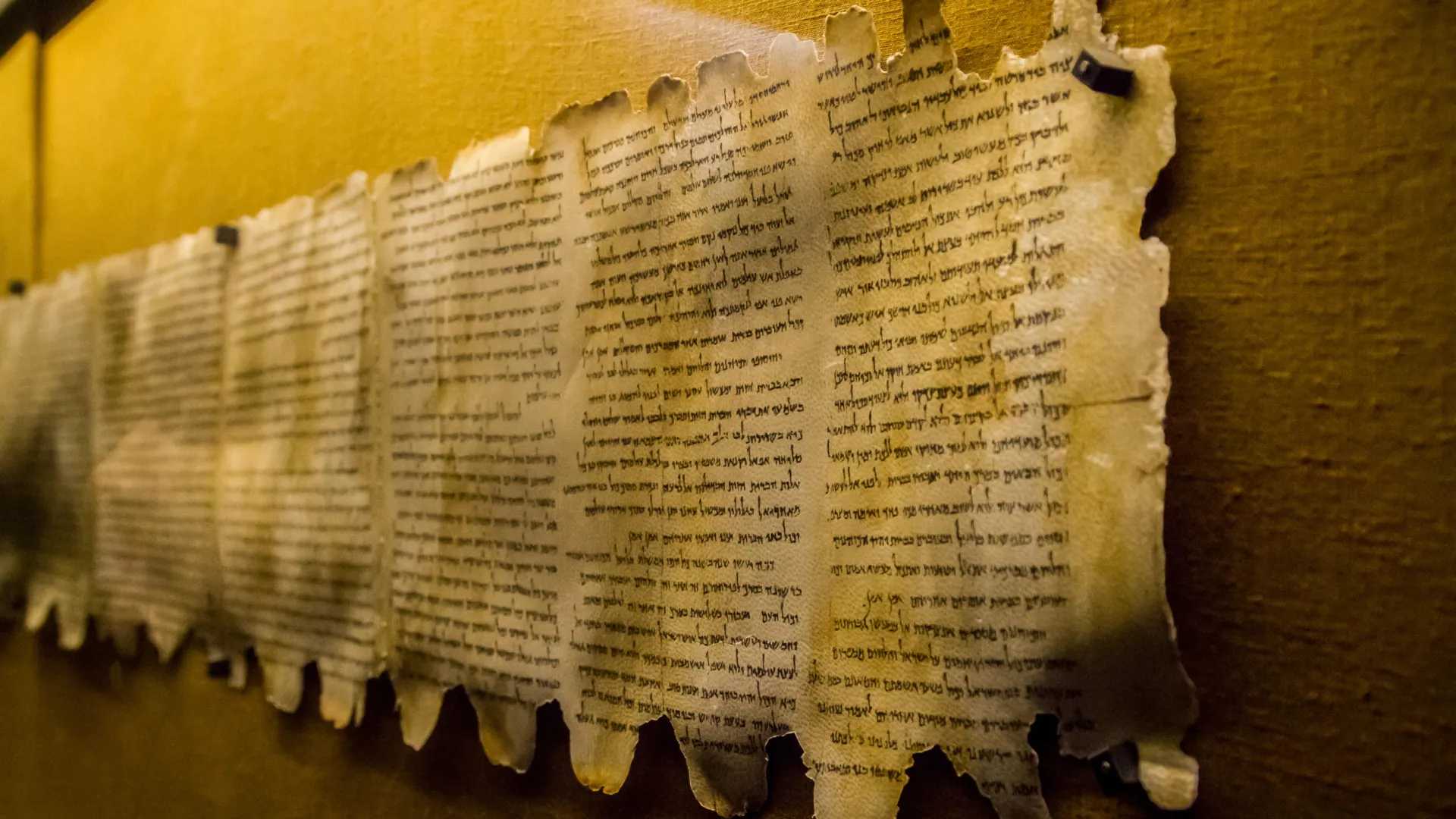
A new study may offer an explanation for one of the long-standing mysteries surrounding the Dead Sea Scrolls: Did the Qumran sect actually follow its unusual 364-day calendar, or was the system mainly a religious and theoretical ideal?
Researchers have debated this question for decades. A Tel Aviv University study argues that both possibilities may be partly correct. According to the proposed reconstruction, the Qumran community likely used the calendar during its early history, when disagreements over religious dates contributed to its separation from the Jerusalem religious establishment.
However, the community may later have abandoned the calendar because of fundamental astronomical problems and changing political relations with the Hasmonean leadership under Alexander Jannaeus.
The study was conducted by Professor Eshbal Ratzon of the Department of Jewish Philosophy in the Entin Faculty of Humanities and Sciences and the Kohn Institute for the History and Philosophy of Science and Thought.
A Calendar Built Around 52 Perfect Weeks
The Qumran calendar differed significantly from the lunisolar calendar that shaped Jewish religious life during the Second Temple period.
It contained exactly 364 days, making it evenly divisible by seven. As a result, every year consisted of 52 complete weeks, and religious festivals always occurred on the same day of the week.
For Qumran believers, this orderly structure was more than a mathematical convenience. They viewed it as evidence of a complete divine system established at the creation of the world.
The calendar also carried important political and religious meaning. Authorities at the Jerusalem Temple used a common calendar to determine the dates of major religious observances, but the Qumranites rejected the idea that human leaders should control sacred time.
Instead, members of the community believed that the dates of religious festivals had already been set by God and should not be changed by people.
The Hidden Problem with a 364-Day Year
The same features that made the Qumran calendar elegant and mathematically consistent also created serious practical difficulties.
A 364-day year is approximately 1.25 days shorter than the astronomical year, which lasts about 365.24 days. Although the difference may seem small, it accumulates over time.
If the calendar were followed for 20 years without any adjustment, religious festivals would shift by nearly four weeks in relation to the seasons. After several decades, festivals associated with spring could eventually occur in winter or fall.
That would have been especially problematic for a community whose religious festivals were connected to agriculture, harvests, first fruits and other seasonal cycles.
The problem is similar to a clock that loses one minute every day. At first, the error is barely noticeable. But after enough time, the clock no longer shows the correct time.
Professor Ratzon’s research suggests that something similar may have happened with the Qumran calendar. Although the system was conceptually elegant and mathematically orderly, it gradually moved away from the natural seasonal cycles it was meant to organize.
Was the Qumran Calendar Used in Daily Religious Life?
Scholars have proposed several explanations for this apparent contradiction.
Some have suggested that the Qumran community periodically inserted extra days or weeks to keep the calendar aligned with the seasons. Others argue that the 364-day system was never intended for everyday use and instead represented an idealized religious framework.
Professor Ratzon argues that the Dead Sea Scrolls do not clearly support either explanation.
Instead, she points to evidence that the calendar was central to the religious identity of the Qumran community and played a major role in its disagreements with Jerusalem’s religious authorities.
Approximately 20 scrolls discovered at Qumran contain information about calendars and astronomy. Their unusually large number suggests that these subjects were highly important to the local community.
The Book of Jubilees, one of the important works preserved in the Qumran library, strongly criticizes the common lunar calendar. It presents the 364-day system as the original calendar given to Moses at Mount Sinai.
How the Calendar Became Part of a Religious Conflict
Based on this evidence, Professor Ratzon proposes an alternative historical scenario.
She argues that the Qumranites actively followed a 364-day calendar during their formative years in the second century BC. The dispute over how sacred time should be measured may have intensified the sect’s conflict with Jerusalem’s religious leaders and contributed to its isolation.
As the decades passed, however, the growing difference between the calendar and the seasons would have become increasingly difficult to ignore.
The political situation may also have changed. Relations between the Qumranists and the Hasmonean rulers improved during the reign of Alexander Jannaeus, who supported halacha in a way that was similar to the sect and opposed the Pharisee leaders.
This shift in the political environment may have made it easier for the community to abandon its earlier strict position and adopt the more practical calendar used by the Temple authorities.
The community’s distinctive calendar may not have disappeared entirely from its religious thought. Instead, it could have survived as an ideal system believed to have been valid at the creation of the world and capable of returning at the end of time.
A Possible Solution to the Dead Sea Scrolls Calendar Mystery
This interpretation may explain why the 364-day calendar occupies such an important place in the Qumran texts, even though it appears to have disappeared from practical historical use.
“The Qumran calendar has long been considered one of the hallmarks of the Qumran school, but also one of the most puzzling mysteries of the Dead Sea Scrolls,” Professor Ratzon said. “This study proposes an alternative to the seeming contradiction between the functional and theoretical calendars. It is quite possible that it was used in practice, but that due to both inherent problems and political changes, it lost its practical role and became a symbol of religious ideals and identity. This explains both its centrality in the Qumran texts and its gradual disappearance from historical reality.”
Source: www.sciencedaily.com