


Nepal Floods Highlight the Urgent Need to Fix the UN Loss and Damage Fund
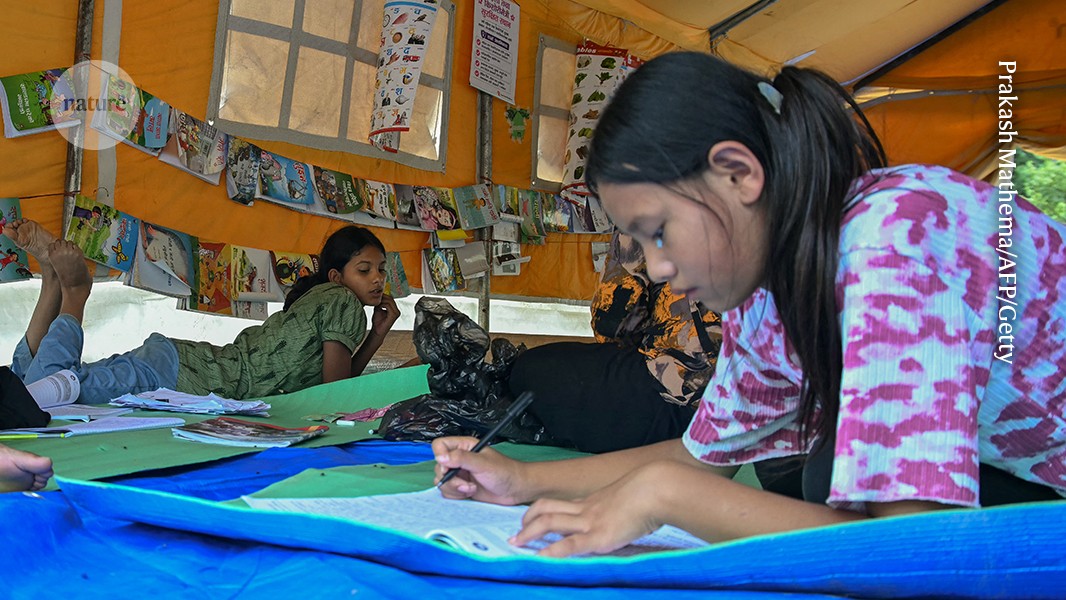
A temporary school in a flooded area of Nepal run by the charity Save the Children.
Credit: Prakash Mathema/AFP/Getty
Climate change worsened Nepal’s devastating floods
There is growing evidence that global warming contributed to last month’s devastating floods in Nepal. On August 26, a glacier burst and floods destroyed entire villages, killing more than 1,400 people and leaving around 6,000 missing.
A rapid scientific review published last week concluded that exceptionally warm temperatures in July and August contributed to the destabilization of an already geologically fragile region. The study is available from the World Weather Attribution.
Nepal is seeking $20 million in climate disaster funding
Representatives of the Nepali government reportedly said they would cite the study in their application for funding from the United Nations Special Fund for loss and damage caused by extreme weather events linked to human-induced climate change.
Nepal applied for US$20 million, the maximum amount available, to cover some of its immediate recovery costs and prepare for future climate change.
However, Nepal is one of a further 119 countries awaiting a decision from the fund. Applications began to be accepted at the end of 2025, but so far only four have been considered by the fund’s board, at its last meeting in July. No decisions have been made, and the next meeting will not take place until December.
These delays are unacceptable and contradict the fund’s objective of providing rapid financial support after climate-related disasters and emergencies. Board members seeking an emergency interim meeting are right to do so.
Climate loss and damage funding is falling far short
Donors to the fund, primarily rich countries, need to reconsider how claims are evaluated and how money is distributed in a timely manner. More than $800 million had been pledged as of March, but applications so far totalled $2.8 billion, far exceeding the $250 million available.
The Loss and Damage Fund was established in 2022 and was led by the late Bangladeshi climatologist Saleemul Huq. It followed decades of efforts by some low-income countries to achieve a measure of climate justice. Rich countries, which are responsible for most of the emissions driving human-induced climate change, are expected to provide financing to help poorer countries deal with its impacts.
The fund is not aid; it is based on the “polluter pays” principle.
How the Loss and Damage Fund differs from climate finance
The Loss and Damage Fund was part of a larger climate-finance system, but its purpose is different from that of the Green Climate Fund. Based in Incheon, South Korea, the Green Climate Fund supports countries seeking to reduce greenhouse-gas emissions and build climate-resilient infrastructure through grants and loans.
The average time for Green Climate Fund projects to be approved is two years, while one in five projects takes three to five years. By contrast, the UN’s Loss and Damage Fund was created to meet countries’ immediate needs after climate disasters. It is intended to provide grants rather than loans over a short period.
Many applications come from the poorest countries in Africa and Asia, including small island states, where average household income is between $100 and $400 a month. Governments in these countries often lack the resources to respond quickly after extreme weather events. They may need urgent funding to clear debris, move people to safe shelters, provide clean water and organize schooling.
The UN fund needs faster emergency decisions
Climate loss and damage funds may be new, but the idea of providing rapid grants during emergencies is not. The United Nations Central Emergency Response Fund, for example, is reviewing an application from Nepal for $2.5 million.
Economist Richard Jolly, co-director of the United Nations History Project, has charted the United Nations’ contribution to economic development. The organization has a track record of nurturing and developing good ideas, but it has not been as effective at learning from its own experiences.
One lesson from the current situation is that grant applications from countries where entire villages have been destroyed by floods, and where the requested amount is within the fund’s resources, should not take longer than six months to process.
Nepal and other countries in need are not asking for the planet. They need a fund that efficiently distributes money already earmarked for relief in precisely these situations.
Source: www.nature.com