


Close Menu
HitechubHitechub
    What's Hot
    Science

    Einstein’s 120-Year-Old Theory May Be Missing a Major Clue About the Big Bang

    Science

    324-Million-Year-Old Fossil Reveals How Insects First Conquered Land

    Science

    Can You Hold Classes Outdoors? 7 Tips for Smooth Outdoor Lectures

    Important Pages:
    • About Us
    • Privacy Policy
    • Terms & Conditions
    Facebook X (Twitter) Instagram Pinterest
    Facebook X (Twitter) Instagram
    HitechubHitechub
    Thursday, November 26
    • Shop
      • Fashion
        • Mens
        • Womens
        • Accessories
          • Handbags
          • Keychain
          • Masks
          • Money clicps
          • Neck Pillow
          • Rings
          • Towels
          • Wallets
        • Jewelry
        • Watches
        • T-shirts
        • Hawaiian shirts
        • Vests
        • Swim trunks
        • Swimsuits
      • Fun
        • Magic cubes
        • Magnifiers
        • Misc
        • Photo books
        • Puzzles
        • Toys
      • Home
        • Cleaning/Care
        • Mailbox covers
        • Mugs
        • Pot Holders
        • Spoon
      • Office and Electronics
        • Chairs
        • Office Supplies
        • IPad cases
        • Laptop stickers
        • Mouse pads
        • Notebooks
        • Pencil bags
        • Pens
        • Phone cases
      • Personalized
      • Pets
      • Sports
        • Cycling
          • Balaclava Mask
          • Bike Bell
          • Bike Computer
          • Bike Fender
          • Bike Grips
          • Bike Kickstand
          • Bike Light
          • Bike Locks
          • Bike Mitts
          • Bike Pumps
          • Bike Repair Stand
          • Bike Seat
          • Bike Trainer
          • Bike Wheels
          • BIKES
            • Folding Bikes
            • Road Bikes
          • Carbon Fiber Bike Products
          • Cycling Mask
          • Kid’ Bike Helmets
          • Inner Tube
          • Motorcycle Bag
          • Nylon Pedals
          • Adult Helmets
          • Photochromic Sunglasses
          • Soft Coolers
          • Suction Cup Bike Rack
          • Tool accessories
          • Winter Cloth
          • Heart Rate Monitor
        • Outdoors/Camping
          • Outdoor Bags
        • Sweatband
    • Technology
      1. AI
      2. Gadgets
      3. View All

      This is the most popular CEO in the world

      Sectors in which “Chat-GPT” is most often used

      Artificial intelligence has begun to “swallow” professions

      The unusual robot conductor of a concert in Seoul

      Here’s how you can tell if your phone is being tapped

      PlayStation 5 becomes a completely silent console and gets more space

      This is the first phone that can be used to park a car

      Best Gaming Laptops 2023: Powerful Portables for PC Games

      FCC Authorizes SpaceX to Deploy Up to 1 Million Satellites in Orbit

      Top 30 Early Black Friday Deals 2026: Best Picks and Ultimate Buying Guide

      Kagi Announces Gmail Rival After Challenging Google Search

      European Spacecraft Discovers Chaotic Asteroid Impact Site After Deflection Test

    • Science
      1. Space
      2. Wheels
      3. View All

      Space Perspective: A Journey to the Edge of Space

      5 Fascinating Facts About Space

      Space Exploration: Unveiling the Wonders of the Universe

      Toyota wants to make a new generation battery with a range of up to 1,200 km

      Meet Toyota’s lunar “baby” that could make exploring the Moon easier

      What does a night drive look like with one of the most beautiful cars in the world: the Rolls-Royce Ghost

      Find Shelter on Resolution Island: Complete Guide for Visitors

      Coherent Fermion-Parity Oscillations in Coupled Minimal Kitaev Chains

      Iowa Explosion Lead Contamination Concerns Persist Despite Official Assurances

      Einstein’s 120-Year-Old Theory May Be Missing a Major Clue About the Big Bang

    HitechubHitechub
    Home » NASA Modernizes Commercial Airline Systems With Advanced Aviation Technology
    Science

    NASA Modernizes Commercial Airline Systems With Advanced Aviation Technology

    Share Facebook Twitter Pinterest WhatsApp
    Share
    Facebook Twitter LinkedIn Pinterest WhatsApp

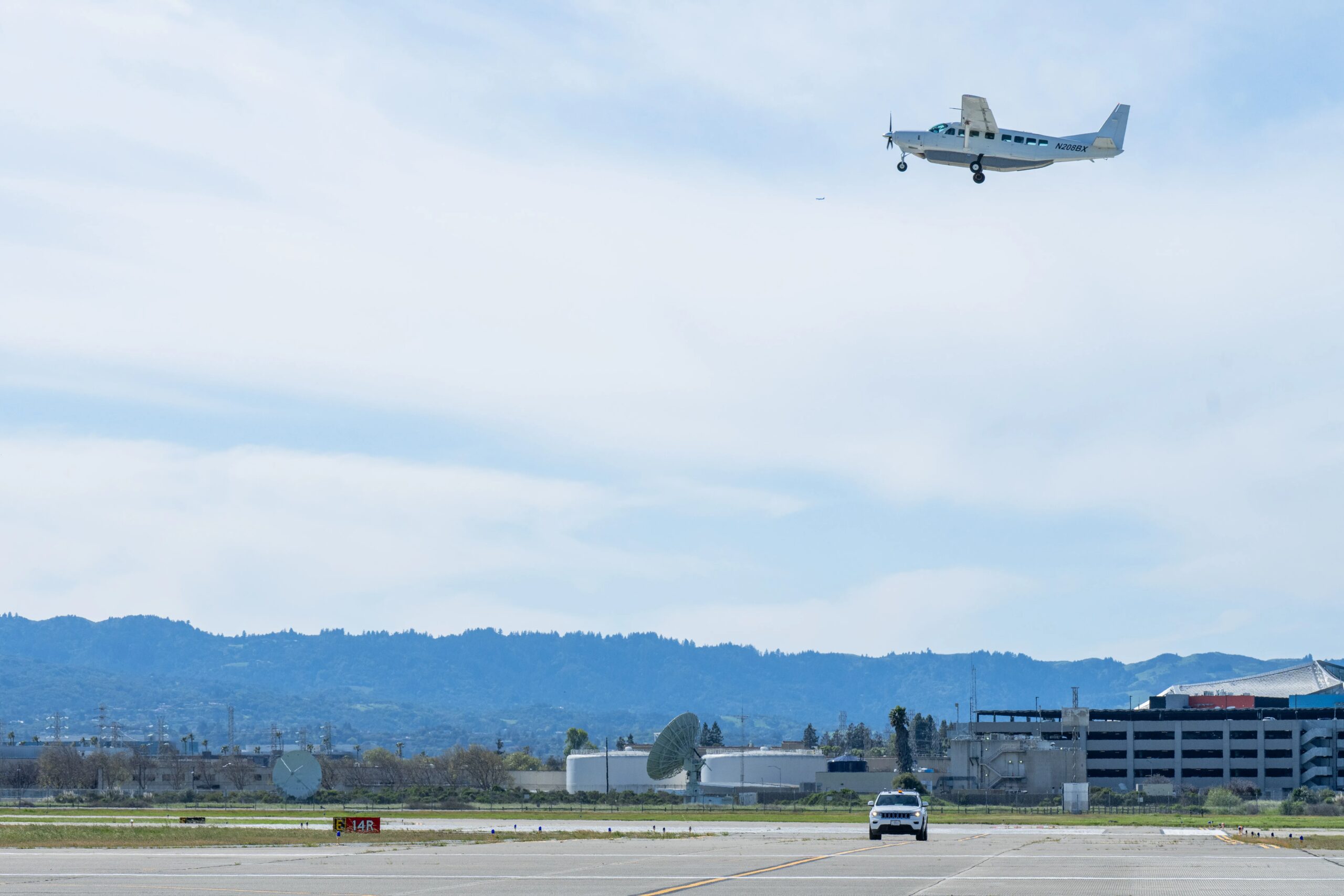
    NASA and Boeing Test Digital Taxiing and Runway Safety Technology to Reduce Airport Delays

    NASA researchers are testing new aviation technologies designed to make airport taxiing, runway operations, and air traffic management safer and more efficient. The systems could reduce communication errors, lower pilot and controller workload, improve situational awareness, and help keep flights moving smoothly.

    Large airports are among the busiest and most complex environments in aviation. Aircraft, ground crews, and service vehicles must share crowded taxiways while air traffic controllers coordinate arrivals and departures. To address these challenges, NASA’s Ames Research Center in California’s Silicon Valley recently partnered with Boeing to test three types of information and technology: digital taxi guidance, safe taxiways, and safe runways.

    NASA Tests Digital Taxi Guidance for Safer Airport Operations

    During digital taxi tests, pilots received route guidance directly on cockpit displays or tablets instead of relying solely on verbal instructions from air traffic controllers. The aircraft followed a digital route while sensors monitored the taxiway and runway for vehicles or other aircraft that could obstruct its path.

    This approach could reduce the workload for both pilots and air traffic controllers while lowering the risk of errors caused by verbal communication. Digital taxi guidance may also give flight crews more consistent information as they move through busy airport environments.

    Runway Sensors Improve Awareness During Aircraft Landings

    NASA also tested safe runway technology to improve awareness of potential hazards near approaching aircraft. During the tests, the same sensor system detected vehicles on the runway while a Boeing aircraft was preparing to land.

    By providing an additional alert about runway activity, the technology could help pilots and controllers identify potential collision risks and respond more effectively during critical phases of flight.

    Together, NASA’s digital taxi and runway safety capabilities are designed to reduce miscommunication, ease pilot workload, and help airport traffic flow more efficiently. Future tests will combine sensors and digital taxi systems in a simulated air traffic control environment to evaluate how the technology could support broader airspace management.

    NASA Technology Targets Flight Delays and Holding Patterns

    NASA’s efforts to modernize aviation extend beyond airport surfaces. Commercial flights must constantly adapt to changing weather, turbulence, and traffic conditions. Even small changes in direction or altitude can affect arrival times and contribute to holding patterns as controllers rebalance congested airspace.

    NASA air traffic management researchers have worked for years to reduce these disruptions. In a 2025 collaboration with Boeing, United Airlines, and international partners, NASA evaluated real-time flight information sharing on domestic and transoceanic flights.

    During the test, United’s Boeing 737 aircraft regularly shared flight data with the airline’s operations center and air traffic control. NASA analyzed how frequently the updates were sent and which details were most useful for producing accurate arrival predictions.

    More accurate and timely information can help controllers sequence aircraft more effectively. For passengers, that could mean fewer holding patterns and more direct descents.

    Digital Rerouting Could Reduce Fuel Use and Delays

    NASA has also developed pre-departure rerouting technology and digital exchange tools that allow dispatchers and air traffic controllers to view the same digital picture of a flight before it takes off.

    When a better route becomes available, controllers can coordinate changes digitally rather than depending entirely on verbal communication among pilots, controllers, and dispatchers. The technology has the potential to reduce delays, lower fuel consumption, and make airline operations more predictable for passengers.

    NASA has transferred the routing technology to the Federal Aviation Administration, and airlines will continue testing it. The tools build on NASA’s decades of work to modernize the nation’s airspace and improve the management of aircraft arrivals and departures.

    NASA’s Role in the Future of Air Travel

    NASA has worked with the FAA to advance automation concepts, improve arrival and departure flows, and introduce data-driven software used by commercial airlines.

    “Aviation safety is key to NASA research,” said Parimal Kopaldekar, director of NASA’s Airspace Operations Safety Project. “Technologies that can provide additional autonomy and support future airspace where multiple aircraft operate in harmony are key to moving the National Airspace System forward.”

    By working with airlines, aircraft manufacturers, government agencies, and international partners, NASA continues to develop technologies that could improve every stage of a flight—from departure and taxiing to air traffic management and safe arrival.

    Source: www.nasa.gov

    Share. Facebook Twitter Pinterest LinkedIn WhatsApp
    Previous ArticleDo Humans Have Two Brains? The Truth Behind the Myth
    Next Article Placeholder Domains in Development Documentation Protected Against ClickFix Attacks

    Related Posts

    Science

    Find Shelter on Resolution Island: Complete Guide for Visitors

    Science

    Coherent Fermion-Parity Oscillations in Coupled Minimal Kitaev Chains

    Science

    Iowa Explosion Lead Contamination Concerns Persist Despite Official Assurances

    Science

    Einstein’s 120-Year-Old Theory May Be Missing a Major Clue About the Big Bang

    Science

    Physicists Use Gravity to Send Unblockable Messages Through Brick Walls

    Science

    Engineering Signaling Centers for Human Trunk Morphogenesis In Vitro

    Technology

    Italy and Switzerland Warn of Cyberattacks Powered by Autonomous AI Systems

    Science

    NASA Expands Supplier Program With New Mentor-Protégé Agreements

    Add A Comment
    Leave A Reply Cancel Reply

    Stay In Touch
    • Facebook
    • Twitter
    • Instagram
    • Pinterest
    Top Picks
    Technology

    What Happens When a Child’s Robot Best Friend Dies?

    But Moxie belongs to a growing category of social robots designed to support neurodivergent children.…

    GTA 6 Release Date, Price, Gameplay, Trailers, News and Everything You Need to Know

    Data Analyst Jailed for Stealing Data and Extorting Employer

    Google Says Schools Can Skip Gemini, but AI Search Is Now Essential

    New Vitamin A Discovery Reveals How Vision Works

    Most Popular
    Science

    Uncovering Surprising Foods That Cause Weight Gain: What You Didn’t Expect

    Technology

    Judge Considers Whether President Trump Can Charge $100,000 for Early Access to Truth Social Posts

    Categories
    • AI (9)
    • Gadgets (6)
    • Science (3,595)
    • Space (3)
    • Technology (3,238)
    • Wheels (3)
    Our Picks
    Science

    Anthropic AI Formalizes Fermat’s Last Theorem Proof in Just 11 Days

    Science

    AI Consciousness May Increase Belief in Vampires, Karma and Ghosts, Study Finds: What It Means for AI Use

    © 2026 Hitechub.
    • Home
    • About Us
    • Privacy Policy
    • Terms & Conditions

    Type above and press Enter to search. Press Esc to cancel.

    GDPR Cookie Banner

    We are using cookies to give you the best experience on our website.

    You can find out more about which cookies we are using or switch them off in .

    Ad Blocker Enabled!
    Ad Blocker Enabled!
    Our website is made possible by displaying online advertisements to our visitors. Please support us by disabling your Ad Blocker.