


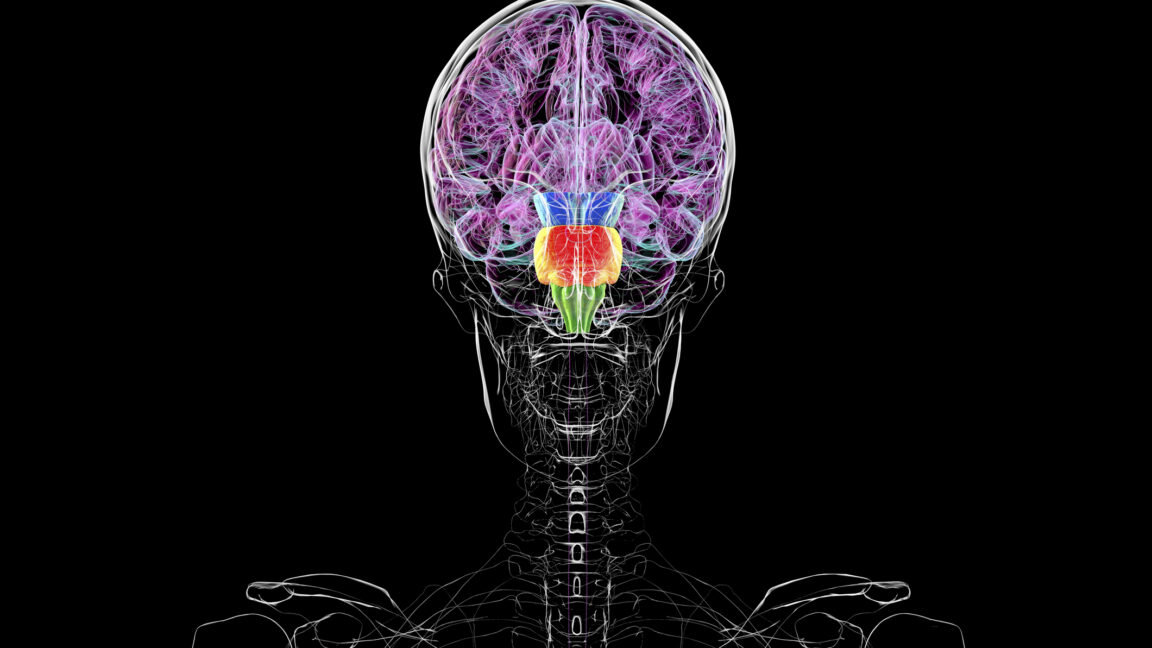
No, Humans Don’t Have Two Brains: What New Research Really Shows
Late last week, headlines claimed that new research suggested humans might have “two brains.” That is not what you would see on an MRI scan—and it is not what the research shows.
As is often the case, the rumors appear to have originated with a single press release published by one of the universities involved in the research.
There are not two human brains. Taking the paper’s results literally is a misleading way to understand them. A better interpretation helps explain how the brain is assembled and illustrates several important concepts in developmental biology.
Here is what the research actually addresses—and how it fits into our understanding of brain development.
How the nervous system develops in sections
You may associate body segments with crustaceans and insects, but parts of the vertebrate nervous system also develop in distinct regions. Vertebrates have four main divisions of the central nervous system: the forebrain, midbrain, hindbrain, and spinal cord. Some of these regions later form additional subdivisions, which are not the focus here.
The new paper is primarily concerned with a fundamental question: How do these major regions form during development?
Why brain development matters
Questions like this are central to developmental biology. The field examines how organisms begin as single cells and progress through a series of carefully timed and coordinated processes that produce all the tissues found in adults.
To understand how the brain takes shape, it helps to start with the embryo’s earliest organization. By the time the first cells that will develop into neurons appear, a vertebrate fetus already has an established head and tail, as well as a back and belly. The biological processes that establish those directions are complex, but they are well studied.
At that stage, the embryo consists of three primary tissue layers. The endoderm lines the intestines, the mesoderm develops into structures such as muscle and bone, and the ectoderm forms the skin and nervous system.
Source: arstechnica.com