


Two New Sea Spider Species Found in British Columbia’s Salish Sea
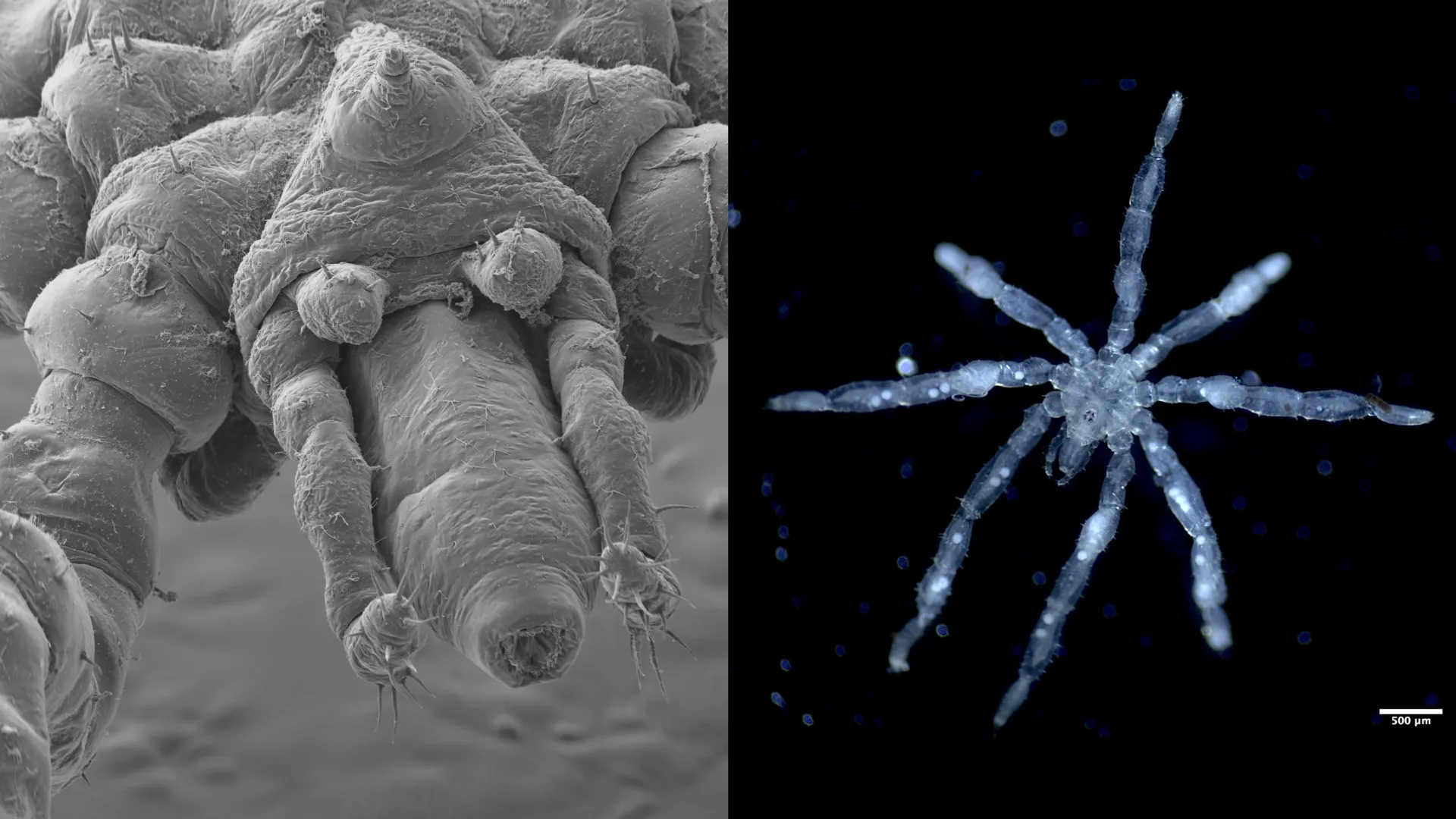
If you are swimming in the Salish Sea at night and imagine small, hairy feet creeping toward you, there is at least one unsettling reason that image feels plausible. Researchers at the University of British Columbia have identified two previously unknown sea spider species, including one with hairy legs and striking red eyes.
The discovery marks the first time a new sea spider species has been officially described from the Salish Sea in nearly 100 years. Published in Biological Diversity and Evolution, the study combines detailed physical observations with genetic analysis to address a major gap in scientists’ understanding of these rare marine animals.
“Marine invertebrates in the Salish Sea are particularly at risk, so we were interested in how sea spiders would be affected by climate change and human disturbance, but we couldn’t find anything,” said lead author Cormac Toler-Scott. He conducted the research as part of his master’s degree in zoology at UBC. “That’s mainly because people don’t know much about what species exist here and what their lifestyles are like.”
Toler-Scott said the lack of basic information affects many marine arthropods.
“We need to be able to identify marine invertebrates to understand how they are being affected by things like climate change and how we can better protect these important components of the ecosystem.”
Sea spiders are ancient marine relatives of scorpions and horseshoe crabs
Sea spiders belong to an ancient lineage that originated approximately 500 million years ago. They are related to spiders, scorpions and horseshoe crabs, but unlike their land-dwelling relatives, they have remained entirely marine.
Their appearance is strange even by arthropod standards. Some species may have as many as 12 legs in addition to the proboscis they use for feeding. Their size varies widely, from less than a centimeter long to more than 70 centimeters in Antarctica, and some species hunt small animals in deep-sea environments.
“They retain some strange characteristics,” Toler-Scott said. “Many shallow-sea species are so small that they live as parasitoids on larger organisms, using strange devices called proboscises to suck the juices from their hosts.”
Sea spiders also have unusual reproductive and physiological characteristics. They breathe directly through their skin, and males are responsible for carrying and raising the young.
Females have ovaries that extend into their limbs, where eggs develop before emerging through specialized openings. During mating, the male collects the eggs using a specialized appendage near the base of the head. He coats the eggs with glue secreted from his legs and attaches the developing egg mass to his body.
One new sea spider has hairy legs and red eyes
Researchers collected the newly described species during dives reaching depths of up to 18 meters between September 2023 and August 2024. The specimens came from a variety of marine habitats around Quadra Island, Vancouver, Bamfield and Victoria.
One species was named Karipalen Pirospedes, a name derived from the Latin words meaning “hairy foot.” Long, curved spines cover the lower part of its foot.
The animal has red eyes and a short proboscis with claws that help it grasp food before chewing. Its mouth is triangular, divided into three lips and surrounded by sensory tendons, giving it an appearance reminiscent of the burrows of a small marine Sarlacc.
The species also has unusually agile egg-carrying appendages. Under a microscope, researchers watched as the sea spiders wrapped these appendages around their legs and used their comb-like spines to groom and clean their bodies.
Despite its memorable appearance, the research team found only one specimen.
The second species was covered in parasites and debris
The second newly described species is tanystylam xin. Its name comes from the ruins of an ancient Indigenous village near where the specimen was first collected.
Pronounced “keehin,” the name refers to the sound of waves crashing at the base of the village grounds.
Unlike Karipalen Pirospedes, this species has much smaller and less flexible limbs for carrying eggs. This appears to limit its ability to groom effectively.
Researchers often found small parasites, dirt and debris stuck to the animal’s body. The result is what Toler-Scott described as “an ecosystem within an ecosystem within an ecosystem.”
DNA analysis reveals hidden sea spider diversity
The study is the first comprehensive survey of sea spiders in the Salish Sea to combine detailed imaging with DNA analysis.
Researchers generated gene sequences for several species that had never been sequenced before. They also created an identification guide to help scientists distinguish among sea spider species found throughout the region.
Both newly described species have now been added to the global database. However, Toler-Scott said the Salish Sea likely contains additional species that have not yet been recorded.
“Even though we only had one field season, there is definitely diversity out there that we haven’t recorded.”
In other words, plenty of nightmare fuel could still be hidden beneath the surface of the Salish Sea.
This research was funded by the National Science and Engineering Research Council of Canada.
Source: www.sciencedaily.com