


Nikon Disqualifies Microscopy Competition Winner Over Generative AI Use
A winning entry in Nikon’s prestigious Small World in Motion scientific photography competition has been disqualified after scientists questioned whether the video was authentic.
Generative AI breached competition rules
Nikon said the use of generative AI in the video’s composition violated the rules of the competition, which recognises photos and videos captured using powerful microscopes.
The company said the video “does not comply with competition regulations regarding generative AI”. It added that it does not assess applicants’ professional reputations or scientific contributions.
Nikon said it would review the rules and procedures for the annual competition, which has been running for 15 years and focuses on microscopic images.
The company said the decision followed “a thorough re-evaluation of the video and supporting documentation and in consultation with review committee members”.
Winning video showed cilia in children with PCD
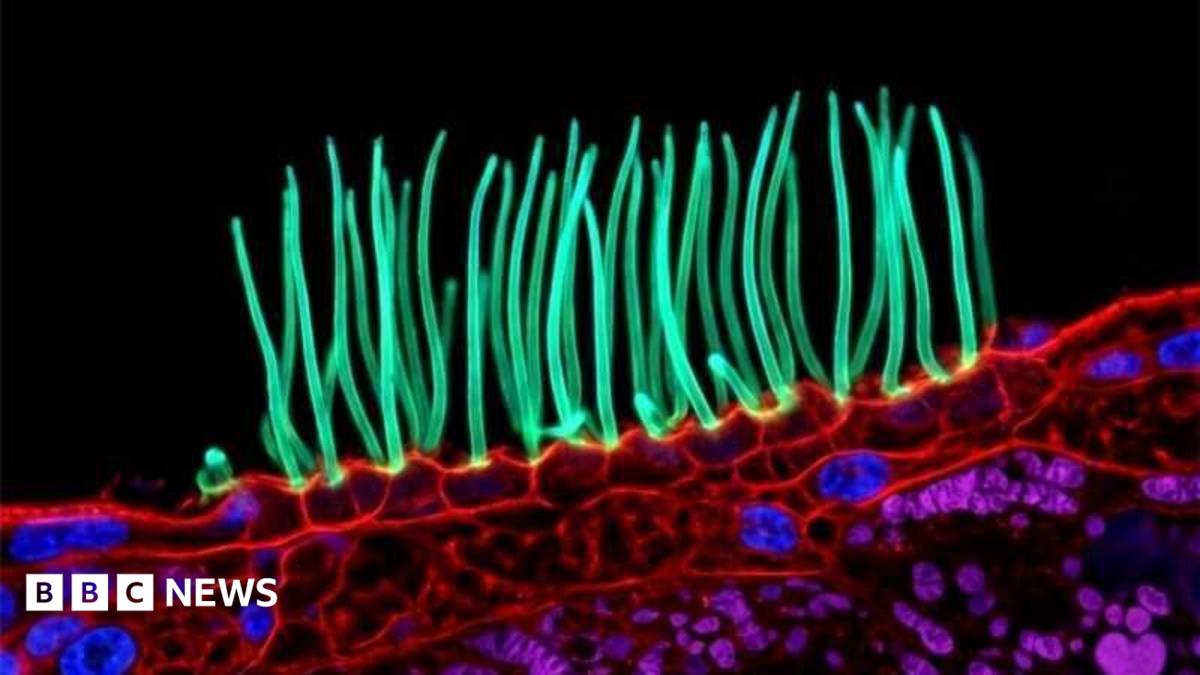
The disqualified entry was submitted by Dr Ning Xu of Tsinghua University in China. It showed tiny hair-like structures called cilia moving inside the airways of children with primary ciliary dyskinesia, or PCD, a respiratory disease.
The BBC has contacted Dr Xu for comment.
Scientists raised concerns about the video
Several scientists, including former competition judges, contacted Nikon through its LinkedIn page, saying the video did not appear to be authentic.
Mr Xu acknowledged using AI but said he believed he had acted within the rules and cooperated with Nikon’s investigation.
Dr Robert Hurst, a University of Leicester scientist who was among the first experts to raise concerns, said he was “not surprised” by the disqualification and had “quickly knew the video was a hoax”.
“For 20 years, I have been diagnosing PCD by examining cilia waveform, length, cell size, and shape,” he said.
Mr Hirst, lead scientist at the university’s NHS Center for Diagnosis of PCD, said the cells and cilia “looked nothing like those of PCD patients”.
“This controversy affects many patients, scientists, physicians and PCD support networks around the world,” he said.
Source: www.bbc.co.uk