


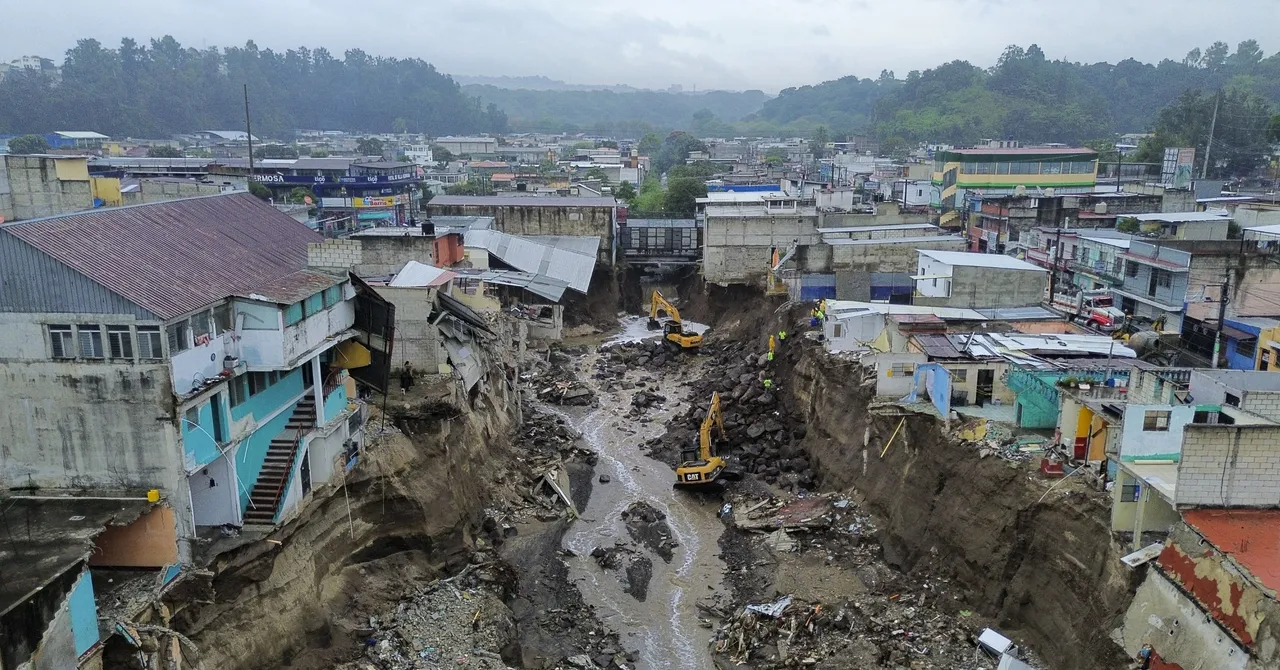
Super El Niño Is Intensifying: What It Means for Global Weather and Climate Change
A powerful El Niño is developing in the tropical Pacific, with forecasts pointing to record-breaking ocean heat and major weather impacts around the world.
tropical Pacific The heat has been increasing for months as a “super” El Niño develops.
El Niño, a weather phenomenon that occurs every few years, is expected to return this year, breaking daily temperature records and reaching unprecedented strength this winter. El Niño is characterized by warmer-than-normal seawater in the eastern tropical Pacific Ocean, but its effects can be felt across the globe.
It is natural to wonder how El Niño relates to another global problem: climate change caused by the burning of fossil fuels. Christopher Callahan, a climate researcher at Indiana University, said that while it may seem obvious that a warmer climate would cause El Niño events, researchers still have “more questions than reactions” about the relationship. In other words, the connection remains an active area of research, and this year’s El Niño could provide important insights.
Why El Niño affects weather around the world
Increased ocean heat from El Niño affects the atmosphere and changes weather patterns around the world. Think of it like a domino run: one event starts a chain reaction. The large mass of heat in the Pacific Ocean acts as a powerful nudge to the atmosphere, triggering weather changes that could be severe and last for generations.
The National Oceanic and Atmospheric Administration predicts a 100 percent chance that a very strong El Niño will continue through December, along with a more than 80 percent chance that it will persist through February.
The event is already breaking multiple daily high-temperature records. The recent maximum temperature reached 3.4 degrees Celsius.
NOAA publishes El Niño forecasts as three-month rolling averages. The agency predicts that peak heat could reach 2.7 degrees Celsius above normal from October through December. However, temperatures exceeding 3 degrees Celsius are not inconceivable.
If the forecast holds, this El Niño would break the previous record of 2.4 degrees Celsius, set during the 1982–1983 event.
How does climate change affect El Niño?
A growing body of evidence indicates that climate change is likely to play at least some role in influencing El Niño. Francisco Estrada, coordinator of the climate change research program at the National Autonomous University of Mexico, said the phenomenon’s magnitude and frequency have increased over the past 60 years. Its variability and the way its effects are distributed around the world have also changed.
Estrada argues that the discussion should not frame the issue as a choice between a “natural El Niño” and a “climate change-induced El Niño.” Instead, he says, researchers should examine how the two processes interact.
“El Niño and global warming cannot be separated; they are closely related,” he explains.
Callahan said many models struggle to accurately represent long-term temperature trends in the eastern tropical Pacific. However, modeling also suggests that El Niño is likely to strengthen as the planet warms. That possibility has given researchers pause, while other evidence suggests climate change may be making El Niño more intense.
Source: www.wired.com