


7 Places That Reveal the Deep History of Native Americans
Native American history stretches back tens of thousands of years—long before Christopher Columbus arrived in the Bahamas in 1492. Archaeological discoveries and recent scientific research continue to show that people lived in the Americas much earlier than many experts once believed.
For Indigenous Peoples Day, explore seven places across the United States that help tell the story of Native American communities, cultures and achievements.
1. Chaco Canyon, New Mexico
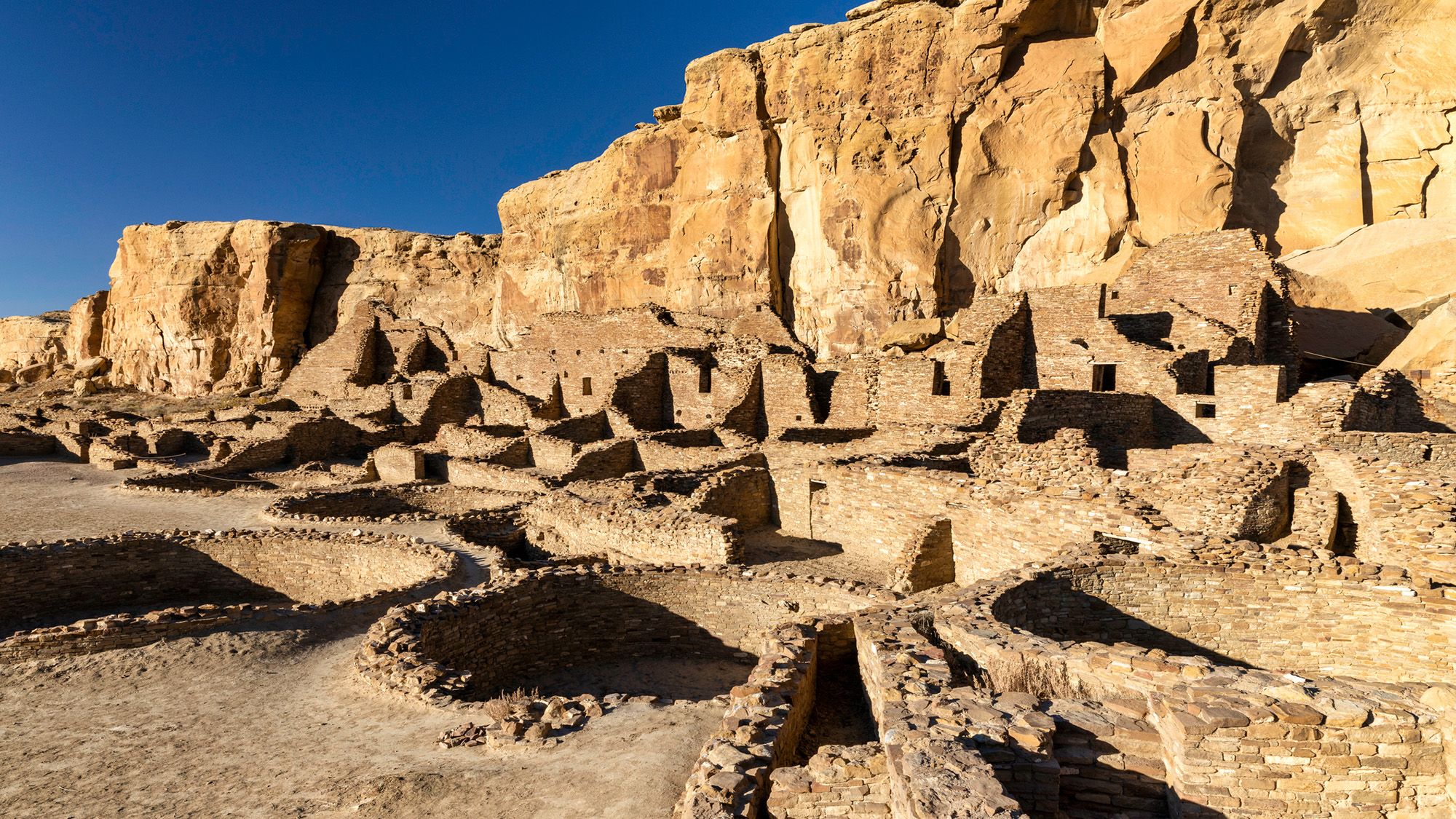
Chaco Canyon was a major center of politics and ritual for the ancestral Puebloans from approximately A.D. 850 to 1250. At its center was Pueblo Bonito, a four-story stone complex with more than 600 rooms and 35 underground ceremonial chambers called kivas.
Builders used sandstone blocks reinforced with timber beams. Experts estimate that more than 200,000 beams were transported from distant mountains to construct the settlement.
Chaco Canyon was also connected to a road network that extended more than 400 miles (640 kilometers). Archaeologists have found imported Mesoamerican macaws and cacao, evidence of long-distance trade with distant regions. The site is preserved by the National Park Service.
2. Cahokia, Illinois
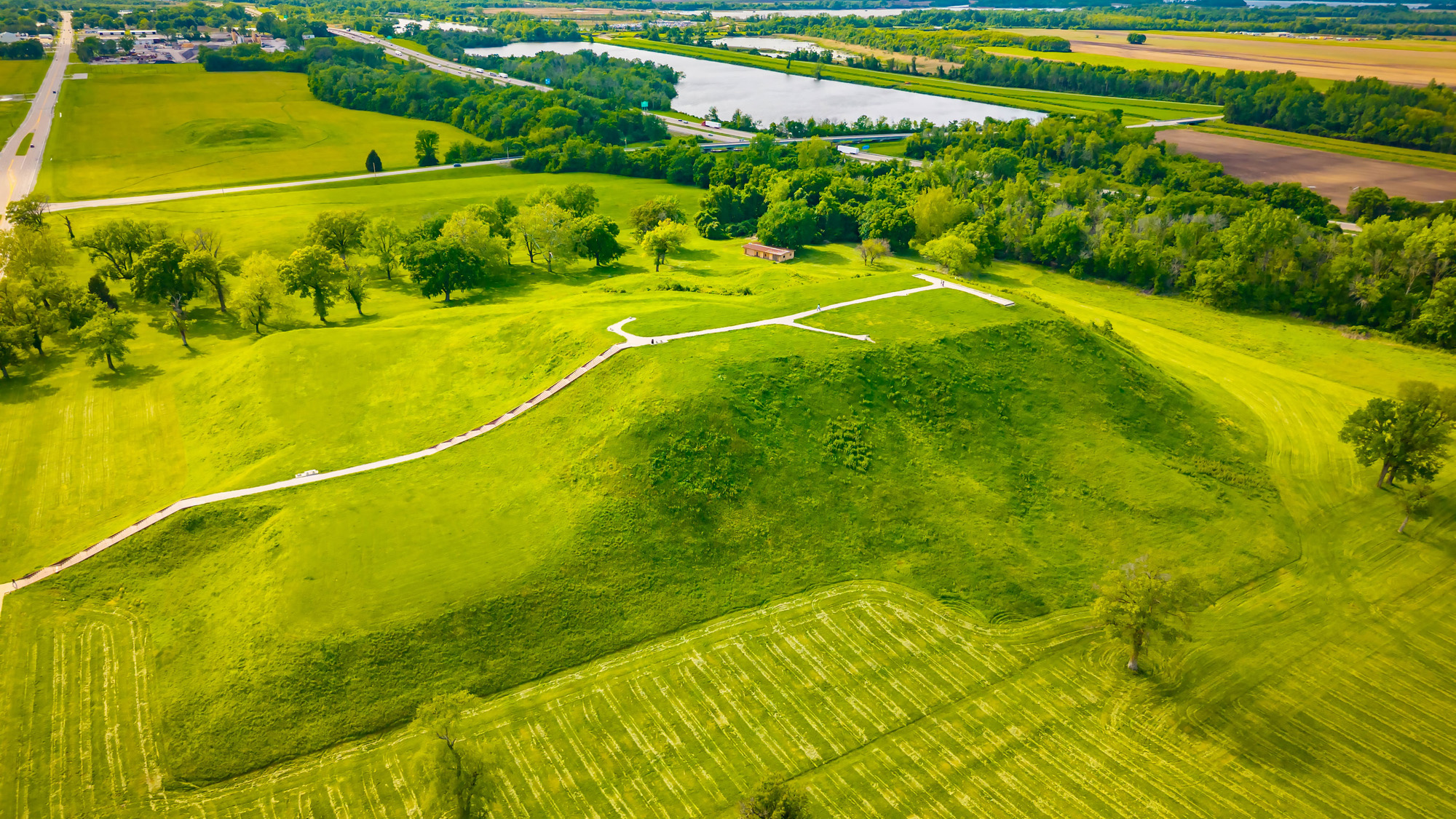
Cahokia was once the largest Native American settlement north of Mexico. At its height around A.D. 1100, as many as 40,000 people may have lived there—making it comparable in size to a major medieval European city.
The settlement included houses made from wattle and daub, a large public square, wooden fences and dozens of ceremonial mounds. Its residents transported timber across long distances, including wood used to build the marker known as the Mitchell log.
Archaeological evidence suggests that people traveled to Cahokia from far away, probably to participate in rituals. Today, the site is a UNESCO World Heritage Site. It includes Monk’s Mound, a stepped earthwork about 100 feet (30 meters) tall, and Woodhenge, a timber circle that tracked the solstices and equinoxes.
3. Mound Key, Florida
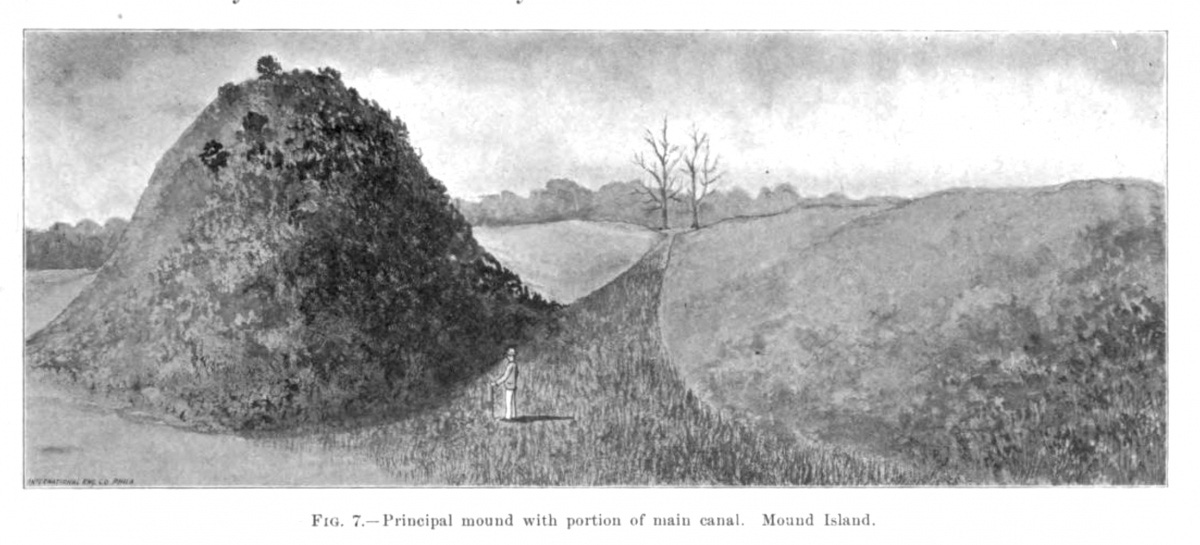
Mound Key is a remarkable island complex in Estero Bay formed from millions of discarded shells, most of them oyster shells. Centuries of shellfish consumption by Native Americans created enormous shell mounds, some rising more than 30 feet (9 meters) above the water.
Before European arrival in the 16th century, the island was called Kalos. It was developed by the Calusa people into a prosperous maritime city. The Florida Museum describes the site as an important part of the Calusa kingdom.
4. Sitka, Alaska
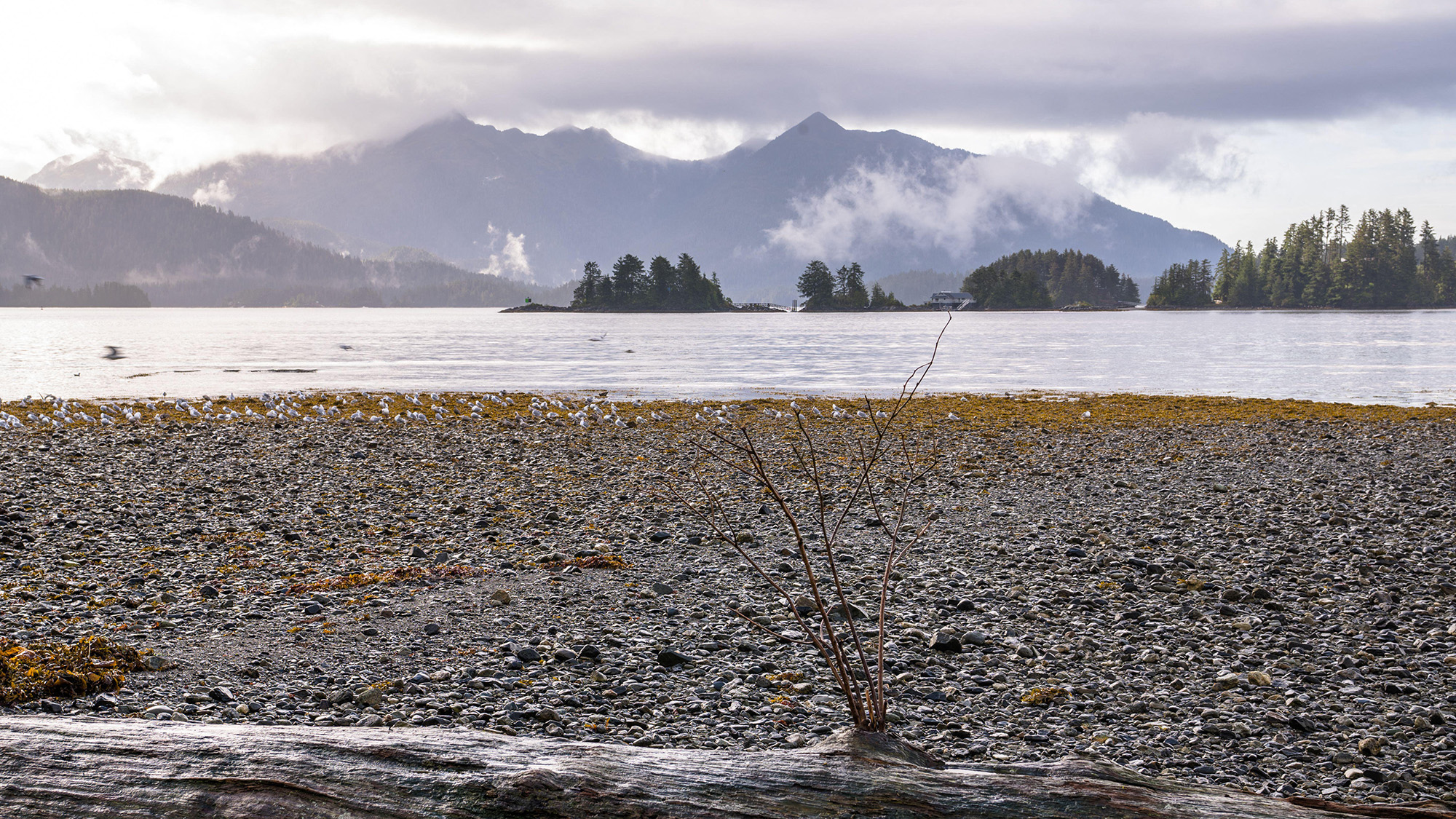
Sitka National Historical Park preserves the site of the 1804 Battle of Sitka, fought between Tlingit warriors and colonial Russian forces. It was the last major armed conflict between Europeans and Alaska Natives.
The conflict began after Russian fur traders built a fort in Sitka and entered Tlingit territory in 1802. The Tlingit destroyed the fort and expelled the Russians, then built their own fortifications in anticipation of a counterattack.
In 1804, Russian ships bombarded the Tlingit fort, forcing its abandonment. Russia continued to claim Alaska until selling the territory to the United States in 1867. The history of the battle is documented by the National Park Service.
5. Walnut Canyon, Arizona
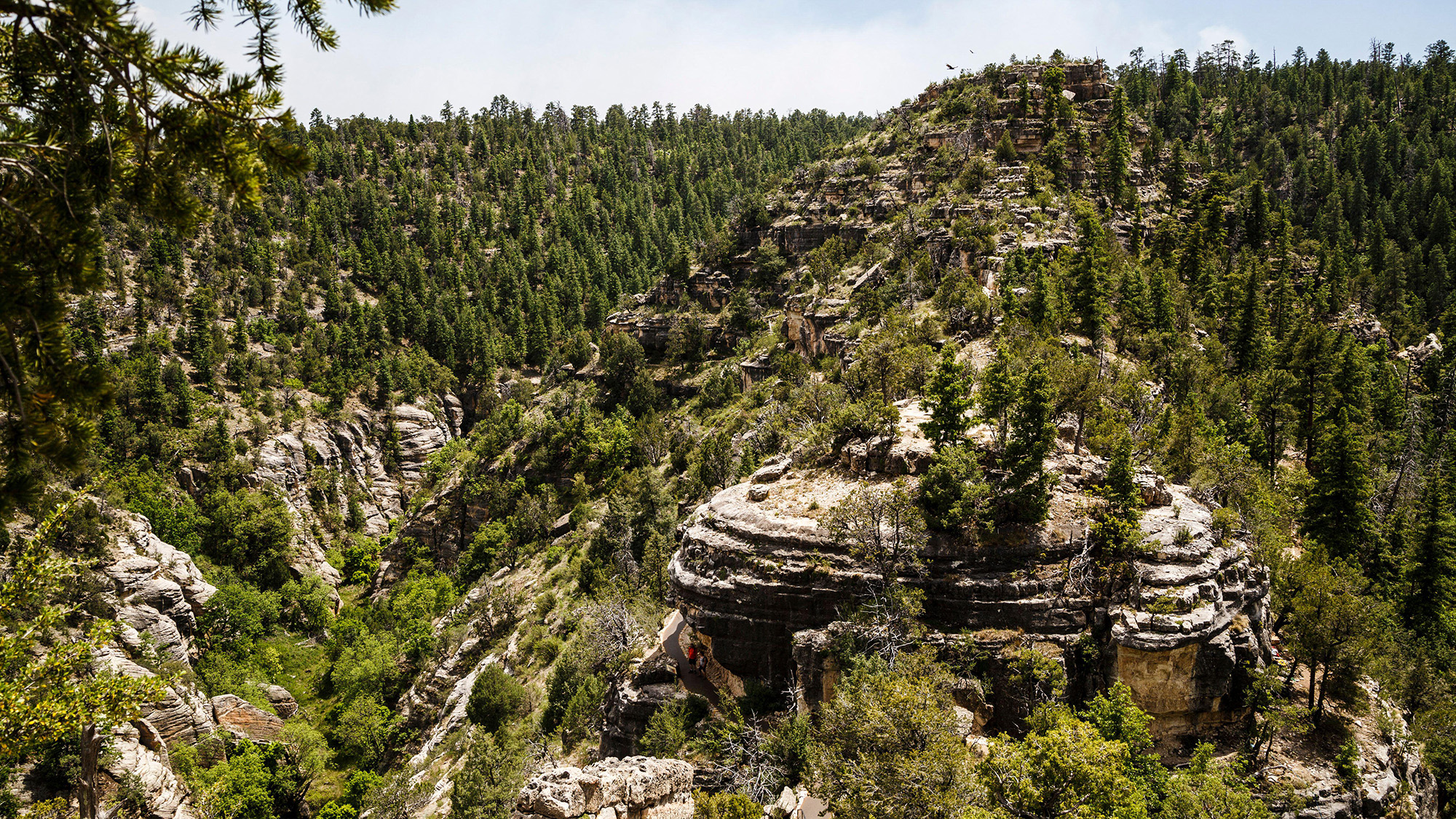
Walnut Canyon contains more than 80 cliff dwellings built by the Northern Sinagua people between A.D. 1125 and 1250. Visitors can reach the ruins by following a boardwalk through a deep limestone and sandstone canyon about 10 miles southeast of Flagstaff.
The dwellings were built inside natural limestone caverns, which helped protect residents from extreme heat and cold. Their elevated positions above the canyon floor also offered a defensive advantage.
Walnut Canyon demonstrates how Native Americans adapted to a dry environment through careful water management. Residents cultivated crops on the flatlands along the canyon rim and drew water from rivers below to fill reservoirs. The site is preserved by the National Park Service.
6. Chimney Rock, Colorado
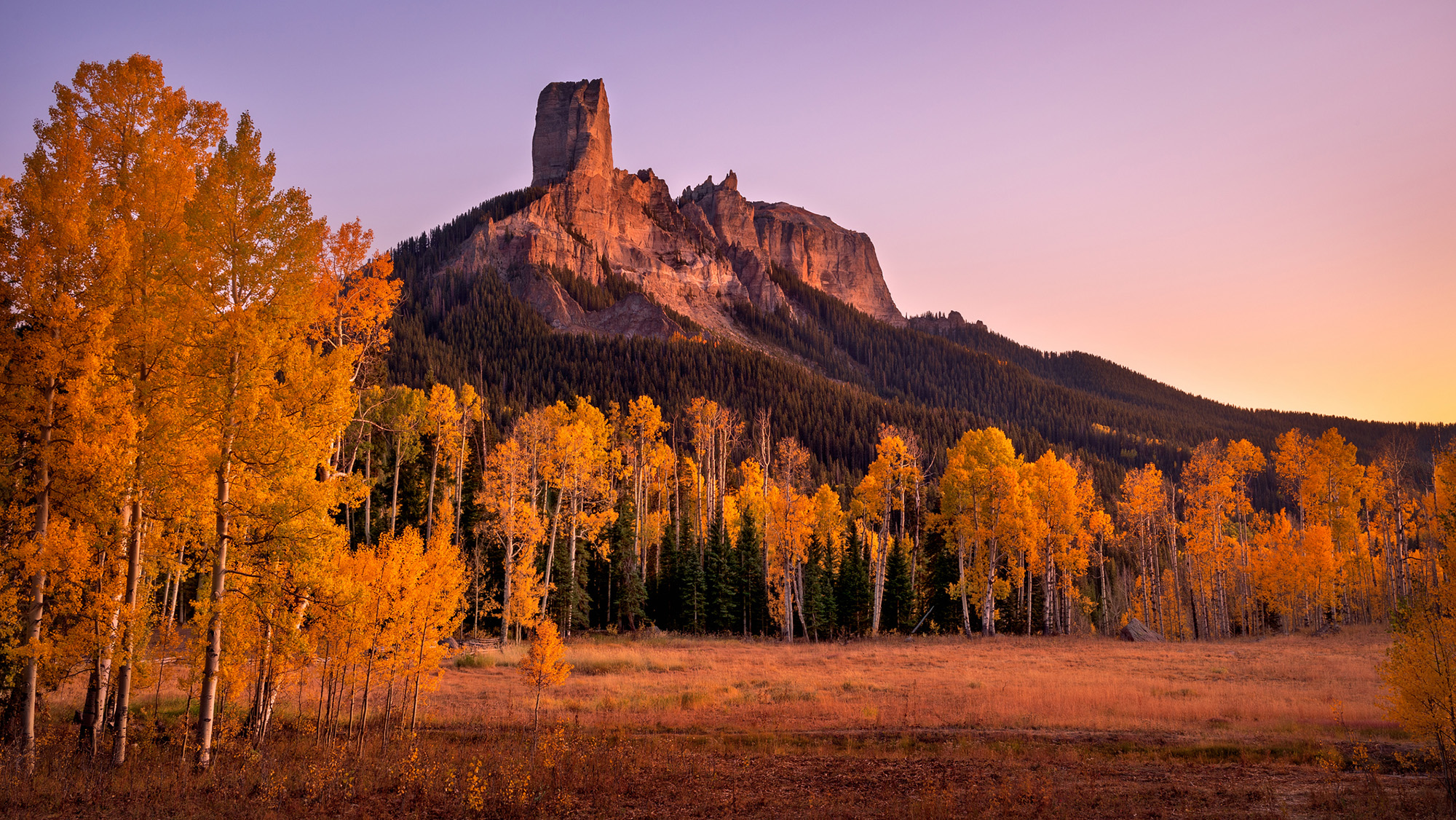
Chimney Rock is part of a landscape containing more than 80 Ancestral Puebloan ruins. The prominent rock formation and its surrounding structures were built about 1,000 years ago.
A sandstone, clay and wood “Great House” stood on a ridge near the rock spire, offering sweeping views of the surrounding territory. Its architecture resembled that of Chaco Canyon, about 100 miles (160 kilometers) to the south.
Archaeologists believe Chimney Rock served as a ceremonial center. Its location also had astronomical significance: the site was associated with the moon’s 18.6-year cycle, an important observation among Native American communities.
7. Blackwater Draw, New Mexico
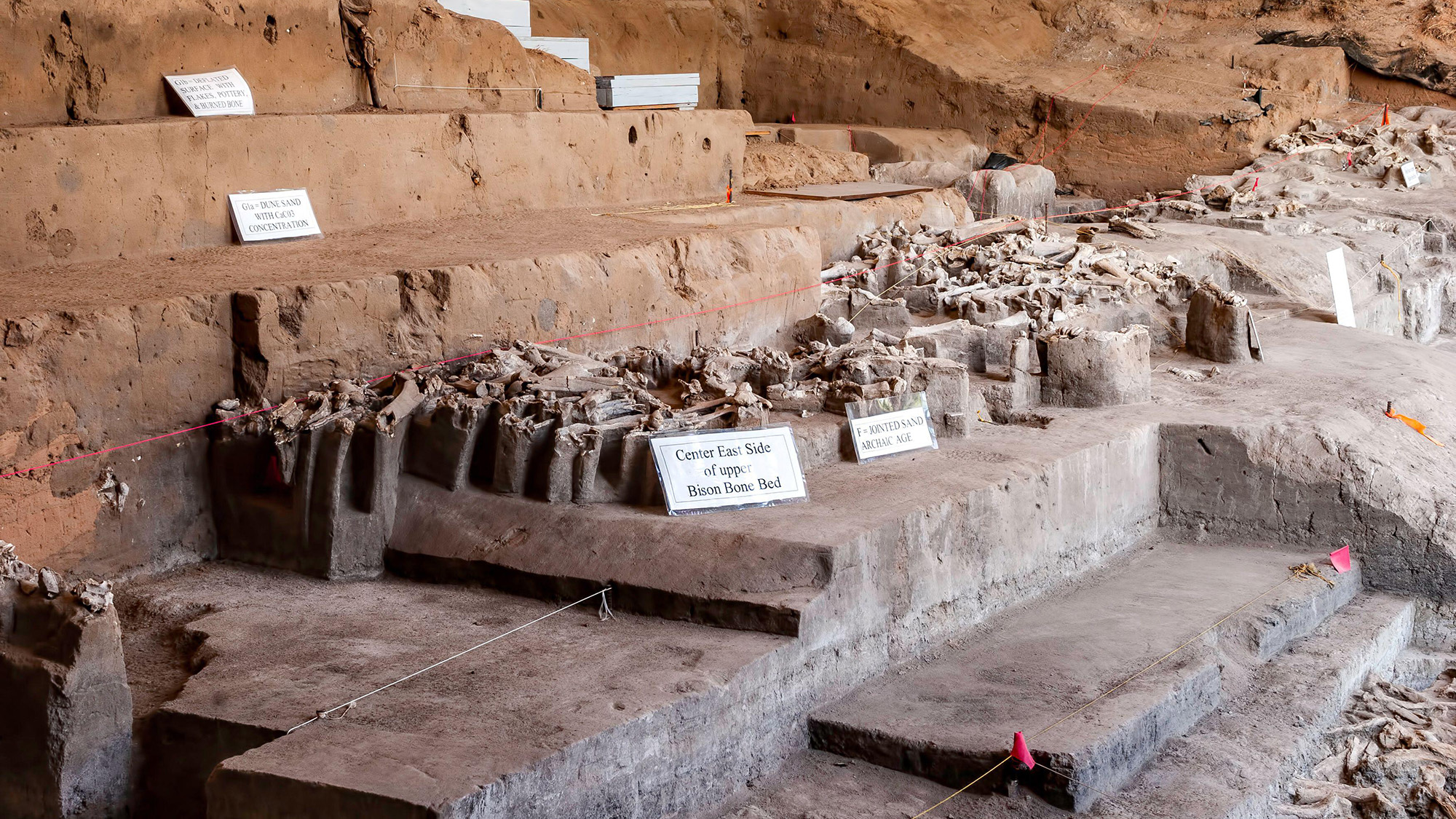
Blackwater Draw is closely associated with the Clovis culture, once considered the oldest Indigenous culture in the Americas. The Clovis people lived in the region about 13,000 years ago. Archaeologists have discovered stone and bone tools, along with evidence of animals they hunted, including mammoths.
The first evidence of the Clovis people was discovered near the town of Clovis in 1929 and at Blackwater Draw in 1932. However, later discoveries have pushed back the timeline for human presence in the Americas.
Research on ancient footprints at White Sands National Park in New Mexico appears to confirm that humans lived in the region as far back as 23,000 years ago—long before the Clovis people.
How much do you know about the first people to reach the Americas? Test your knowledge with our first Americans quiz.
Source: www.livescience.com