


How Cloud Seeding Uses Silver Iodide to Increase Rainfall
Rainmaker founder and CEO Augustus Dorico says his company uses carefully measured silver iodide compounds in cloud-seeding flights. The company’s approach has prompted questions about chemical safety and the environmental impact of releasing silver iodide into clouds.
How Much Silver Iodide Does Rainmaker Use?
Dorico said Rainmaker releases 20 grams of silver iodide per flight, spreading it across thousands of square kilometers. According to Dorico, the resulting increase in ground-level concentrations is approximately 1 part per quadrillion—well below the threshold established by the U.S. Food and Drug Administration for acceptable levels.
How Rainmaker’s Cloud-Seeding Drones Work
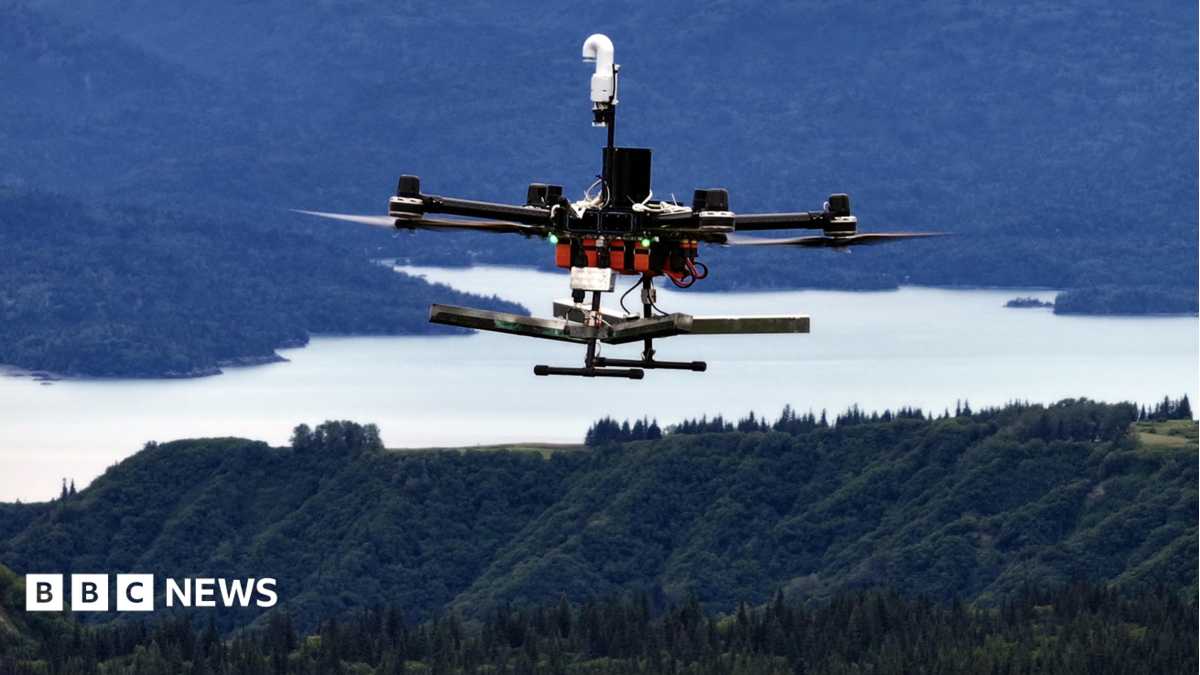
Rainmaker uses drones to fly into existing clouds. Without clouds, Dorico says, “we can’t do anything,” highlighting one of the main limitations of cloud seeding: operations must wait for suitable clouds to form before precipitation can be encouraged.
The company’s drones carry silver iodide flares. When ignited, the flares release particles that remain suspended in frozen clouds for hours. The particles eventually help form ice crystals, which can later develop into precipitation.
Rainmaker’s Cloud-Seeding Operations
Rainmaker operates in states including Idaho, Utah, and Colorado, as well as in the Middle East, including Jordan.
“Due to water scarcity, Jordanian residents often only have access to water for a few hours a week from their water utilities. We are honored to support this storied region,” Dorico said.
The History of Cloud Seeding
Cloud seeding dates back to 1946, when researchers at General Electric’s laboratory used dry ice as the first seeding agent. A year later, scientists found that silver iodide was more effective than dry ice, which quickly turns into an ineffective gas.
Although cloud-seeding agents have been linked to increased rainfall, the results have not always been significant. The technology’s effectiveness can vary considerably depending on local weather and cloud conditions.
“With the right conditions, cloud seeding can squeeze out about 5 to 10 percent of the extra precipitation,” said John Meyer, assistant state climatologist at the Utah Climate Center.
What Research Says About Silver Iodide Cloud Seeding
A landmark 2017 study provided encouragement for the cloud-seeding industry. The research showed that silver iodide worked as expected and was among the first studies to use radar and precipitation gauges to observe cloud seeding in action.
In recent years, Meyer has encouraged companies such as Rainmaker to continue innovating in the established cloud-seeding industry.
“Drones such as Rainmaker’s products present this new path,” Meyer said. “We expect these clouds to provide a more targeted nature to these clouds and be more responsive.”
Source: www.bbc.co.uk