


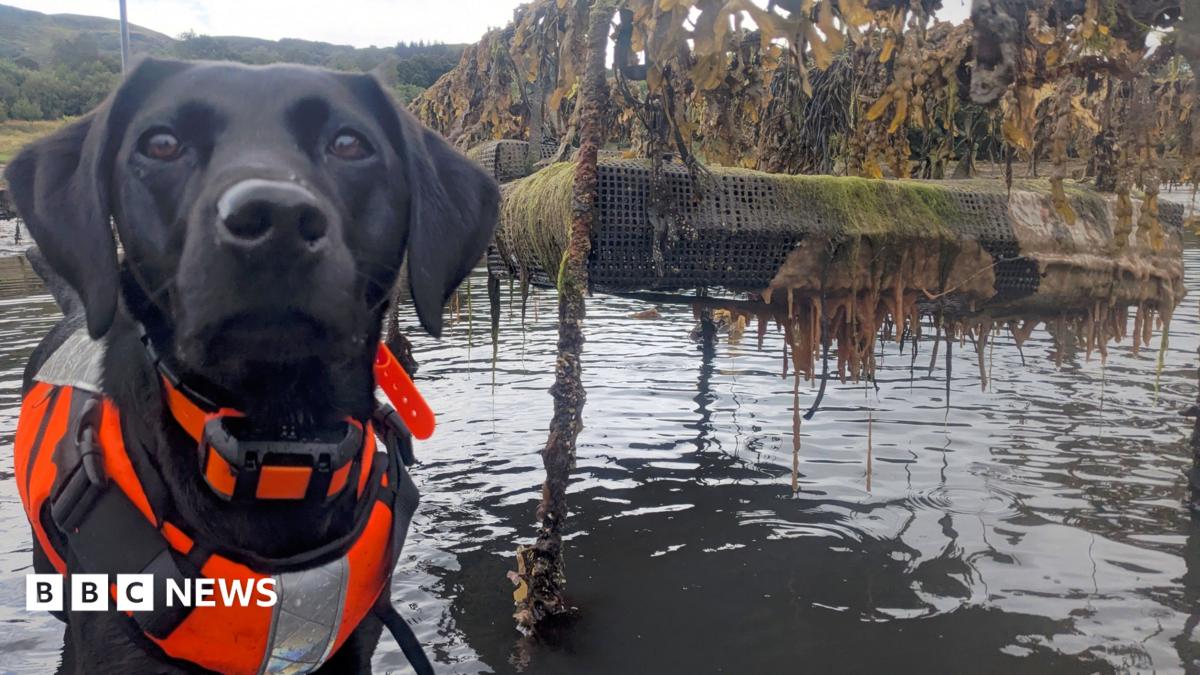
Dog Sugias Helps Detect Invasive Carpet Sea Squirts Beneath Seaweed
Sniffer dog Sugias is helping marine experts locate invasive carpet sea squirts, offering a promising new way to tackle a growing threat to coastal ecosystems and marine infrastructure.
A proof-of-concept project with promising results
“When we first started this project, we really didn’t know if it would work,” Dr. Sim said.
“No one had seriously considered whether dogs could help solve this problem in the marine environment. This started as a proof-of-concept project, but it has exceeded all my expectations.”
Dogs’ powerful sense of smell is already used in land-based conservation, including tracking endangered species and investigating environmental crimes. At low tide, Sugias can “dive under the seaweed,” as Dr. Sim puts it.
“It’s much easier because she can basically pinpoint the location just by investigating with her nose,” she said.
What are carpet sea squirts?
Marine experts believe the carpet sea squirt, officially known as Didemnum vexillum, originated in Japan. The invasive species arrived on the coasts of southern England and Wales in 2008.
Carpet sea squirts appear in shades ranging from orange to cream and have since spread to several seaside locations across the UK.
They reproduce rapidly during the warm summer months and could become even more widespread as ocean temperatures rise.
Why invasive sea squirts are a concern
Dr Martin Kerr, a marine biologist at Bangor University, told BBC News that invasive or “biofouled” species such as carpet sea squirts can compete with native wildlife for valuable nutrients.
“These species also clog machinery such as aquaculture cages, marine infrastructure and boat propellers,” he explained.
Across Europe, efforts to control and remove these problematic marine invaders cost millions of pounds every year. Sugias’ ability to locate carpet sea squirts could help experts identify affected areas more efficiently.
Source: www.bbc.co.uk