


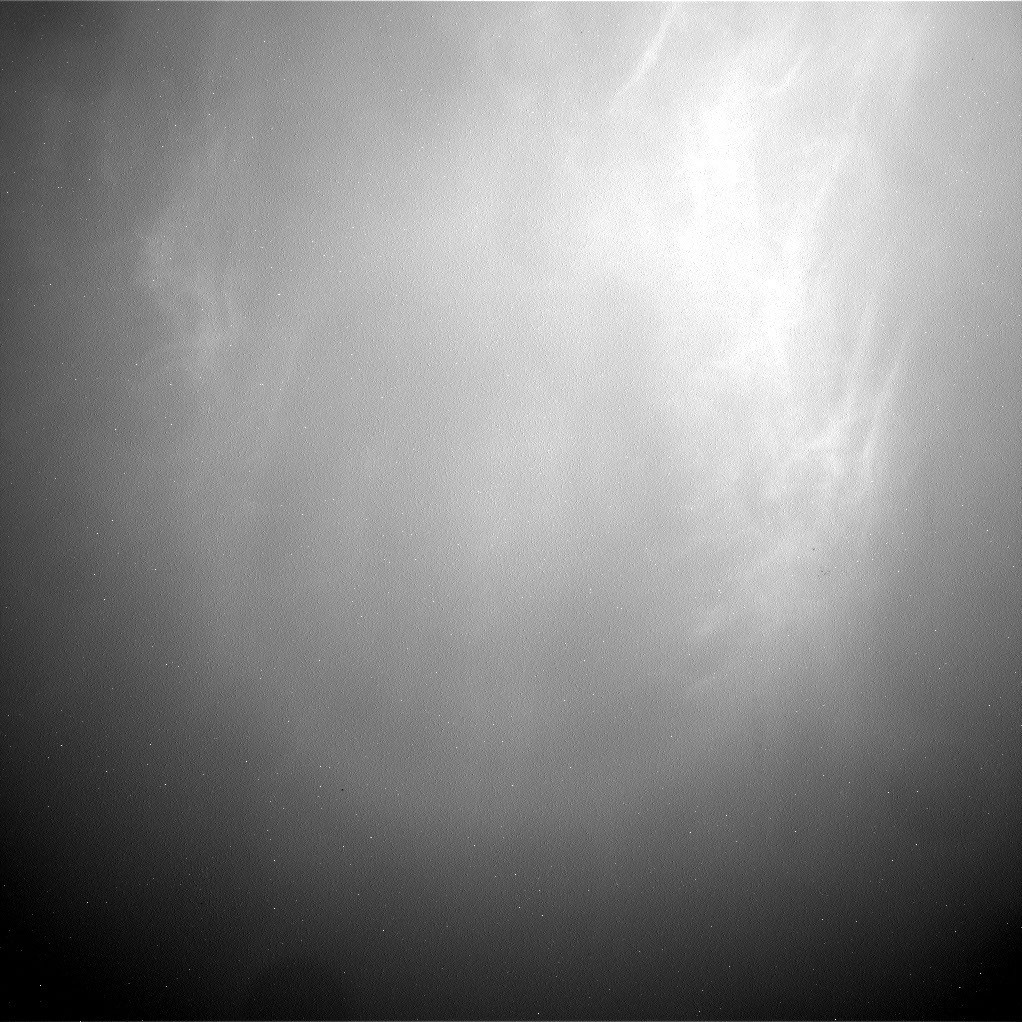
Mars Year 39 Begins as Autumn Clouds Return to Gale Crater
Written by Alex Inanen, atmospheric scientist at York University
Happy New Year of Mars! The Martian New Year begins with spring in the northern hemisphere, marked by the vernal equinox. Scientists track Mars’s seasons using solar longitude, or Ls. Because Mars completes a 360-degree revolution around the Sun, each season spans 90 degrees of solar longitude.
Mars Year 39 began when solar longitude reached 0 degrees, or Ls = 0°—pronounced “el-sub-zero” if you want to sound like a Martian—at the end of September. The new year also marks the arrival of autumn at Gale Crater, just south of the Martian equator.
Curiosity Continues Training at the “Basque Lake”
As Michelle mentioned last week, we welcomed the Martian New Year with a training campaign at the “Basque Lake.” This week, I focused on completing my training activities before leaving for the weekend.
After reviewing the results from last week’s laboratory activities, the SAM team decided to add more GCMS experiments. GCMS, or gas chromatography/mass spectrometry, is an energy-intensive activity. However, Monday’s plan covered all four sols, leaving plenty of time for remote-sensing work with Mastcam and ChemCam, as well as scientific investigations of drill tailings—the rock and mineral debris left behind by drill samples.
This weekend’s plans will provide a few more sols to collect the final contact and remote-science targets needed at the Basque Lakes. Once the training activities are complete, we will begin heading back toward the clean, crystalline forms observed in the “Chiu Chiu” area.
Autumn Brings High Dusk Clouds to Mars
Meanwhile, the atmosphere around Gale Crater continues to change with the seasons. Autumn brings a return of high dusk clouds, which are beautifully illuminated by the Sun’s low angle at sunset.
Evening cloud activity increases as autumn progresses, but a late-afternoon cloud video captured on Wednesday has already recorded the first high clouds of the season, shown at the top of this post. Most clouds in Gale Crater are either optically invisible or too thin to be seen by the human eye—or even by Curiosity’s robotic cameras.
These dusk clouds are different: They are bright enough to appear in raw images from Curiosity’s navigation cameras. As I watch the clouds appear and disappear, I look forward to experiencing another autumn on Mars.
Source: science.nasa.gov