


NASA’s Curiosity Rover Captures Stunning Panorama of Mars’ Mysterious Yardang Cliffs
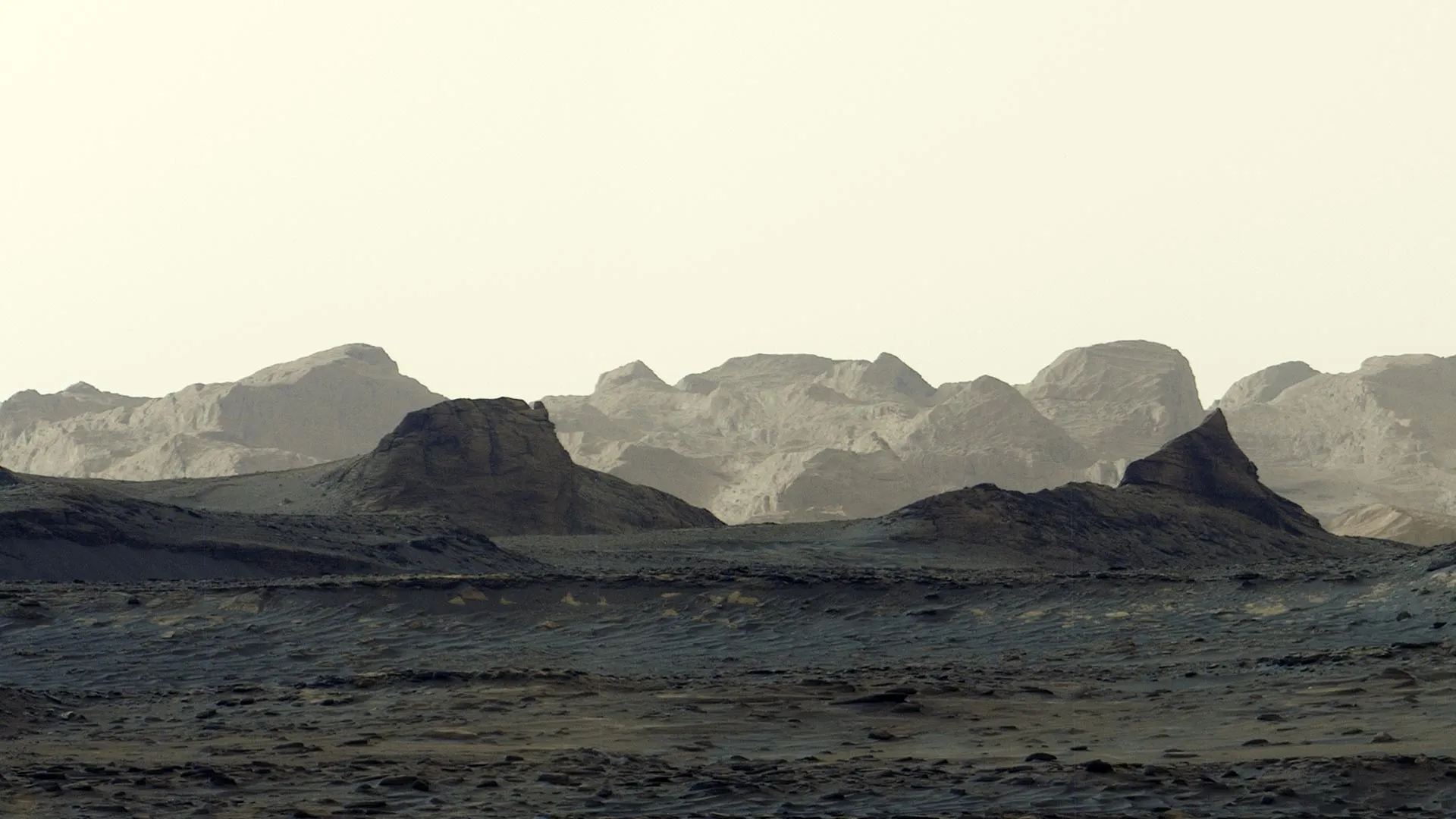
NASA’s Curiosity rover has captured a spectacular new panorama of Mars, offering the clearest view yet of mysterious cliffs shaped by wind. Scientists are eager to study these distant geological formations up close, and the latest images provide an exciting preview of what lies ahead. Taken at 8:30 a.m. local Mars time, the panorama shows a striking blue hue across the foreground as morning sunlight illuminates the steep cliffs known as yardangs along the horizon.
Curiosity photographs the mysterious cliffs of Mars
Curiosity recorded the panorama with its Mastcam on August 11, during the rover’s 4,982nd Martian day, or Sol. Six separate images were transmitted to Earth and combined to create the expansive landscape. Unlike most Mastcam photographs, these images were processed without adjusting the white balance, preserving the distinctive colors and lighting of a Martian morning.
The yardang formation stretches about 10 miles (16 kilometers) across the northwest corner of 5-kilometer-high Mount Sharp, which Curiosity has been climbing since 2014. The rover recently reached a major milestone by gaining 0.6 miles (1 kilometer) in elevation—a greater climb than any other rover has completed on Mars.
As Curiosity approaches these unusual geological formations, researchers hope to capture more detailed views of the cliffs. More importantly, examining the rocks directly could help explain how this remarkable Martian landscape formed.
How Mars’ ancient rocks reveal the planet’s past
Mount Sharp contains numerous layers of sedimentary rock, each preserving evidence of a different chapter in Mars’ history. By studying these geological formations, scientists have reconstructed a time billions of years ago when lakes and streams existed in the region.
As Mars’ environment changed, those bodies of water eventually disappeared, leaving behind salty mineral deposits. After additional material stopped accumulating on the mountain, powerful winds may have gradually eroded some of the existing rock, carving the distinctive yardangs seen today.
However, the unusual appearance of this particular layer has raised questions about its origin. Its color differs from the surrounding terrain, and its rock formations are tilted in unexpected directions. Scientists suspect that processes beyond ordinary wind erosion may have contributed to its formation.
“The Yardang layer looks out of place. The color is wrong, the layer is tilted at an odd angle, and it almost looks filled in,” says Ashwin Vasavada, Curiosity project scientist at NASA’s Jet Propulsion Laboratory in Southern California. “But that’s what makes it exciting to get there. No one knows exactly what formed this layer, but one idea is that it could be ash deposited by an ancient volcanic eruption.”
NASA plans to investigate the Martian cliffs in 2027
Curiosity is currently in the second year of its fifth extended mission. The mission began with an investigation of an unusual, spiderweb-like box ridge. Over approximately the next year, the rover will continue traveling through rock formations rich in sulfates and carbonates—minerals that provide evidence of Mars’ ancient arid conditions.
Mission scientists aim to reach the bottom of the Yardang formation sometime in 2027. Once there, Curiosity should be able to use its robotic arm to examine the mysterious cliffs, collect unique measurements and investigate how they formed. The findings could help reveal the environmental changes that shaped Mars billions of years ago.
Source: www.sciencedaily.com