


Scientists Capture a Subduction Zone Beginning to Break Apart Beneath the Pacific Northwest
Scientists have captured unusually detailed images of a major tectonic system beneath the Pacific Northwest as it begins to collapse.
This discovery provides new evidence that the Cascadia subduction zone is actively fragmenting. Subduction zones form where one tectonic plate is forced beneath another and pushed deep into Earth. They are responsible for some of the planet’s largest earthquakes, powerful volcanic eruptions and long-term changes to continents and ocean basins.
Until now, however, scientists have had few opportunities to clearly observe how one of these enormous systems reaches the end of its life.
How do subduction zones disappear?
Subduction is one of the major processes that continually reshapes Earth’s surface. As an oceanic plate sinks beneath another plate, material from Earth’s crust is carried downward toward the mantle, the hot layer beneath the crust.
These systems can remain active for millions of years, but they cannot continue indefinitely. If they did, continents would eventually overlap, oceans would disappear and much of Earth’s geological history would be erased.
This leaves geologists with a fundamental question: What causes a mature subduction zone to shut down?
“Starting a subduction zone to form is like trying to push a train uphill; it takes a lot of effort,” said Brandon Schack, a geologist at Louisiana State University and the study’s lead author. “But once it starts moving, it’s like a train hurtling downhill and it’s impossible to stop. It takes something dramatic to end the train: a train wreck.”
Scientists may now be watching that process unfold beneath Cascadia.
Plate structure is splitting beneath Cascadia
Off the coast of Vancouver Island, the Juan de Fuca and Explorer plates are slowly being pushed beneath the North American plate. This area is part of the Cascadia subduction zone, a vast tectonic boundary stretching along the Pacific Northwest.
Researchers combined detailed seismic recordings with seismic-reflection images to investigate the depths beneath the ocean floor. The technology works similarly to medical ultrasound: Scientists send sound waves into Earth and measure how those waves reflect from underground structures.
The seismic measurements came from the NSF-funded Cascadia Seismic Imaging Experiment 2021, or CASIE21. During the expedition, researchers aboard a ship transmitted sound waves toward the ocean floor. A 15-kilometre-long streamer equipped with underwater listening devices recorded the returning signals.
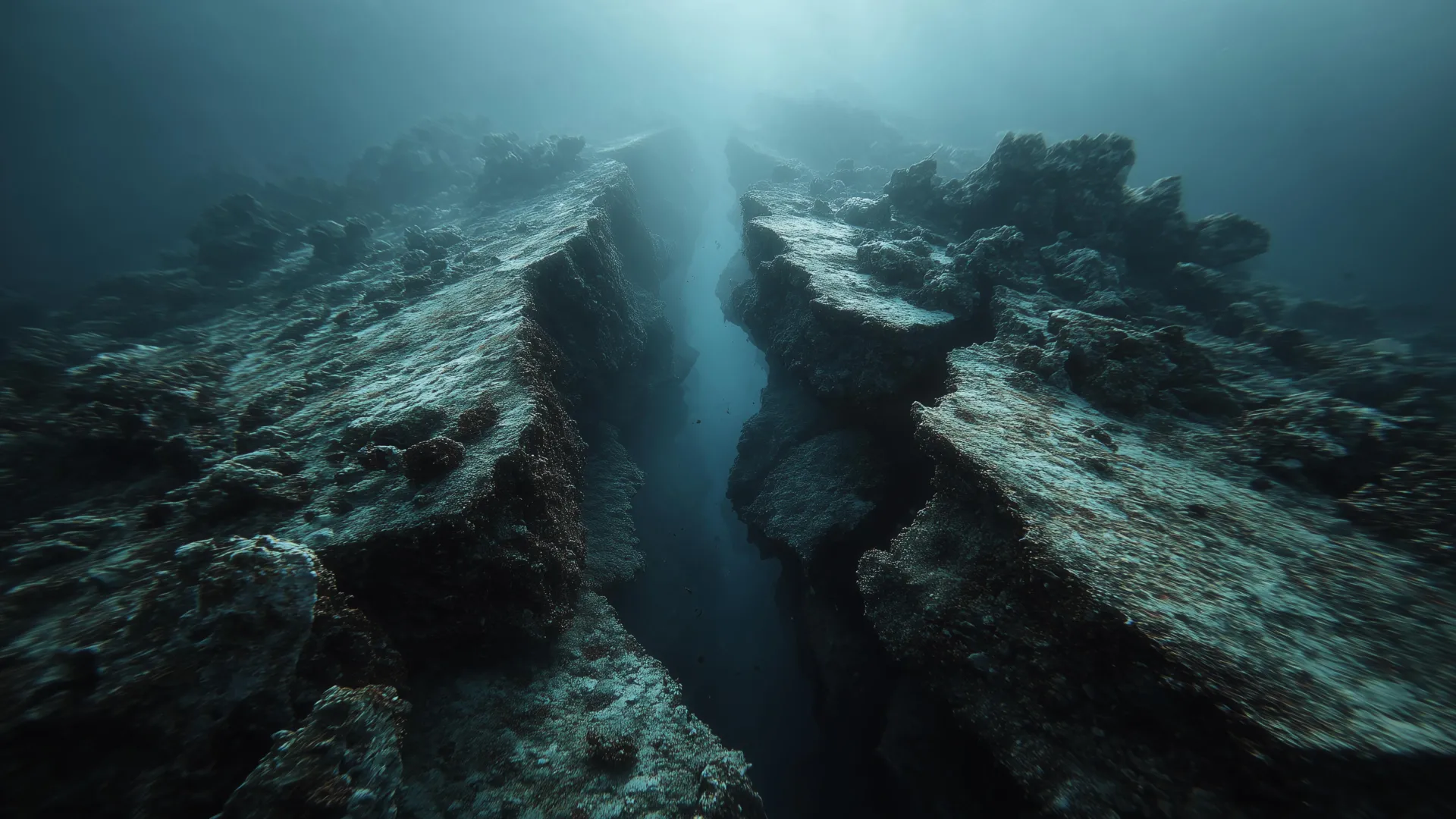
By analyzing these echoes, scientists created detailed images of structures hidden beneath the seafloor. The images revealed large faults and cracks cutting through a subducting plate, including areas where the plate appears to be actively tearing apart.
“This is the first time we have a clear picture of a dying subduction zone,” Schack said. “Rather than everything stopping at once, the plates are torn apart bit by bit, creating smaller microplates and new boundaries. So instead of a big train wreck, it’s like watching a train slowly derail one car at a time.”
A 75-kilometre rift is breaking through the plate
Researchers identified several rifts running through the oceanic plates. One particularly dramatic feature is a large offset where part of the slab has fallen approximately 5 kilometres.
“There are very large faults that are actively fracturing the plates,” Schack explained. “It’s not 100% peeled off yet, but it’s close to it.”
Seismic activity provides another clue about what is happening. Along the roughly 75-kilometre rift, some sections continue to experience earthquakes while others have remained unusually quiet.
This distinction is important because earthquakes occur when connected blocks of rock accumulate stress and suddenly begin to slide.
“Once the pieces are completely broken up, the rocks are no longer stuck together, so there’s no earthquake,” Schack said.
The absence of earthquakes along part of the rift suggests that this section of the plate may have already separated. According to the researchers, the area of delamination is gradually expanding.
Earth’s crust may break apart piece by piece
Rather than failing in one giant event, subduction zones may stall through a series of smaller collapses.
Researchers describe this process as “temporary” or “piecewise” termination. Individual sections are torn apart at different times, gradually dismantling the larger tectonic system.
Transform boundaries may play an important role. These are faults where parts of Earth’s crust move sideways relative to one another. In this setting, they act like geological scissors, cutting across plates and helping separate individual pieces.
Once the pieces separate, they can form microplates. Microplates are small sections of Earth’s hard outer shell that move somewhat independently of the major tectonic plates surrounding them.
Meanwhile, nearby sections of the larger plate may continue to sink.
As more pieces break away, the remaining plate loses some of the downward gravitational pull that helps it continue subducting. Schack compares the process to removing cars from a runaway train. Eventually, there are not enough connected sections left to keep the system operating in the same way.
The breakdown of individual sections can take millions of years. Together, however, these episodes could ultimately mark the end of the entire subduction zone.
Ancient tectonic movements begin to make sense
The discovery may help explain geological mysteries in other parts of the world.
Scientists have found abandoned plate fragments and rare volcanic rocks that appear to record the final stages of an ancient subduction system. Until now, researchers had evidence that these systems collapsed but far less direct information about how the process unfolded.
One important example lies off the coast of Baja California, where geologists identified fossilized microplates left behind by the Farallon Plate. This giant ancient oceanic plate once covered much of the eastern Pacific Ocean.
These fragments have long suggested that the Farallon Plate did not simply disappear in a single event. Observations from Cascadia now provide a possible explanation for how such debris formed.
Rather than collapsing all at once, a dying subduction zone can break down gradually, leaving small plate fragments scattered behind as geological evidence.
Plate tearing can trigger volcanic changes
The splitting process could also change what happens deeper beneath Earth’s surface.
When a section of a subducting plate separates, an opening called a “slab window” may form. This gap allows hotter material from the mantle to rise toward the surface.
The ascending material can alter magma production and potentially contribute to episodes of volcanic activity.
As the collapse continues, tectonic boundaries may shift, additional microplates may form and different sections of the subduction system may shut down at different times.
“Episode by episode, it gradually falls apart,” Schack said. “And that’s very consistent with what we see in the geological record, where volcanic rocks grow younger and older in sequence, reflecting this gradual tearing apart.”
The connection between modern observations and ancient rocks gives researchers new ways to interpret the remains of long-vanished plate boundaries.
What does this mean for the Cascadia earthquake risk?
The discovery also raises important questions for the Pacific Northwest. Could the newly identified rifts influence future earthquakes?
Researchers now want to determine whether a large earthquake could continue rupturing across one of the cracks or whether damaged sections of the plates could alter the path of a rupture.
A rupture is the rapid movement along a fault that causes an earthquake. The distance a rupture travels and the structures it encounters can significantly affect an earthquake’s magnitude and behavior.
For now, researchers emphasize that the findings do not significantly change Cascadia’s earthquake risk on human timescales.
The region remains capable of producing very large earthquakes and tsunamis. The fragmentation observed beneath the ocean floor unfolds over millions of years, not decades or centuries.
Adding these newly identified structures to earthquake models could eventually improve scientists’ understanding of how future ruptures behave.
For geologists, Cascadia offers something especially rare: the chance to observe one of Earth’s vast tectonic systems slowly disintegrating, one piece at a time.
Source: www.sciencedaily.com