


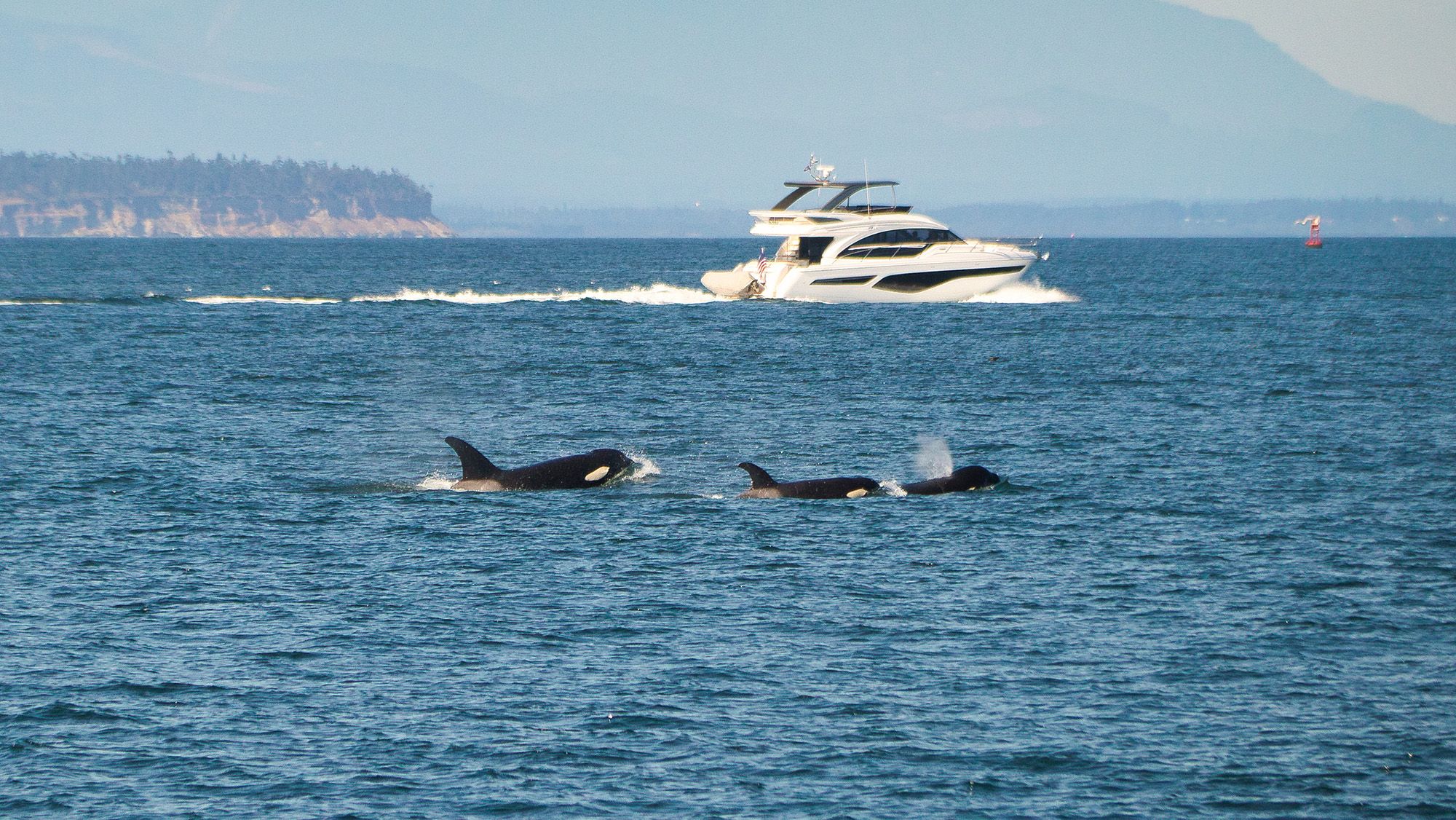
For more than six years, some killer whales have repeatedly damaged or destroyed boat rudders, prompting explanations ranging from play and revenge to warnings and cultural transmission. Christian Frings, a cognitive psychologist at the University of Trier in Germany, proposes another possibility: the orcas may be predicting the sensory consequences of their actions and deliberately carrying out sequences of behavior to produce those effects.
Frings does not study killer whales directly. Instead, he believes theories developed to explain how humans control their actions could offer insight into the behavior of other complex animals. He describes killer whales as a possible “test case” for whether different species can predict how their actions will change the environment and act with the goal of producing those changes.
He published this hypothesis in the journal Animal Cognition on September 8. The theory does not suggest that killer whales have sinister motives or intend to sink boats, frighten people or hurt them.
Predicting the effects of an action
Frings, who is also a professor of general psychology and methodology at the University of Trier, said an orca might learn what happens when it damages a rudder: how the boat moves, looks and feels when it becomes difficult or impossible to steer. Once it has learned that relationship, the animal could recall and repeat the sequence of actions that produces the expected effect.
His theory does not attempt to explain why killer whales would want to damage boats or rudders. “Why they would want this effect is a secondary question, and while of course interesting, it touches on a completely different topic,” Frings told Live Science by email.
Frings’ research explores how perceptions become actions and how recent experiences influence what people do next, often without their awareness. He told Live Science that this action-control framework could help researchers think about how other animals behave in the wild.
“The most important point is that agents — humans, and perhaps killer whales — control their actions by actually predicting the behavioral and sensory consequences of their actions,” Frings said.
He compared the process with turning on a light. The action begins with an expectation of what the room will look like once the light is on. Pressing the switch then retrieves a motor program from memory that produces the expected result. In this view, behavior is organized around predicting the effects of actions.
A different explanation for boat attacks
One common explanation for the orcas’ behavior is a stimulus-response process: the sight or presence of a rudder triggers an approach or attack response. Under that explanation, any rudder could elicit the behavior.
Another possibility is cultural transmission, or observational learning. In that scenario, one orca sees another attack a rudder and copies the behavior.
Frings does not reject those explanations, but suggests adding another layer. The killer whales may anticipate what it will look and feel like to destroy a rudder and may be testing what effects their actions can produce.
“I don’t call it playing,” he said. “Maybe I’m just testing or researching what kind of effects it can have.”
He compared this possibility with the way a human baby moves its arms and legs while developing an understanding of cause and effect. Babbling, he noted, can also be viewed as a form of testing and investigating the effects of an action. “Perhaps this is something killer whales do too. I don’t know. But at least it is another theory.”
Intent without human-like thought
Frings said his proposal does not require the orcas to form a human-like intention to disable a boat. If they can predict the effects of damaging a rudder, that prediction could allow them to retrieve from memory the actions needed to produce the effect.
“There is no need for human-like intent,” he said. “It’s like turning on a light. When I turn on the light, I don’t think too much about it. I just want the lights on.”
In the same way, an orca could be seeking an outcome without consciously representing every muscle movement required to produce it. “Again, you don’t really need higher-order cognition or anything like that,” Frings said. “We don’t need to impose motives or complex ideas on killer whales.”
“What I’m trying to say is look at this behavior from a slightly different angle and add this layer around action effects.”
Christian Frings
Could the behavior be changed?
If Frings’ hypothesis is correct, it could suggest a way to alter the behavior. If an orca expects an action to produce a particular effect, changing the boat or rudder could break the connection between the animal’s actions and the expected outcome.
Frings said this might involve testing a different version of a boat rudder. If an original rudder leaves a damaged boat floating in a “helpless” state, a second rudder might allow the vessel to remain maneuverable even after an attack. If the hypothesis is right, breaking the link between the orcas’ planned action — ramming the boat — and the outcome they seek could change their behavior.
However, Frings cautioned that such an approach could be dangerous and should not be attempted on a boat carrying people. If the expected effect changes, the orcas might try another behavior to produce it, potentially becoming more aggressive. “It’s unpredictable,” he said.
A framework that crosses species
Frings views killer whales as a case study for testing behavioral theories that are not restricted to one species. Researchers may have models of human behavior control, or perhaps models for great apes, but a broader set of frameworks could apply to humans, killer whales and at least some other animals.
He also considers the behavior important because it occurs in the wild. Much research on behavioral control is conducted in laboratories under tightly controlled conditions, and some researchers assume that laboratory models may not apply to real-world behavior.
“This paper is a great showcase of how laboratory models can actually be used to explain real-world behavior,” Frings said.
This interview has been condensed and lightly edited for clarity.
Christian Frings is Professor of Cognitive Psychology and Director of the Institute of Cognitive and Affective Neuroscience at the University of Trier, Germany. His research examines how the human mind turns perceptions into actions and why recent experiences shape subsequent actions.
Source: www.livescience.com