


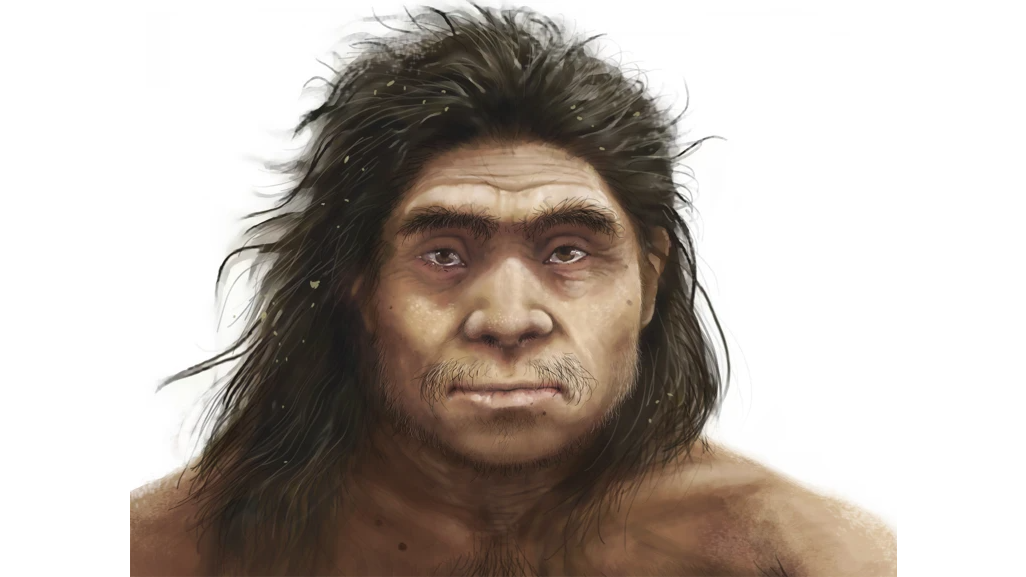
A new study of ancient proteins and fossils suggests that the Denisovans were a distinct ancient human group with a mixture of anatomical traits associated with Homo erectus, Neanderthals and modern humans. Analysis of 20 remains from the Xujiayao site in northern China has also helped researchers develop a clearer picture of the Denisovans’ skull shape and appearance.
Identifying the Xujiayao remains
The study was published Oct. 21 in Nature. Researchers analyzed a Denisovan skull excavated at the Xujiayao site in northern China.
Denisovans were an ancient human group that lived in Asia and disappeared about 30,000 years ago. They were first identified in 2010 through DNA recovered from finger bones discovered inside a cave in Siberia.
The Xujiayao bones and teeth were excavated in the late 1970s, before scientists knew Denisovans existed. Depending on the fossil’s shape and age, the remains were initially thought to belong either to Neanderthals or archaic Homo sapiens. The fossils are estimated to be between 138,000 and 199,000 years old.
Recent advances in paleoproteomics — the study of ancient proteins preserved in bones and teeth for longer periods than DNA can survive — have made it possible to identify Denisovan remains through distinctive genetic variations. In the new study, the researchers used paleoproteomic analysis to determine that all 20 remains from Xujiayao belonged to Denisovans.
A distinctive Denisovan skull
The Xujiayao skull has several characteristics associated with H. erectus, including a low, broad braincase and thick bone. It also has anatomical features resembling those of Neanderthals and modern humans, particularly in the premolars, the teeth between the canines and molars.
The researchers identified several cranial features that may be unique to Denisovans. For example, the back of the skull was more vertical and less rounded than the skulls of Neanderthals and modern humans.
After establishing the shape of the Denisovan skull from the Xujiayao fossils, the researchers compared it with fossils from other East Asian Denisovan populations. Some experts have assigned those fossils to other species, including Homo juruensis and Homo longi. However, the similarities between the fossils may make it difficult to separate Denisovans into distinct species.
“This unique combination of morphological features of H. erectus, modern humans and Neanderthal lineages of hominins support the attribution of most members of archaic Homo to the mid-late Pleistocene of East Asia,” the researchers wrote. This suggests that Denisovans may have belonged to a human lineage that adapted to diverse ecological zones across Asia over hundreds of thousands of years.
Denisovan diversity
“It is still possible that other lineages existed in East Asia during the time period when Denisovans are known to have existed,” study co-author Qiao Meifu, director of the Institute of Ancient DNA at the Institute of Vertebrate Paleontology and Paleoanthropology at the Chinese Academy of Sciences, told Live Science by email.
“We know from DNA that the Denisovans were a very genetically diverse group, and that they split into different populations early on,” Chris Stringer, a palaeoanthropologist at London’s Natural History Museum who was not involved in the study, told Live Science by email. “These may have given rise to many morphological variations, which may surprise us as fossil samples grow.”
Reconstructing the Denisovan appearance
The researchers also created a new reconstruction of a Denisovan man. Previous DNA research suggested that Denisovans probably had brown skin, brown hair and brown eyes.
The reconstruction depicts the Denisovan looking directly at the viewer. His low, broad skull is partly obscured by dark hair flowing back from the ridges of his prominent brow. Although the reconstruction shows clear similarities between Denisovans, Neanderthals and modern humans, it also reflects the distinctive physical appearance suggested by the new fossil analysis.
Xing, S., Wu, Z., Shao, Q., Ge, J., Bennett, E. A., Rao, H., Lin, S., Zhao, Y., Liu, F., Liu, Y., Zhou, K., Feng, X., Jiangzuo, Q., and Fu, Q. (2026). “Middle Pleistocene Xujiayao proteome and common Denisovan morphology.” Nature.
Find out how much you know about early humans with our Human evolution quiz.
Source: www.livescience.com