


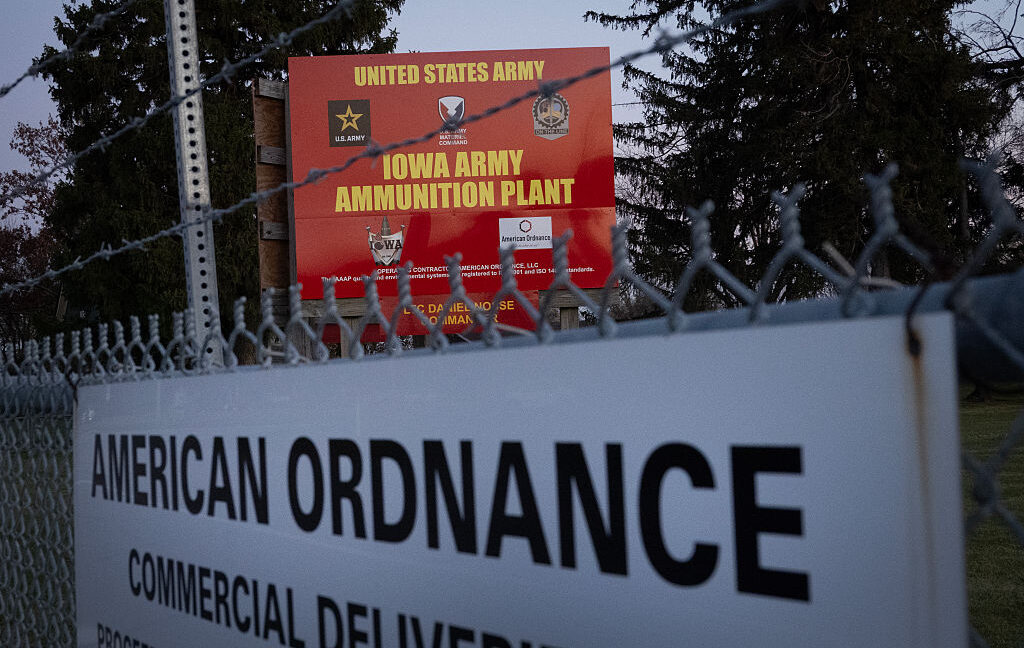
The US Army has postponed plans to destroy 68 deteriorating barrels of lead azide at the Iowa Army Ammunition Plant after residents raised concerns about toxic emissions and a federal appeals court issued an emergency order halting the operation. Army models indicate that a plume containing neurotoxic lead could travel as far as 160 miles north from the Army installation in Middletown, Iowa.
Army delays planned explosions
The Army had planned two controlled explosions at around noon Friday. The blasts were intended to destroy the barrels inside an earth-covered concrete containment structure, known as an earth-covered magazine, or ECM.
Before the court issued its stay, the military had already moved the planned detonation to November 23 to allow more time to communicate with Iowa residents. Some people in the area said they did not learn about the planned explosion until earlier this week.
“Public communication is essential to public trust,” Acting Secretary of the Army Adam Tere said in a social media post Thursday at 7:31 p.m. ET. “As such, the Army Corps continues to work proactively with state and local officials across the region to disseminate accurate and up-to-date information.”
Tell argued that the Army could not postpone the detonation beyond Monday because the highly explosive material is continuing to deteriorate. “This would delay the explosion until the latest possible moment of expected temperature drop, risking further instability of the material,” Tell said.
Why the lead azide is dangerous
Lead azide is a compound used in munitions detonators and stored by the US military. In March, the military confirmed that its stockpile at the Iowa Army Ammunition Plant was deteriorating.
The 68 barrels contain approximately 9,700 pounds, or 4.4 tons, of lead azide suspended in a mixture of water and ethanol inside the ECM. Over time, however, the material decomposed and crystallized.
The Army says temperature fluctuations can cause lead azide to dissolve in water-and-alcohol solutions and then recrystallize as needles or platelets. In this crystallized form, the compound is highly sensitive to physical shock, friction and heat. The Army has described the current condition of the material as “catastrophically dangerous.”
Source: arstechnica.com