


Close Menu
HitechubHitechub
    What's Hot
    Science

    AI Startups Transforming Mathematics: The Race to Revolutionize Learning and Innovation

    Science

    Hurricane Season Kicks Off: Below-Average Forecast Highlights First Time in a Decade

    Technology

    The story of traffic lights

    Important Pages:
    • About Us
    • Privacy Policy
    • Terms & Conditions
    Facebook X (Twitter) Instagram Pinterest
    Facebook X (Twitter) Instagram
    HitechubHitechub
    Saturday, June 13
    • Technology
      1. AI
      2. Gadgets
      3. View All

      This is the most popular CEO in the world

      Sectors in which “Chat-GPT” is most often used

      AI Pioneer Expresses Concern About Potential for AI to Surpass Humanity

      Artificial intelligence has begun to “swallow” professions

      What’s new in Android 14

      Europeans have about 700 million old mobile phones in their drawers

      Here’s how you can tell if your phone is being tapped

      “Sneaker X” – computer case in the shape of a sneaker

      Russian Gamers Unite to Prevent Nuclear War: Join the Fight Online

      Challenges of Space Travel: Why Journeying to Space is So Difficult

      NASA Astronaut Casts Historic Vote from Space

      Discover the Future of Comfort: What If You Could Wear a Chair?

    • Science
      1. Space
      2. Wheels
      3. View All

      Galaxies in the universe are growing more slowly than they should

      “Espace” presented the new lander “Apex 1.0”

      The largest asteroid sample ever collected has arrived on Earth

      (VIDEO) Incredible flight of the Parker Solar Probe

      Toyota wants to make a new generation battery with a range of up to 1,200 km

      Meet Toyota’s lunar “baby” that could make exploring the Moon easier

      Microlino – Is this the perfect city car?

      Alfa Romeo 4C gets an electric successor

      Ancient Anesthetic Unearthed in Chinese Doctor’s Grave: A Historical Breakthrough

      Space Storm Threatens Train Signals, Potentially Leading to Serious Accidents

      First Quantum Grandfather Clock: Exploring the Origins of Gravity

      Nasa’s Ambitious Lunar Base Project: A Massive Facility Covering Hundreds of Square Kilometers

    HitechubHitechub
    Home » Revealing the Truth: Stonehenge’s Altar Stones Likely Not Transported by Glaciers
    Science

    Revealing the Truth: Stonehenge’s Altar Stones Likely Not Transported by Glaciers

    Share Facebook Twitter Pinterest WhatsApp
    Share
    Facebook Twitter LinkedIn Pinterest WhatsApp
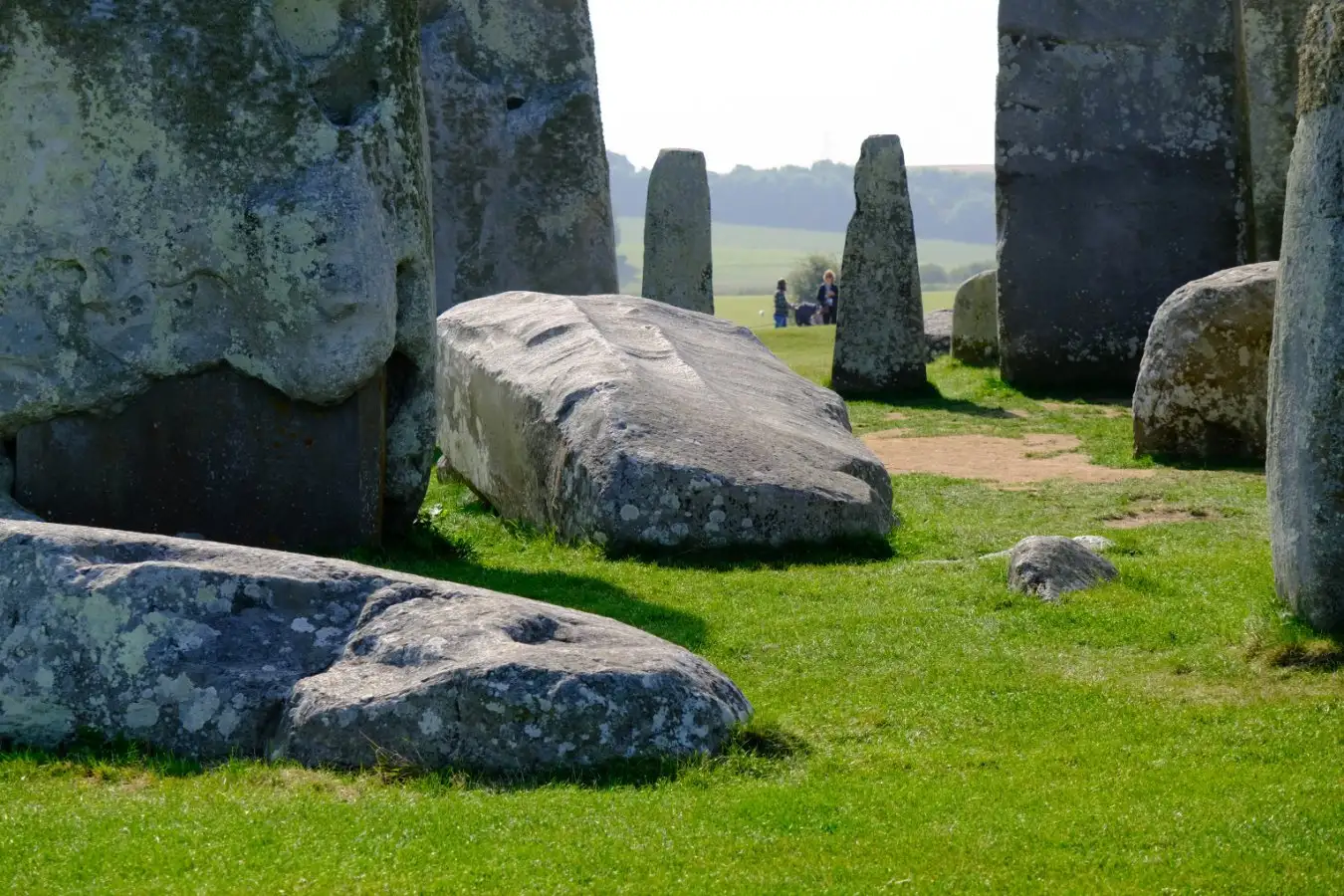
    Stonehenge Altar Stone

    Most of the 5-meter-long altar stone is buried in the center of Stonehenge.

    Laurence Berger/Getty Images

    Researchers examining the origins of the enigmatic altar stone at Stonehenge suggest that this six-ton stone may have been transported south from Scotland by glaciers, although this theory depends on an improbable series of events. It is more plausible that humans moved the stone.

    This impressive 5-meter monolith, partially buried and flanked by two other stones, has resided at the center of Stonehenge’s worked rock ring for approximately 4,500 years.

    In 2024, Anthony Clarke and researchers from Curtin University in Perth, Australia, concluded that the altar stones originated from northeastern Scotland, based on detailed chemical analysis of the rocks.

    “The altar stone is sandstone. Think of crushed grains of sand from a beach,” Clarke explains. “We can fingerprint the age and chemical composition of these particles and forensically compare them to other rocks throughout the UK and Ireland.”

    The chemical analysis indicated that the stone matched an outcrop in the Orcadian Basin, a geological feature spanning parts of northeastern Scotland, implying that the stone was transported 750 kilometers south to Stonehenge in southern England.


    Initially, Clarke and his team considered that the stones were likely brought in by boat. However, they also theorized that glaciers during the last ice age might have relocated the stones closer, thereby optimizing the distance humans needed to transport them.

    Using geological analysis and ice flow modeling, Clarke and his colleagues reconstructed the movement of ancient glaciers. They discovered that while most ice flow from northeastern Scotland moved northward, some icy masses might have flowed southward, depositing rocks onto Dogger Bank. During the last ice age, Dogger Bank was a land bridge linking Britain to mainland Europe, now submerged beneath the North Sea off England’s eastern coast.

    If glaciers did carry the altar stones to Dogger Bank, the distance humans would have needed to haul them could have been significantly reduced.

    However, Dogger Bank was flooded around 8,000 years ago, while the construction of Stonehenge began approximately 5,000 years ago. Therefore, the hypothesis that glaciers transported the altar stones involves a complex array of conditions, as Clarke noted.

    Notably, other stones in Stonehenge weigh between 25 and 30 tons and were moved by humans over tens of kilometers. Given sufficient time, they would have possessed the skills and determination to transport the altar stone further, according to Clarke.

    “The creators of Stonehenge were not in a rush. Similar to the construction of the pyramids, this could have been a gradual endeavor lasting many years,” he explains.

    Researchers aspire to conduct more sampling, aiming to identify the precise quarry or outcrop from which the altar stone originated. Yet, the motivation behind such a monumental undertaking may remain a mystery, as Clarke speculates.

    “Why pick Italian marble for your kitchen?” he questions. “What drives us to choose specific pieces of jewelry? Humans have always sought suitable stones, and for some reason, British monuments seem to require sandstone from northeastern Scotland.”

    Topics:

    Source: www.newscientist.com

    Share. Facebook Twitter Pinterest LinkedIn WhatsApp
    Previous ArticleExperts Recommend Ditching AI Prompts to Reduce Energy Consumption
    Next Article Unlocking Multitasking: How Science Reveals Your Brain’s Potential with Practice

    Related Posts

    Science

    Ancient Anesthetic Unearthed in Chinese Doctor’s Grave: A Historical Breakthrough

    Science

    Space Storm Threatens Train Signals, Potentially Leading to Serious Accidents

    Science

    First Quantum Grandfather Clock: Exploring the Origins of Gravity

    Science

    Nasa’s Ambitious Lunar Base Project: A Massive Facility Covering Hundreds of Square Kilometers

    Science

    Why Wealthy Individuals with Environmental Values Contribute Most to Carbon Emissions

    Science

    Stunning Images Reveal Sand’s Advance on Sahara Desert Oasis

    Science

    Exploring Ian Watson’s Sci-Fi Classic ‘The Embedding’: A Fascinating Yet Outdated Read

    Science

    Exploring Henry Moore: A Stunning Exhibition Merging Art and Nature

    Add A Comment
    Leave A Reply Cancel Reply

    Stay In Touch
    • Facebook
    • Twitter
    • Instagram
    • Pinterest
    Top Picks
    Science

    Exploring the Health Benefits of Turmeric and Curcumin: Do They Really Deliver?

    Discover the Health Benefits of Curcumin, a Key Component of Turmeric. soldatoff/shutterstock As temperatures in…

    Discover the Giant Scorpion That Dominated Ancient Britain in the Devonian Period

    Exploring Galaxies During Cosmic Noon: A Sciworthy Analysis

    How Q-Day Could Threaten Bitcoin and Your Retirement Savings

    California Sees Largest Mushroom Poisoning Outbreak in U.S. History: Rising Cases Reported

    Most Popular
    Science

    Discover the Giant Scorpion That Dominated Ancient Britain in the Devonian Period

    Science

    Why Superintelligent Machines Might Still Rely on Humans

    Categories
    • AI (13)
    • Gadgets (10)
    • Science (224)
    • Space (9)
    • Technology (37)
    • Wheels (9)
    Our Picks
    Gadgets

    HONOR won 36 awards at IFA 2023 – Honor Magic

    Science

    Assessing Soil Lead Contamination From Los Angeles Area Wildfires: Ongoing Debates and Key Findings

    © 2026 Hitechub.
    • Home
    • About Us
    • Privacy Policy
    • Terms & Conditions

    Type above and press Enter to search. Press Esc to cancel.

    We are using cookies to give you the best experience on our website.

    You can find out more about which cookies we are using or switch them off in .

    Ad Blocker Enabled!
    Ad Blocker Enabled!
    Our website is made possible by displaying online advertisements to our visitors. Please support us by disabling your Ad Blocker.
    Go to mobile version
    Hitechub
    Powered by  GDPR Cookie Compliance
    Privacy Overview

    This website uses cookies so that we can provide you with the best user experience possible. Cookie information is stored in your browser and performs functions such as recognising you when you return to our website and helping our team to understand which sections of the website you find most interesting and useful.

    Strictly Necessary Cookies

    Strictly Necessary Cookie should be enabled at all times so that we can save your preferences for cookie settings.