


Senior scientists make mistakes too, and those missteps can reveal how research advances. Physicist Peter Shawhan learned that carefully documenting null results is a scientific skill; chemist Omar Yaghi discovered that listening to a persistent student could open a new field; plant geneticist Chris Martine found a new species after questioning an apparently misplaced sample; and palaeontologist Catherine Badgley learned when to stop pursuing an attractive but unsupported idea.
Sometimes, reaching a dead end is the only way around a problem. In other cases, graduate students prevent advisers from discarding valuable data. Senior scientists also know that overthinking can lead to experimental paralysis. “Every year, I devote a meeting with students and postdocs to discuss failures and how errors of judgement or methods are part of academic life,” says Catherine Badgley, a palaeontologist at the University of Michigan in Ann Arbor. “I hope this helps them to see they can learn from mistakes rather than be devastated by them.”
Nature’s careers team spoke to Badgley and four other senior scientists about their failures and the lessons they drew from them.
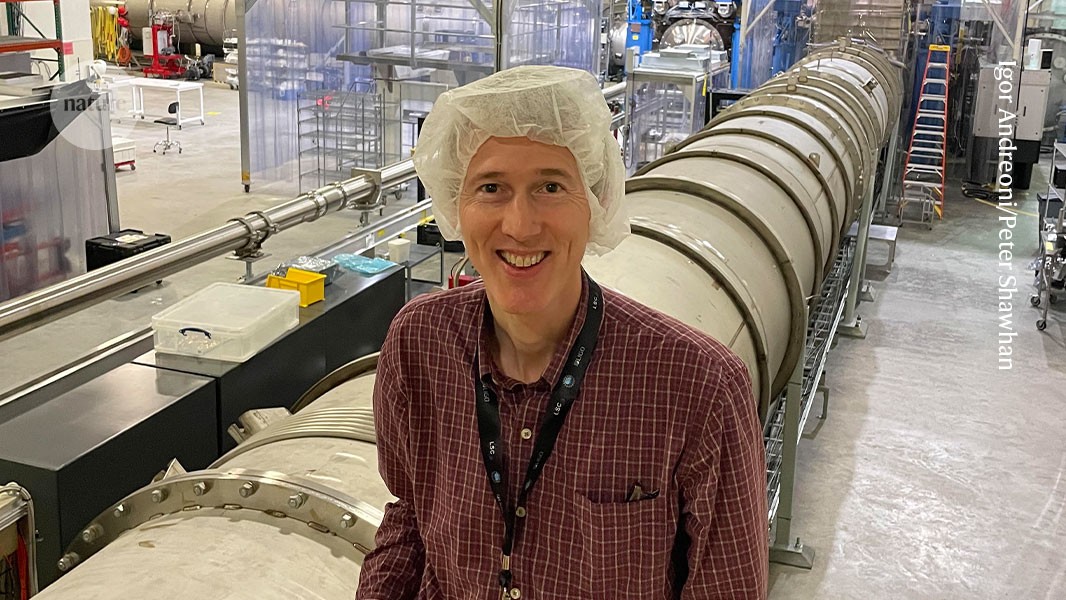
Peter Shawhan: Learning to find nothing is a skill
Physicist at the University of Maryland in College Park and a deputy spokesperson for the Laser Interferometer Gravitational Wave Observatory (LIGO) scientific collaboration.
For the past 26 years, I have been searching for gravitational waves with LIGO, which operates a gravitational-wave observatory in Livingston, Louisiana. These waves are echoes of massive events such as merging black holes or colliding neutron stars. They produce ripples in space-time that are so faint by the time they reach Earth that they are extremely difficult to detect using light or telescopes alone.
For example, telescope observations of two colliding neutron stars revealed gold and platinum atoms, helping to solve a long-standing question: what is the origin of about half of all elements heavier than iron? Detecting such an event with LIGO would provide even more information.
During LIGO’s first tests, the team found nothing. Later, after improving the detectors, we still found nothing.
In fact, we became very good at reporting nothing. We learned what we could rule out. By the time we made our first gravitational-wave detection, in 2015 — a discovery that helped LIGO’s founders win the 2017 Nobel Prize in Physics — we had published about 100 papers reporting null results.
One such case occurred in 2010. We were completing a science run, during which data are collected for a defined period, and had identified a candidate for a striking event. It appeared that we had finally detected something. But we knew it might be a “blind injection”: a false signal inserted into a data set by authorized colleagues to test our analyses.
We completed the analysis, drafted the paper and then asked the LIGO director to open a sealed envelope revealing whether the event was real. It was not. But the exercise exposed a genuine problem: the sky location recovered by our analysis did not match the signal’s known location. Two of the detector’s mirrors had moved in the wrong direction.
We found the glitch in about a day. The incident showed that we could efficiently correct ourselves when detecting a real signal — which happened five years later.
I tell my students that scientists make many mistakes. We use cross-checks and analyse results carefully, so we catch almost all of them. Some are found within minutes, some within days and some require much more work. This one took about a day because we had built a test that was designed to assess itself.
That is really the goal: not to avoid mistakes, but to build enough ways to catch them quickly. Knowing what it means to find nothing is important; it is a genuine scientific skill.

Omar Yaghi: A fixed mindset is the enemy of discovery
Chemist at Tsinghua University in Beijing and a co-recipient of the 2025 Nobel Prize in Chemistry for his work with metal–organic frameworks.
In the 1990s, I was an assistant professor at Arizona State University in Tempe. My team had begun researching inorganic porous materials: solids containing networks of tiny, connected pores that act as molecular sponges, trapping molecules such as wastewater contaminants and toxic gases on their surfaces. We were successful, publishing one paper in the Journal of the American Chemical Society1 and a later paper in Science2.
Then a doctoral student approached me about joining my laboratory. She did not sound confident, her English was not very good and it was not the right time of year to look for a PhD adviser. I made up a reason not to accept her. But she kept returning and was determined to work with me.
I eventually accepted her into the group. She began working on metal–organic compounds, another type of porous material. I thought this was a waste of time. Researchers had known about these structures since the 1950s, but nothing useful had come from them. Once their solvent-filled pores were emptied so that they could trap other molecules, such as gases, the structures collapsed and became useless. I used to call them sculptures: beautiful, but without a function.
She persisted, while I remained sceptical. After a year, we sat down to discuss her results. That was when I realized there was an opportunity: perhaps we could make robust metal–organic compounds after all.
Metal–organic frameworks, or MOFs, are materials filled with tiny pores. Their size and shape, along with the chemical properties inside them, can be adjusted. This makes MOFs more tunable than inorganic porous materials such as zeolites and better at trapping certain gases. Some MOFs can drive chemical reactions, some conduct electricity and some are stable enough to be reused.
My student found strong chemical bonds that stabilized early versions of these structures. Within a short time, our findings were published in Nature3. It had worked.
Decades later, I met with my former student. She told me that she had been struggling at the time and had decided to try her luck with me, a new professor, because no one else would take her.
I think science is the greatest equalizer. One discovery can take you from humble beginnings, as it did for us, and propel you to the top of your profession.
I had formed an opinion about an area of research and did not listen to my student. To her credit, she persisted. To my credit, I changed my thinking. Neither the student nor the professor can afford to do science without the other.

Chris Martine: Overconfidence can be a trap
Plant geneticist at Bucknell University in Lewisburg, Pennsylvania, and president of the Botanical Society of America.
I have studied Australia’s bush tomatoes for about 25 years. My team was the first to describe Solanum ossicruentum, nicknamed the blood bone tomato because it appears to bleed when cut open. The discovery attracted press coverage and was a major event for our laboratory in 20164.
In 2017, Angela McDonnell, a postdoctoral researcher, joined us. We began a large genetics project to build an evolutionary tree and understand the family history of the bush tomatoes we had studied for years.
We had two samples of S. ossicruentum, from the Tanami Desert and Keep River National Park, both in northern Australia. When the test results came back, genomic differences placed the two samples in completely different locations on the group’s evolutionary tree.
In my mind, that was impossible. I had identified the specimens myself, so I assumed that something had been mislabelled. I asked Angela to check everything carefully, but she was certain that was not the case. To me, the result did not make sense. I came close to saying, “Let’s just pull the misplaced one and call it an error.”
Two years ago, while looking through folders of S. ossicruentum specimens at the Northern Territory Herbarium in Palmerston, Australia, I noticed that some had strange dots on the backs of their leaves. At first, I thought the dots were mildew. Then I wondered whether they were extrafloral nectaries — nectar-producing glands found outside a plant’s flower.
I realized that plants with these dots mostly came from one part of Australia, the northern edge of the Tanami Desert, which was exactly where I was heading next.
When I arrived, I found that plants with the small dots were dripping with nectar, while ants harvested it. I had not seen this interaction to such an extent before. I checked whether Angela’s phylogeny project included material from that region, and there it was: the misplaced plant.
The two samples I had thought were S. ossicruentum belonged in different places on the evolutionary tree because they were two different species. The original sample’s position on the tree was the strongest evidence for the new species that we later described, Solanum nectarifolium5. My first thought was to thank Angela for not removing the specimen from our analysis. I was honestly thrilled.
Before that, I had been overconfident in what I knew. Angela, meanwhile, was confident that the data set had been carefully curated and that the genetic result had been rigorously obtained. As I have become more senior, I have become more comfortable with uncertainty. When something does not fit our preconceived ideas, it is an interesting result — that is how new things are found.
I now realize how important it is for junior researchers to speak up and share ideas, especially when those ideas conflict with convention. Looking back at the history of science, that is the only way the field has progressed.

Catherine Badgley: It’s important to know when to stop
Palaeontologist at the University of Michigan in Ann Arbor.
In the 1990s, I was an associate research scientist at the University of Michigan’s Museum of Paleontology. Serge Legendre, a colleague then at the University of Montpellier in France, showed me a new way of explaining body-size distributions in fossils of extinct mammals. He used cenograms, a graphical technique that ranks mammalian species in a community by body size.
In well-watered ecosystems, the distribution formed a fairly continuous line, with species closely spaced in size. But habitats with long dry seasons showed a large gap in the middle, where medium-sized mammals would normally be. This was an intriguing mystery.
Legendre found that many animals in this size range were fruit-eaters, and fruit is not available in arid or very cold environments throughout the year. If the theory was correct, it might be possible to infer past climates from the sizes of mammals in fossil communities.
I had climate data for mammal locations around the world, so Legendre, palaeontologist Philip Gingerich, who was also then at the University of Michigan, and I decided to build a much larger database of locations and add climate variables. We wanted to determine whether climate variables could predict the size gap we observed.
I was sufficiently excited that I wrote a book proposal and received a contract from the University of Chicago Press.
But the more data we collected, the less clear the picture became. After more than a year, I had written four chapters, yet I had to admit that we had fewer results than when we started.
I knew the data were not flawed because I had used the large mammalian fossil database successfully in other research projects. For example, undergraduate students used it to show that the length of the growing season, as a climate variable, could predict the number of fruit- and plant-eating species present at a given time.
I eventually realized that each continent has its own evolutionary history and climatic circumstances; none is exactly like another. Our largest data sets, from Africa and North America, covered almost completely non-overlapping climates. One was therefore never going to be a good model for predicting the other.
Source: www.nature.com