


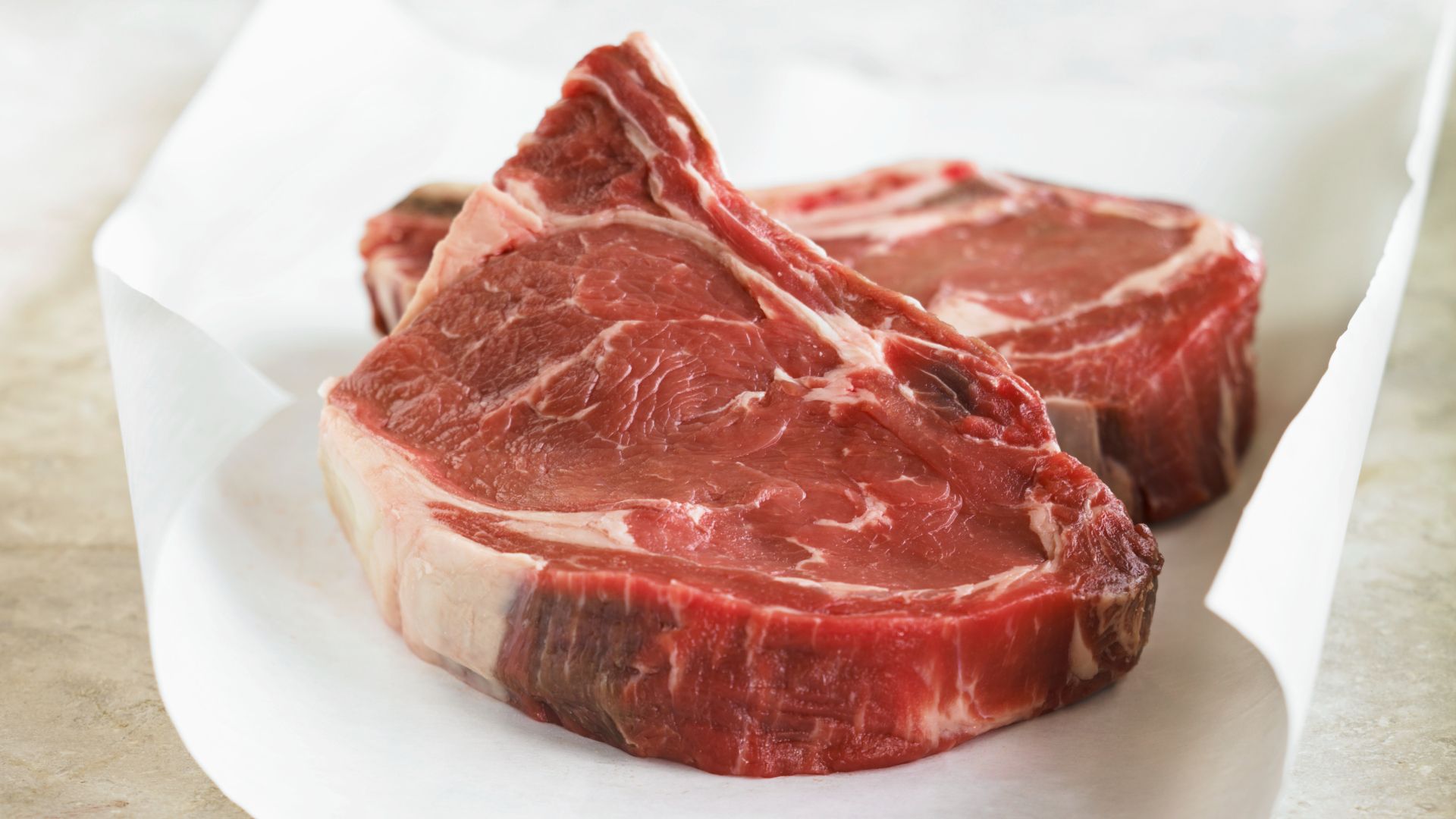
After two tick bites in June 2025, Sandra Tiguila developed a delayed allergy to red meat that caused a painful rash, swelling and the risk of anaphylaxis. Her experience illustrates the growing mystery of alpha-gal syndrome, an allergy to a sugar found in mammalian meat and products that can be triggered by tick bites. Researchers have linked the condition mainly to lone star ticks in the United States, but they are still working to understand why some people develop it, why symptoms are delayed and why the allergy eventually disappears in some patients.
In August 2025, Tiguila ate a bison-sausage breakfast sandwich while dining out. On the drive home, a rash appeared on her wrist, followed by a burning sensation that spread to her arms and legs and made it nearly impossible to sleep. Creams, pills and injections did not help.
Ten days later, she ordered steak at a restaurant. Her face swelled, and her boyfriend drove her to an emergency room. A doctor tested her for tick-borne diseases. Tiguila, who lives in Carbondale, Illinois, had been bitten twice that June.
The next morning, while drinking coffee with her usual bovine-collagen supplement for joint, hair and nail health, Tiguila received the test results: She had developed a red-meat allergy activated by tick bites. “I immediately dumped that coffee down the sink,” she says. She began avoiding mammal products, the main way to manage the increasingly common and occasionally life-threatening allergy.
What is alpha-gal syndrome?
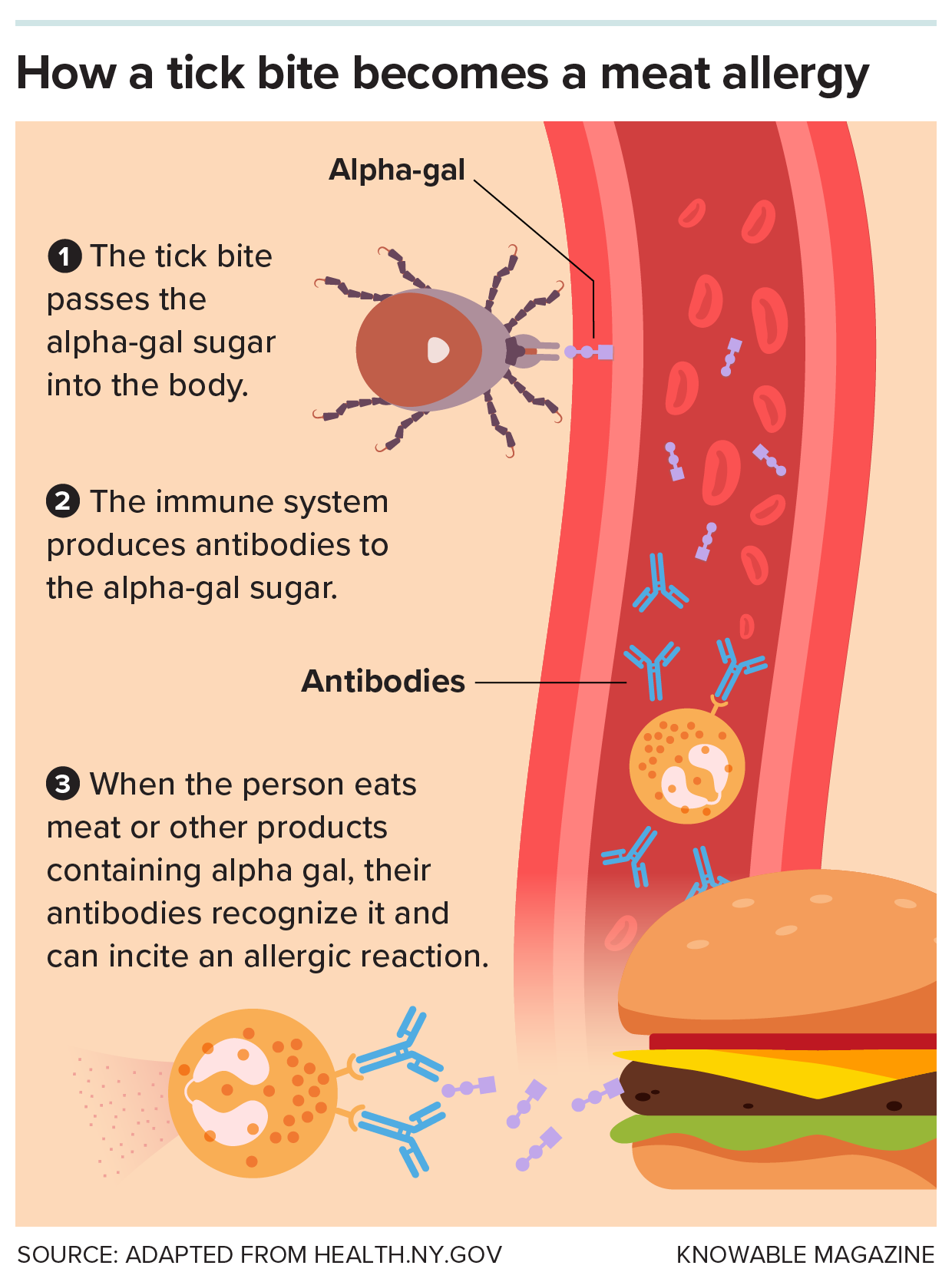
Known as alpha-gal syndrome, the condition occurs when the immune system reacts to alpha-gal, a sugar molecule found in red meat. Symptoms can range from a mild rash or stomach upset to anaphylactic shock. In 2025, alpha-gal syndrome was blamed for the death of an otherwise healthy 47-year-old man.
The syndrome has only recently been characterized and is still not fully understood. Tiguila, a nurse who knew about the allergy, says she nevertheless failed to connect her rash with her meat-heavy meals and earlier tick bites.
As ticks have spread northward, alpha-gal diagnoses have also increased. The Centers for Disease Control and Prevention estimates that up to 450,000 people in the United States may have been affected since 2010.
“It’s emerging as one of the top adult-onset food allergies,” says Onyinye Iweala, an allergist and immunologist at the University of North Carolina at Chapel Hill.
An unusual allergy
Alpha-gal syndrome behaves unlike many conventional food allergies. “Alpha-gal follows none of the rules that I was taught in training about how a food allergy behaves,” says Maya Jerath, an allergist and immunologist at Washington University in St. Louis and one of Tiguila’s physicians.
Unlike reactions to many food allergens, which usually appear within minutes, alpha-gal symptoms often emerge hours after meat is eaten. The condition is also unusual because it is associated with tick bites and is triggered by a sugar rather than a protein.
In the early 2000s, Australian allergist and clinician Sheryl van Nunen began describing patients who developed delayed reactions to red meat after tick bites. “Nobody believed her,” Jerath says.
The mystery was eventually investigated at the University of Virginia in Charlottesville by immunologist Thomas Platts-Mills and his laboratory. The team was studying people who reported unusual reactions to meat while also investigating severe reactions to the cancer drug cetuximab. Both lines of research were needed to identify the connection.
Cetuximab, which binds to cancer cells and blocks their excessive growth, was first approved to treat colorectal cancer in 2004. As the drug’s testing and use expanded, researchers noticed that more than one in five patients in the southeastern United States had allergic reactions, including hives, breathing difficulties and anaphylaxis.
After about a year and a half, Platts-Mills’ group identified the cause, recalls Scott Commins, an allergist who was then part of the laboratory and now works at the University of North Carolina. The patients had high levels of IgE antibodies, which can trigger allergic reactions, and those antibodies were reacting specifically to the sugar alpha-gal, the researchers reported in 2008.
Humans and many other primates do not make alpha-gal, although most other mammals do. The sugar is one of several molecules that cells attach to proteins to influence their structure and function.
Cetuximab is manufactured in laboratory-grown mouse cells, which had attached alpha-gal molecules to the drug. That explained the reactions in some cancer patients. The researchers then asked whether the same mechanism could explain unusual meat allergies.
They found that people with meat sensitivity also had elevated IgE antibodies to alpha-gal, producing what the team described in 2009 as a “novel and severe food allergy.”
The condition raised several puzzles. Food allergies are usually triggered by proteins such as egg or peanut proteins. Although some carbohydrates have been linked to mild allergies, a sugar causing severe reactions was previously unheard of, says Jeffrey Wilson, an allergist and immunologist at UVA Health in Charlottesville, Virginia.
Alpha-gal reactions are also not all-or-nothing. Some people react only to meat, while others are affected by dairy or mammal-derived products such as gelatin in cosmetics or medications.
How ticks became the leading suspect
People encounter alpha-gal frequently because mammal-derived products are widespread, and the sugar can even be produced by natural gut bacteria. Most people tolerate it without difficulty, so researchers needed to determine why some immune systems respond differently.
Commins led a study comparing people with and without meat allergies. The researchers considered whether exposure to a fungus or worm might be responsible, but found no evidence for either explanation.
A colleague in the laboratory provided an important clue. He had developed a meat allergy but had been feeling well enough to try a sausage. He had a severe reaction, and testing showed that his alpha-gal IgE levels had risen to “freakishly high levels,” Commins recalls. The colleague also had itchy spots from recent tick bites.
When Commins asked nearly 200 people with meat allergies about tick bites, most said they had experienced one. The team also learned about van Nunen’s work, published in 2009, strengthening the suspected connection.
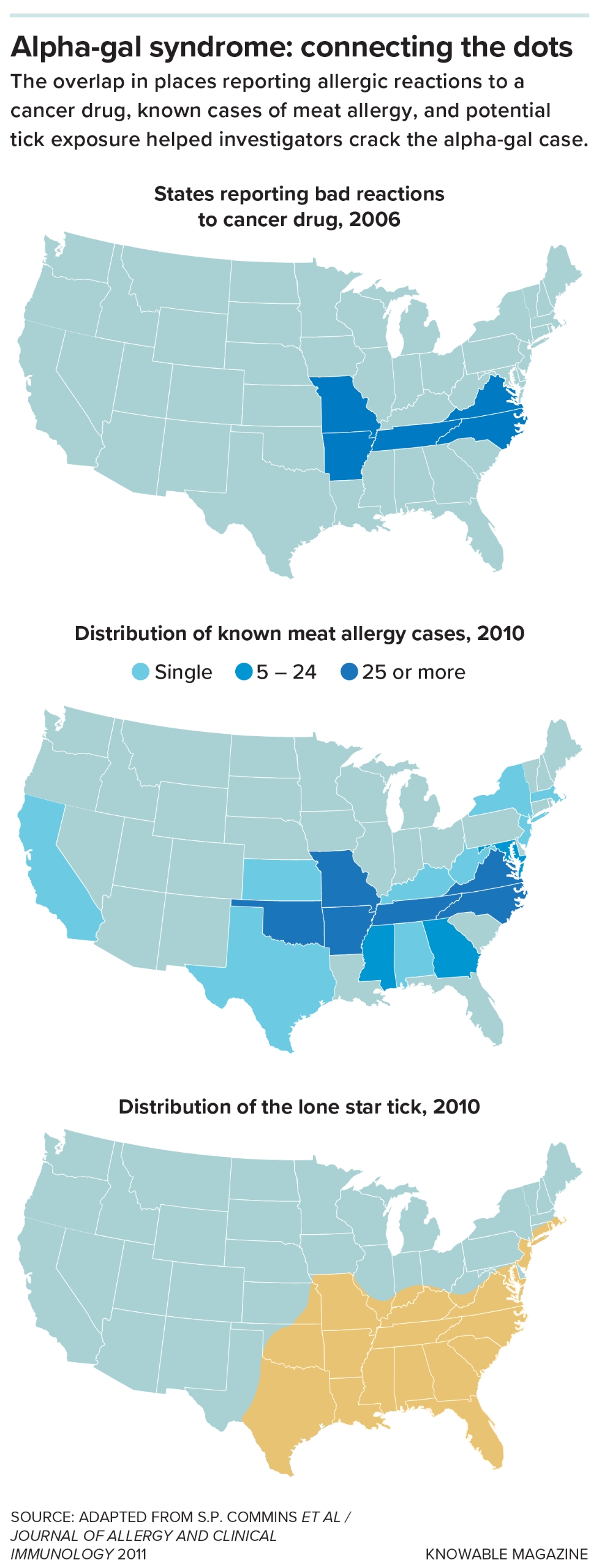
Evidence from several directions pointed to ticks. Regions where people had alpha-gal antibodies overlapped with the range of the lone star tick. People who had been bitten developed more alpha-gal antibodies, and those antibodies often occurred alongside antibodies to other lone star tick proteins, the team reported in 2011.
Later, biologist Shahid Karim of the University of Southern Mississippi in Hattiesburg and colleagues found alpha-gal in the salivary glands of lone star ticks. In 2023, Commins and collaborators at the CDC reported that people with alpha-gal syndrome were more than 11 times more likely to recall finding a tick on their bodies than people without the allergy.
About a dozen tick species worldwide are now associated with alpha-gal allergy. In the United States, the lone star tick is the primary suspect, and its range is spreading northward, aided by warmer temperatures and growing deer populations, which provide the ticks with hosts.
Mysteries remain
Because of the expanding health concern, the CDC has pledged $10 million for alpha-gal surveillance and awareness among health professionals and the public. Scientists are still trying to explain how a tick bite leads to a meat allergy.
Commins, who hosts a podcast about alpha-gal syndrome, speculates that the body may learn either to tolerate alpha-gal or to attack it, depending on how exposure occurs. Alpha-gal encountered in the gut through food or bacteria appears to promote tolerance, while exposure through the skin may trigger an allergic response that temporarily overrides it.
This hypothesis could explain why a strong initial reaction or multiple tick bites may increase the risk, and why fresh tick bites can worsen or reactivate the sensitivity.
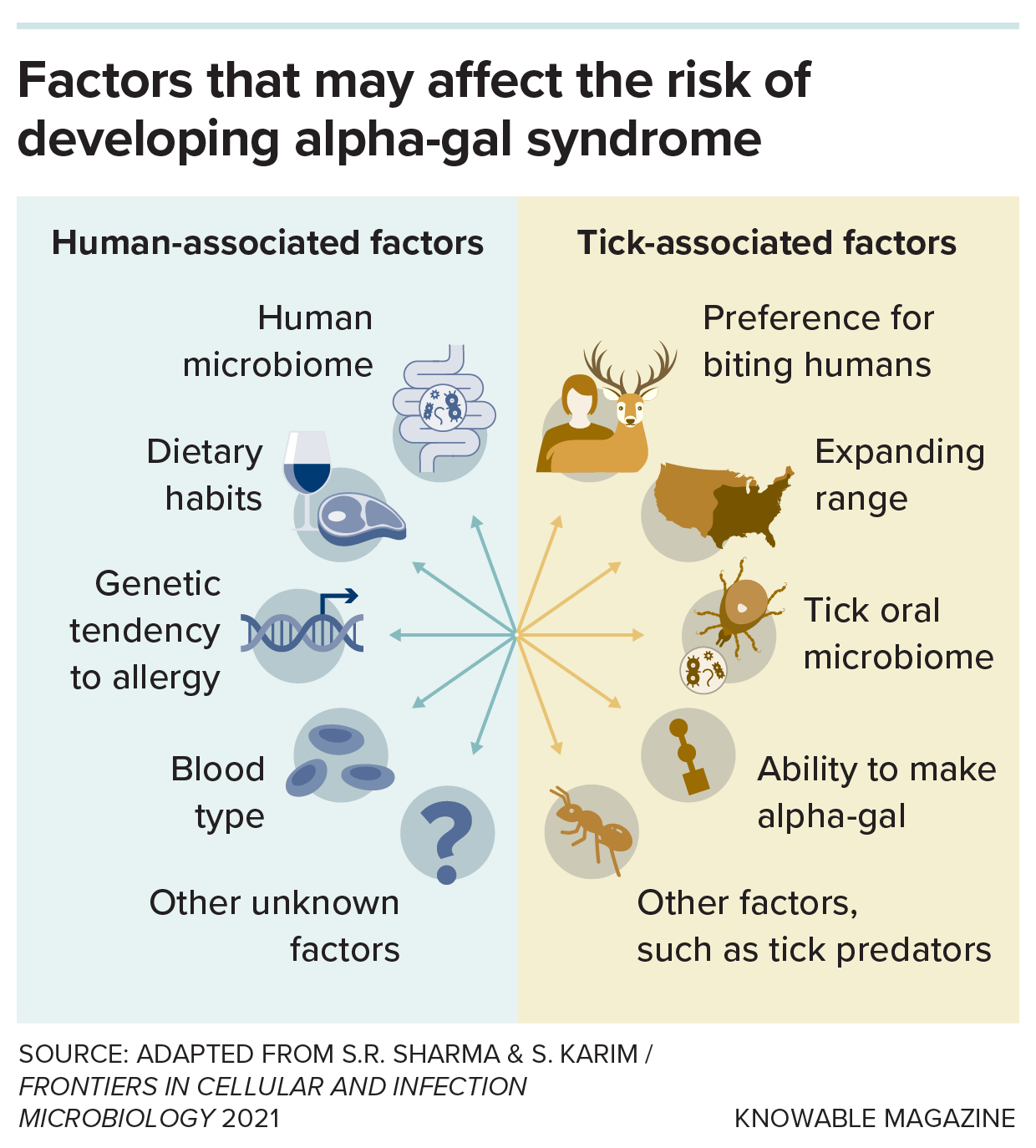
Researchers do not know why some tick species cause the allergy while others do not. One possibility is that the lone star tick’s preference for human blood, along with its unusually long, skin-piercing mouthparts, helps explain its tendency to provoke an allergic response.
Other questions remain. Some people are bitten by ticks but never develop the allergy, while some patients do not recall any tick bites. Some people have high levels of alpha-gal IgE but can eat cheeseburgers without a problem. Others are sensitive to meat despite having relatively low concentrations of the antibody.
Karim is studying what causes some people’s immune systems to switch from tolerating alpha-gal to reacting against it. Some research suggests that blood type may play a role. Type B blood proteins contain a structure resembling alpha-gal, which could promote tolerance and make people with type B or AB blood less likely to develop IgE antibodies to alpha-gal.
The delayed symptoms are another unresolved issue. Wilson speculates that alpha-gal may be attached to meat fats rather than proteins. Because fats take longer to digest and enter the bloodstream, the immune system may not encounter the sugar until several hours after a meal.
For some people, IgE levels eventually fall and the allergy disappears. For others, it persists. In some cases, the condition appears to develop into a broader disorder in which people experience allergy-like symptoms even while avoiding meat, Iweala says.
Managing the allergy
There are currently no therapies designed specifically for alpha-gal syndrome. Allergists may recommend antihistamines and prescribe EpiPens to treat severe reactions. Some prescribe Xolair, or omalizumab, a general allergy treatment that can reduce symptoms after alpha-gal exposure.
The best way to avoid triggering or worsening the syndrome is to avoid tick-infested areas when possible and use insect repellents such as picaridin on the skin and permethrin on clothing.
Commins hopes to develop a more targeted treatment. An immune-signaling molecule called IL-4 is known to play a key role in allergic responses, and he is discussing possible treatments that would interrupt IL-4 signaling with pharmaceutical companies.
Better treatments would be welcome because mammal-derived products are common and difficult to avoid. When Tiguila was first diagnosed, she began checking labels obsessively. She nearly threw a bag of prunes across the room after noticing a possibly mammal-derived additive in the ingredients.
After visiting the Washington University clinic and being advised not to worry about foods that did not cause symptoms, Tiguila became less anxious. She still enjoys the outdoors but applies insect repellent before going outside.
In August 2026, her blood test was negative for IgE antibodies against alpha-gal, suggesting that the allergy might have disappeared. Her physicians prescribed a reintroduction protocol developed for patients who reach that milestone. She began with an ounce of filet mignon, a low-fat cut, and gradually increased her exposure.
“I’ve successfully returned many people to eating meat again,” Jerath says. In one study, her protocol worked for all 19 participants.
Tiguila has now joined that group. As of late September, she had returned to her usual diet. “I’m very grateful to be cleared and not have to be so cautious,” she says.
This article originally appeared in Knowable Magazine, a nonprofit publication dedicated to making scientific knowledge accessible to all. Sign up for Knowable Magazine’s newsletter.
Source: www.livescience.com