


Close Menu
HitechubHitechub
    What's Hot
    Science

    Discover the Giant Scorpion That Dominated Ancient Britain in the Devonian Period

    Science

    Revealing the Truth: Stonehenge’s Altar Stones Likely Not Transported by Glaciers

    Technology

    10 Interesting Facts About the Dark Web

    Important Pages:
    • About Us
    • Privacy Policy
    • Terms & Conditions
    Facebook X (Twitter) Instagram Pinterest
    Facebook X (Twitter) Instagram
    HitechubHitechub
    Friday, June 5
    • Technology
      1. AI
      2. Gadgets
      3. View All

      This is the most popular CEO in the world

      Sectors in which “Chat-GPT” is most often used

      AI Pioneer Expresses Concern About Potential for AI to Surpass Humanity

      Artificial intelligence has begun to “swallow” professions

      What’s new in Android 14

      Europeans have about 700 million old mobile phones in their drawers

      Here’s how you can tell if your phone is being tapped

      “Sneaker X” – computer case in the shape of a sneaker

      Russian Gamers Unite to Prevent Nuclear War: Join the Fight Online

      Challenges of Space Travel: Why Journeying to Space is So Difficult

      NASA Astronaut Casts Historic Vote from Space

      Discover the Future of Comfort: What If You Could Wear a Chair?

    • Science
      1. Space
      2. Wheels
      3. View All

      Galaxies in the universe are growing more slowly than they should

      “Espace” presented the new lander “Apex 1.0”

      The largest asteroid sample ever collected has arrived on Earth

      (VIDEO) Incredible flight of the Parker Solar Probe

      Toyota wants to make a new generation battery with a range of up to 1,200 km

      Meet Toyota’s lunar “baby” that could make exploring the Moon easier

      Microlino – Is this the perfect city car?

      Alfa Romeo 4C gets an electric successor

      AI Overload: How the Surge of Low-Quality Tools is Straining Open Source Developers

      Neil deGrasse Tyson Discusses New Book: Exploring Aliens on Earth and the Fascinating Science of Wormholes

      Red Stripes in Welsh Caves: Britain’s Oldest Art Finally Recognized After Natural Phenomenon Dismissal

      Timeless Math Memes That Have Captivated Mathematicians for Over a Century

    HitechubHitechub
    Home » Atom-Based Quantum Computers: Accelerating Towards Practical Applications
    Science

    Atom-Based Quantum Computers: Accelerating Towards Practical Applications

    Share Facebook Twitter Pinterest WhatsApp
    Share
    Facebook Twitter LinkedIn Pinterest WhatsApp
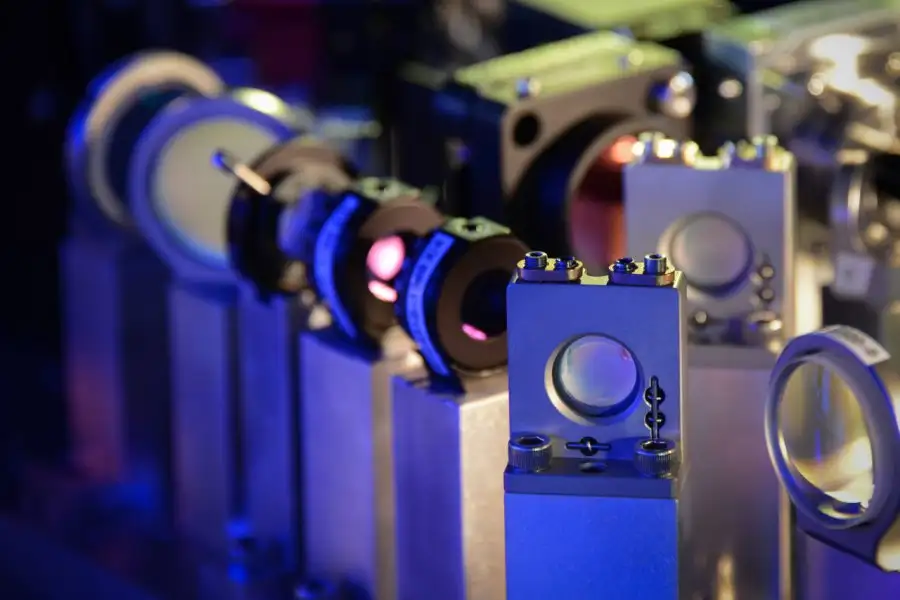
    Optical components of Atom Computing’s quantum computers

    Exploring Optical Components in Atom Computing’s Quantum Computers

    Credit: Atom Computing

    The race for the first practical quantum computer is gaining momentum. A new quantum computer, utilizing ultra-cold atoms, has achieved significant milestones on its path to practical implementation, joining a select group of advanced machines.

    Experts agree that a sufficiently powerful quantum computer could revolutionize material discovery, drug development, and cyber-security by breaking codes that underpin the Internet. However, various methodologies are competing to determine the optimal approach for building these devices. Industry leaders such as Google and IBM have invested over ten years in developing quantum computers based on superconducting circuits, currently viewed as the frontrunners in this domain.

    In contrast, a novel approach utilizing electrically neutral ultracold atoms is gaining traction. Ben Bloom and his team at Atom Computing have constructed a neutral atomic quantum computer that meets critical requirements for error detection and correction, essentials for practical utility.

    “This represents a major milestone for neutral atomic systems,” Bloom asserted. “Previously, we focused on incremental improvements; now our goal is to innovate faster, better, and cheaper.”

    The focus of their research is on error correction—an essential ability for quantum computers to identify errors in calculations, discard faulty processes, and restart accurately. Quantum computers are notoriously prone to errors, making robust error correction one of the largest challenges to their practical application.

    In error correction, information is shared across qubit clusters, with certain qubits designated as alerts when errors surface, enabling timely corrections.

    Atom Computing’s researchers demonstrated that they could expand the size of error-correcting qubit groups from 16 to 32 without increasing error rates. Notably, larger qubit groupings correspond to lower error rates—a crucial factor for amplifying a quantum computer’s power.

    In 2023, Google and researchers from the University of Science and Technology of China successfully increased both qubit counts and reduced error rates in superconducting quantum computers. Furthermore, in 2025, a Harvard University team showed similar advancements using another neutral atomic quantum computer. Bloom emphasized that their new experiment is groundbreaking, allowing continuous error checks and qubit evaluations up to 90 times in succession. “Ultimately, our aim is to achieve infinite error correction,” he stated.

    Addressing industrial challenges necessitates not only vast qubit numbers but also continuous, reliable operation. The Atom Computing team claims their new findings demonstrate their capability to achieve both. “This is the first study to consolidate all functionalities required to construct a functioning neutral atomic quantum computer,” commented Jeff Thompson from Princeton University, noting that while the results are promising, further enhancements in error rates and computational speed are still needed.

    Mark Safman, a leading researcher at the University of Wisconsin-Madison, believes this represents another stride towards establishing a neutral atomic quantum computer that can operate continuously, akin to conventional computers. However, he cautioned that even after 90 error checks, the quantum computer experienced additional error accumulation, which could diminish its efficacy.

    Bloom and his colleagues are diligently working on addressing these errors and are optimistic about enhancing quantum computer performance. They view this new research, alongside contributions from other teams, as positioning neutral atomic quantum computers as formidable contenders against superconducting qubit systems.

    “This research signifies that the barriers preventing neutral atoms from matching superconducting qubits are beginning to be resolved,” Bloom remarked. Thompson echoed this sentiment by stating, “We anticipate swift advancements throughout the industry.”

    Topics:

    Source: www.newscientist.com

    Share. Facebook Twitter Pinterest LinkedIn WhatsApp
    Previous ArticleNew Scientist Recommends ‘Organ Speak’ by Julia Enders: An In-Depth Exploration of Our Body’s Organs
    Next Article Keto Diet: A Promising Approach for Anorexia Recovery

    Related Posts

    Science

    AI Overload: How the Surge of Low-Quality Tools is Straining Open Source Developers

    Science

    Neil deGrasse Tyson Discusses New Book: Exploring Aliens on Earth and the Fascinating Science of Wormholes

    Science

    Red Stripes in Welsh Caves: Britain’s Oldest Art Finally Recognized After Natural Phenomenon Dismissal

    Science

    Timeless Math Memes That Have Captivated Mathematicians for Over a Century

    Science

    Exploring Distant Galaxies: Uncovering New Planets – Sciworthy

    Science

    As Africa Splits in Two, Magma Surge Accelerates – Insights from Sciworthy

    Science

    Boost Your Mood Daily with a Glass of Fruit Juice: Study Insights

    Science

    Ancient Human Settlement Unearthed at 2,000 Meters in the Mountains: Experts in Awe

    Add A Comment
    Leave A Reply Cancel Reply

    Stay In Touch
    • Facebook
    • Twitter
    • Instagram
    • Pinterest
    Top Picks
    Science

    Ancient Oceans Lost Oxygen Millions of Years Before End-Triassic Mass Extinction

    Chemical signatures preserved in ancient rocks reveal that marine environments began deteriorating well before the…

    New Scientist Recommends ‘Organ Speak’ by Julia Enders: An In-Depth Exploration of Our Body’s Organs

    The end of passwords

    How Plants Altered Magma Chemistry: Insights from Sciworthy

    Rare Lyme Disease Bacteria Detected in Ticks Across New York

    Most Popular
    Science

    7 Reasons We Overtrust AI and the Hidden Costs We’re Facing

    Technology

    The end of passwords

    Categories
    • AI (13)
    • Gadgets (10)
    • Science (71)
    • Space (9)
    • Technology (37)
    • Wheels (9)
    Our Picks
    Technology

    Use Google like it’s 1998: This page takes you back to the beginning

    Science

    Atom-Based Quantum Computers: Accelerating Towards Practical Applications

    © 2026 Hitechub.
    • Home
    • About Us
    • Privacy Policy
    • Terms & Conditions

    Type above and press Enter to search. Press Esc to cancel.

    We are using cookies to give you the best experience on our website.

    You can find out more about which cookies we are using or switch them off in .

    Ad Blocker Enabled!
    Ad Blocker Enabled!
    Our website is made possible by displaying online advertisements to our visitors. Please support us by disabling your Ad Blocker.
    Go to mobile version
    Hitechub
    Powered by  GDPR Cookie Compliance
    Privacy Overview

    This website uses cookies so that we can provide you with the best user experience possible. Cookie information is stored in your browser and performs functions such as recognising you when you return to our website and helping our team to understand which sections of the website you find most interesting and useful.

    Strictly Necessary Cookies

    Strictly Necessary Cookie should be enabled at all times so that we can save your preferences for cookie settings.