


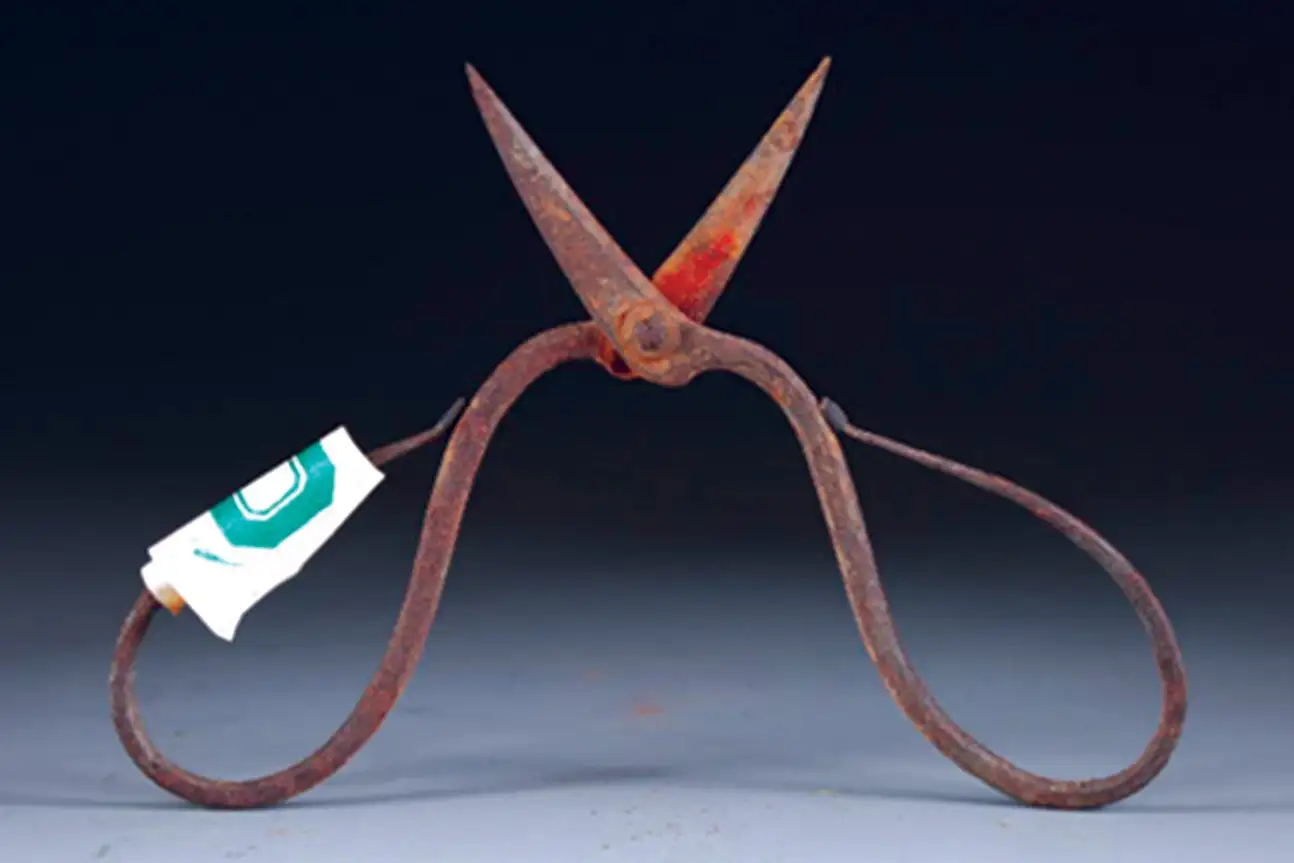

Scissors and tweezers excavated from Xia Quan’s grave showing traces of anesthetic aconitine
Provided by: Xue Ling et al.
Archaeological findings reveal that two medical instruments, discovered from the tomb of a 15th-century Chinese surgeon, hold traces of anesthetic compounds. This discovery presents the earliest chemical evidence indicating that historical doctors aimed to alleviate pain during medical procedures.
The surgical scissors and tweezers were excavated in 1974 from the tomb of the renowned doctor, Xia Quan, who lived from 1348 to 1411 in Jiangsu province.
Zhao Socang Researchers from Northwest University in Xi’an, China, employed lasers to analyze the residue on these instruments, revealing the presence of aconitine, a compound from the aconite family, commonly referred to as Wolfsbane. This substance frequently appears in ancient Chinese medicine formulations.
Aconitine affects sodium channels in neuronal cell membranes. While it offers anesthetic effects at safe doses, its high toxicity limits its use today due to the risk of poisoning.
The concentration of the residue on the scissors and tweezers tips suggests that the presence of aconitine was not the result of contamination, according to the researchers.
Carnie Mathison, a professor at Griffith University in Brisbane, Australia, who was not involved in this study, asserts that this represents the earliest documented use of anesthetics.
The study implies that earlier surgeons possessed a more advanced understanding of pain management than previously noted. “This offers insights into why surgeries were performed in the past and why they were manageable,” Mathison explains.
Historical records indicate that practitioners during the Ming Dynasty developed methods to mitigate the toxicity of aconitine. Techniques included “preparing it with boy’s urine, soaking in black bean decoction, boiling in vinegar, detoxifying with mung beans, and removing the outer skin of aconite tubers,” according to Zhao et al.
Mathematically sophisticated processes were necessary to isolate aconitine from these poisonous plants and derive its application without endangering patients, Mathison elaborates.
“They had to extract the active compounds safely and ensure effective application without risking harm,” he notes. “They also had to validate its efficacy for practical use.”
Topics:
- Medical Advances /
- Archaeological Discoveries
Source: www.newscientist.com