


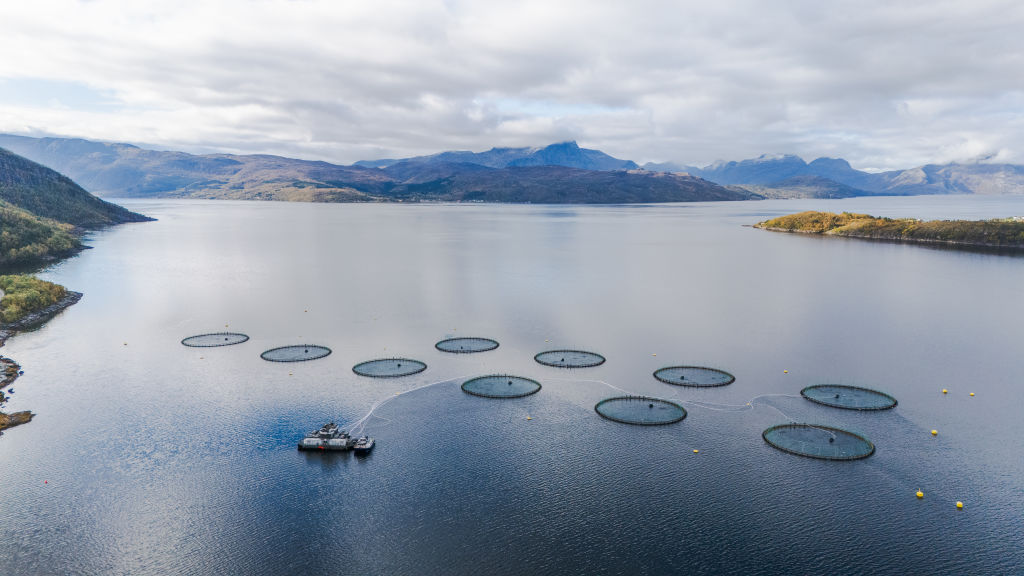
Farmed Salmon’s Shift to Soy Raises Deforestation and Climate Concerns
The environmental impact of farmed salmon is changing as producers increasingly replace marine-based feed ingredients with crops such as soy. Hayek noted that it can be difficult to link soybean consumption to individual fish species. However, research shows that crop-based ingredients now make up a growing share of feed used in salmon aquaculture.
Norway, the world’s largest producer of farmed salmon, illustrates the scale of this shift. In 1990, approximately 90 percent of salmon-feed ingredients came from the ocean. By 2020, that share had fallen dramatically, according to research on changes in aquaculture feed.
An investigation by an environmental advocacy group also found that 90 percent of the soy fed to farmed salmon in Norway came from three Brazilian companies. The report linked those suppliers to soy production sourced from areas affected by illegal deforestation and land conflicts in the Amazon rainforest.
The move toward crop-based feed may also be increasing the carbon footprint of aquaculture. Recent research found that greenhouse-gas emissions per kilogram of farmed fish doubled in Europe and the United Kingdom between 2000 and 2020, largely as the industry adopted more plant-based feed ingredients.
“We’re exchanging one problem of offshore development for another problem of land development,” Cascada said.
The global salmon-farming industry is expected to continue expanding as populations grow and demand for seafood rises. Farmed fish, including salmon, are promoted for their nutritional value and are expected to play an important role in supplying protein. Environmental organizations, however, argue that much of the increased demand is coming from wealthy countries where significant nutritional shortages do not exist.
“The argument is that the salmon industry exists to feed the world and provide extra protein,” Cascada said. “But what we’re actually doing is flooding the Global North with proteins that we don’t necessarily need at the expense of the Global South.”
In the United States, lawmakers are seeking to support the growth of offshore aquaculture. Proposed legislation would make it easier for salmon producers to obtain permits to farm fish in offshore federal waters.
In February, environmental activists and fishermen sent a letter to lawmakers opposing the American Marine Aquaculture Research Act, or MARA.
Supporters of the bill say that placing fish farms in deeper offshore waters could reduce some of the environmental problems associated with aquaculture in sensitive coastal areas.
Opponents argue that the legislation could expand an industrial farming model into the open ocean, creating many of the same environmental concerns associated with intensive livestock production on land.
This article was first published by Inside Climate News, a nonprofit, nonpartisan news organization covering climate, energy, and the environment. Sign up for its newsletter here.
Source: arstechnica.com